
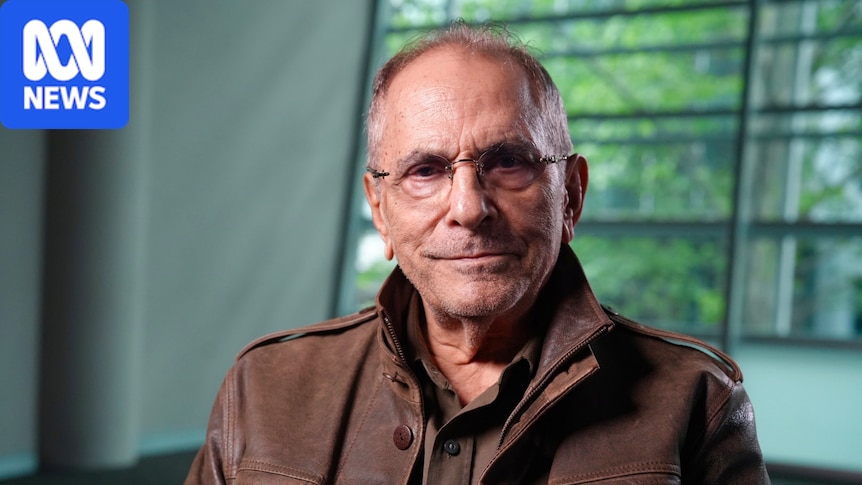
Timor-Leste President José Ramos-Horta has declared that his country will sign the first agreements for the long-stalled Greater Sunrise gas project early next year, as the South-East Asian country pushes on with the hugely ambitious and contentious development.
But there is still widespread scepticism in the sector about the commercial viability of Timor-Leste’s plan to pipe gas from the Greater Sunrise fields to the country’s south coast, where the government hopes to develop a multi-billion-dollar liquefied natural gas (LNG) plant and domestic gas facility.
Timor-Leste says that will generate badly needed jobs and economic activity in the country, but the project has been beset with delays, disagreements and doubts.
In November last year the Australian energy giant Woodside Energy, which holds a stake in the venture along with Timor-Leste’s state-owned oil and gas company, struck an agreement to “mature and progress” the plan.
And Mr Ramos-Horta told the ABC in Sydney that Greater Sunrise was now “finally happening” after “years and years of procrastination [and] deadlock”.
“I was told by Prime Minister Xanana [Gusmao] that he’s confident that within the next few months they will sign the agreement, [that] we will finalise the three main documents,” he said.
Those three documents will help Australia, Timor-Leste and Woodside establish the regulatory and fiscal settings needed for the exploration and development of resources in Greater Sunrise.
Mr Ramos-Horta’s government previously said the parties reached technical agreement in Canberra on three documents: the Petroleum Mining Code, Production Sharing Contract and fiscal regime.
But analysts, as well as government and industry sources, all caution that there is still no guarantee that Timor-Leste and Woodside will strike a commercial agreement on a development plan, and that any final investment decision is likely years away.
Woodside and Timor-Leste’s government said last year that the first LNG from Greater Sunrise may be produced “as early as 2032-2035, subject to concept selection and investment decisions”.
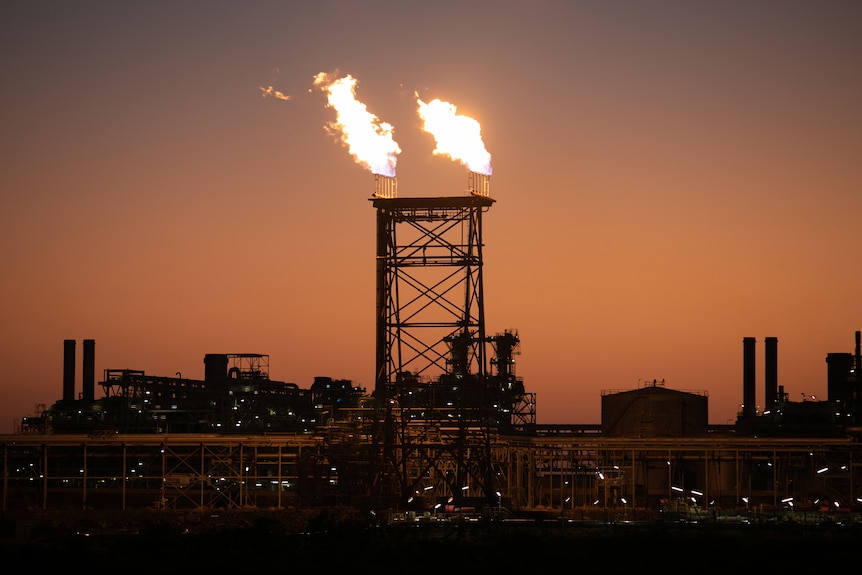
One-third of the Greater Sunrise project is owned by Australia’s Woodside. (ABC News: Margaret Burin)
Last month, Timor’s petroleum minister pushed the production start date back to 2034-2035, saying the country hoped for a final investment decision by 2029.
Mr Ramos-Horta said the regulatory agreements should be signed early next year after being checked and approved by both governments and Woodside.
He struck a bullish tone, suggesting it was a significant moment for the project.
“We cannot wait much longer. We have to do it now,” he said.
“Now is the time, is the opportunity.”
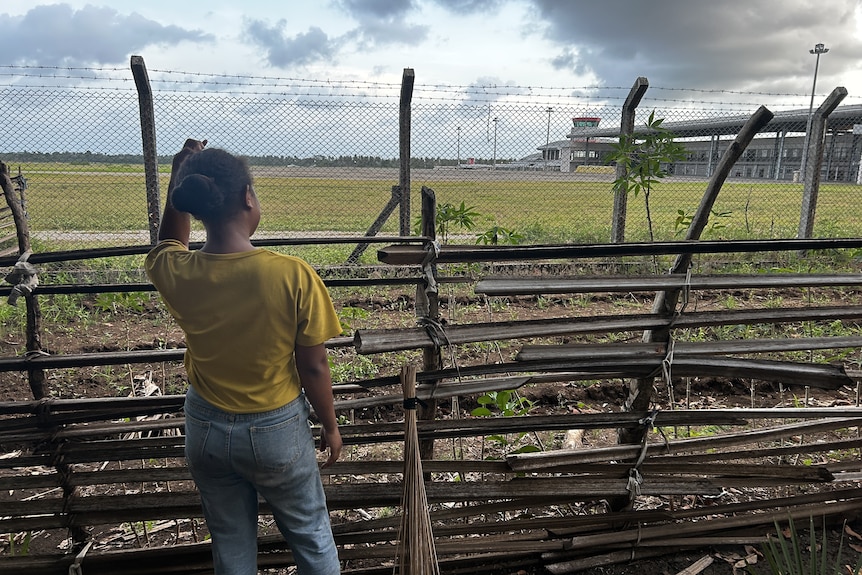
An airport built in anticipation of the gas project opened almost a decade ago, but it has hardly been used. (ABC News: Nick Sas)
The issue is urgent for Timor-Leste because it remains heavily reliant on past oil and natural gas revenues invested in its Petroleum Fund.
The lucrative Bayu-Undan gas field, which pumped billions of dollars into the fund over the last two decades, permanently ceased production last year.
And while the fund now contains $26 billion, the International Monetary Fund (IMF) warned last year that it could be depleted by 2038 if Timor-Leste continues to rely on it to finance fiscal deficits without replenishing it.
Mr Ramos-Horta warned back in 2022 that Timor-Leste would run off a “financial cliff” if it could not get Greater Sunrise up and running within a decade.
Timor-Leste has also warned the Australian government that it would turn to Chinese investors to make the project a reality if it cannot secure agreement from Woodside, although analysts have previously questioned whether they would have the appetite.
In the meantime, the airport built in anticipation of the project lies idle, while roads and other infrastructure constructed for the processing hub are beginning to crumble.
But Mr Ramos-Horta said he was confident that Woodside was “determined to follow through” with the project to pipe gas to Timor-Leste.
“It’s beneficial to Woodside, beneficial to Australia, beneficial to Timor-Leste,” he said.