
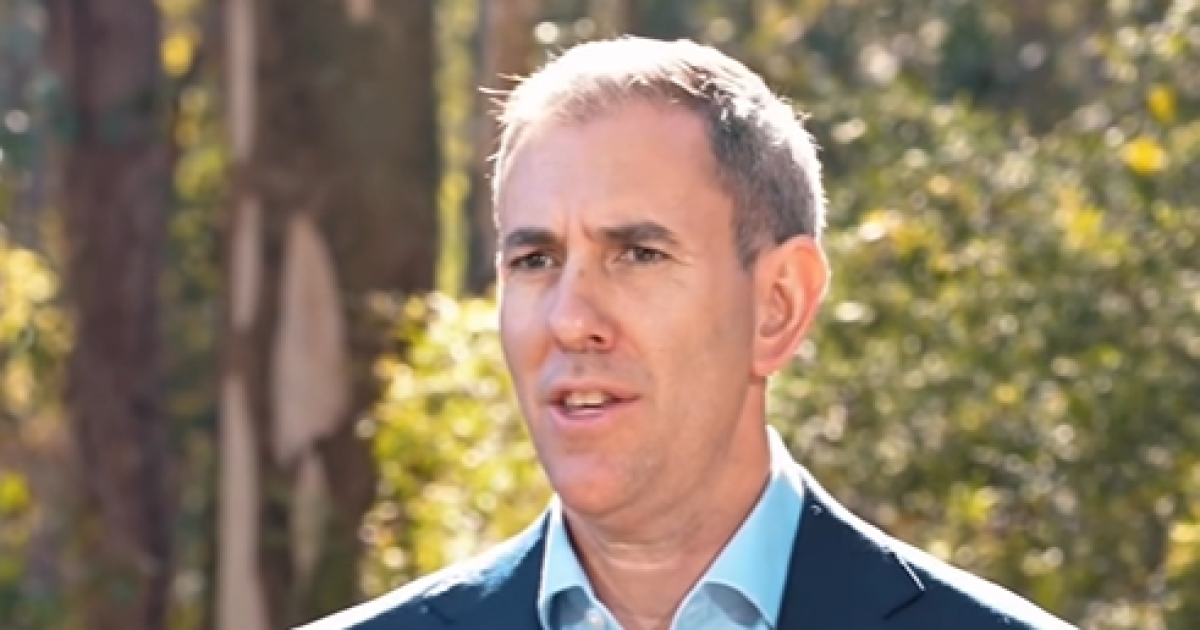
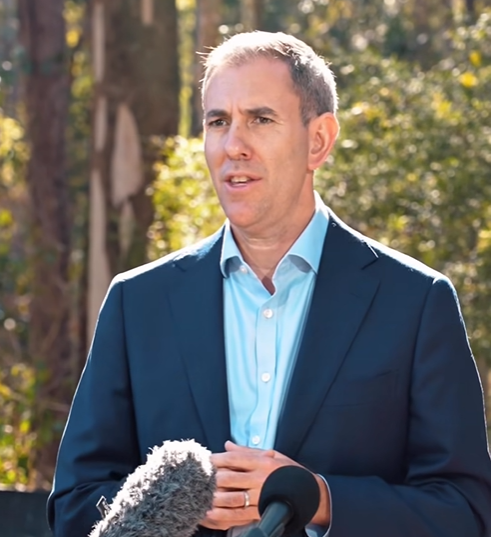
Treasurer Jim Chalmers says while labour market conditions have eased, the jobs market remains resilient. Photo: Screenshot.
Unemployment has reached 4.7 per cent, its highest rate in nearly five years, according to the latest data from the Australian Bureau of Statistics (ABS).
In September, there were 39,000 fewer employed people and 9000 more unemployed.
The total number of employed Australians dropped by 39,300 jobs, a surprise for economists who had expected employment to rise by 20,000.
ABS head of labour statistics Sean Crick said the employment figures meant the employment-to-population ratio fell 0.3 percentage points to 63.6 per cent, and the participation rate fell 0.2 percentage points to 66.8 per cent.
“This September, a higher proportion of people remained unemployed compared to recent years,” Mr Crick said.
“This follows from last month, when a higher proportion of people who were previously not in the labour force moved to being unemployed.”
The underemployment rate rose 0.1 percentage points to 6.3 per cent. Hours worked were up 0.1 per cent in September.
Mr Crick added that the number of part-time hours worked fell 1.5 per cent over the month, with full-time hours worked rising by 0.4 per cent.
Employment and hours worked are closely aligned in annual growth, which Mr Crick said was up 1.2 per cent and 1.3 per cent respectively.
The trend unemployment rate remained at 4.6 per cent as trend employment grew by 0.1 per cent, while hours worked remained steady in trend terms in September.
Trend measures are used to filter out irregular short-term fluctuations and random monthly swings in the job market.
The trend underemployment rate remained steady at 6.3 per cent in September, while the underutilisation rate rose marginally to 11.0 per cent.
The Federal Government said that while the latest jobs data showed Australia’s labour market faced a modest softening in September, it nevertheless remained resilient against the backdrop of ongoing global economic uncertainty.
Treasurer Jim Chalmers said the job figures showed some easing of labour market conditions but Australia’s unemployment rate remained low by historical standards.
“It’s unsurprising to see a tick up in unemployment in the face of global volatility and the war in the Middle East, which has contributed to higher interest rates in Australia and around the world,” he said.
“Despite all the pressures coming at us, Australia’s labour market remains resilient and one of our greatest strengths.”
The Treasurer said Labor had created about 1.3 million jobs since coming to office, and average unemployment had been the lowest of any government for half a century.
“Australia is better placed and better prepared than other countries to confront global uncertainty, with historically low unemployment, lower debt to GDP than almost every other advanced economy and amongst the fastest annual growth compared to all major advanced economies,” Dr Chalmers said.
But Shadow Treasurer Tim Wilson said the government had nothing to be proud of when it came to the labour market.
“The consequences of the Albanese economic model are now laid bare for everybody to see — higher unemployment, higher taxes, higher spending, higher inflation, and higher interest rates,” Mr Wilson said.
“These are devastating numbers for the 100,000 Australians that have lost their jobs over the past year.
“The IMF has projected 800,000 Australians will be without work next year, in addition to the number of Australians increasingly relying on second jobs.
“That’s 800,000 mouths to feed; 800,000 people sitting around the kitchen table looking at their families and saying they don’t know how they’re going to be able to afford their mortgage.
“This government does not understand the consequences of their economic model. It is leading to higher unemployment, higher taxes, higher spending, higher inflation, and of course, higher interest rates.”
The Reserve Bank had forecast that unemployment would reach 4.7 per cent at the end of 2027.
Deputy Opposition Leader Jane Hume said it was unfortunate that the prediction “has come through much earlier than expected” and that Australians would “pay the price” for it.
“Let me tell you about some of the statistics underlying those unemployment figures that are concerning me most,” Senator Hume said.
“Youth unemployment is now 11.1 per cent. That’s double the national average. That’s a genuine concern for Australians, particularly young Australians, who were promised more opportunities under Labor.
“There are more than a million people now that have two jobs. That’s a record, and certainly a record for women. Around 518,000 women now work two jobs.
“Australians are working harder, but they’re not getting ahead. This is a consequence of Labor’s economy.
“And … when you can’t manage your economy, when you can’t manage your budget, when your economic model fails, it’s Australians that pay the price.”