
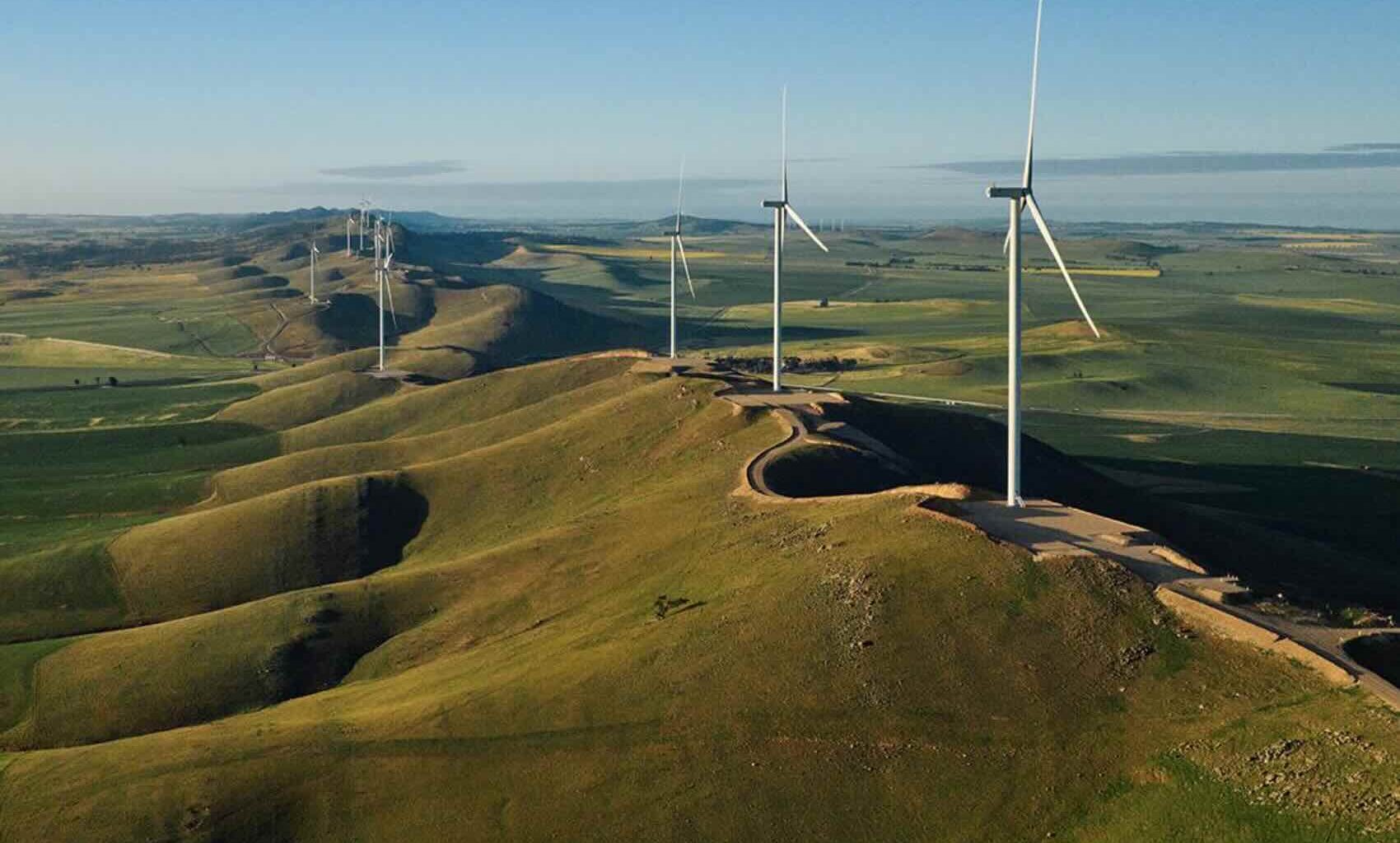
South Australia has unveiled four new renewable energy proposals that would more than quadruple its grid-scale wind and solar capacity, and which it says will underpin the next era of green industrial growth in the state.
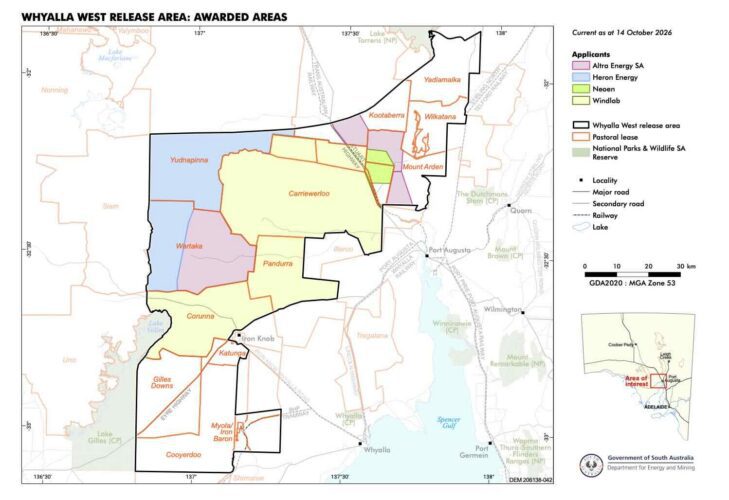
The plans unveiled on Sunday include a six gigawatt wind and solar development put forward by Australian developer Windlab, a separate 4.7 GW wind and solar proposal from Altra Energy, a 1.6 GW wind farm from Heron Energy and a smaller 360 MW solar proposal from Neoen.
Together they represent almost 13 GW of new wind and solar capacity spread across more than 3,300 square kilometres of pastoral land within Barngala country west of Whyalla.
That compares to its already installed grid scale wind and solar capacity in South Australia of nearly 3 GW, which with more than 2 GW of rooftop solar accounts for a world-leading 75 per cent of its annual electricity needs.
The state may have had to rethink its green hydrogen plans, because of the failures at Whyalla, and, as it hinted a week ago, it may arrive a little late on its goal of reaching 100 per cent “net” renewables by the end of 2027, but the state still holds huge ambitions on green energy.
“This is an extraordinary opportunity for Whyalla and the Upper Spencer Gulf, with almost 13 gigawatts of proposed renewable energy generation that could help shape the region’s industrial future,” state energy minister Tom Koutsantonis said in a statement on Sunday.
“For generations, Whyalla has been one of South Australia’s great industrial centres. We want to build on that strength, attracting new investment and creating opportunities for the next generation of industry.”
 Screenshot
Koutsantonis says the scale of interest in the land release announced by the government on Sunday underpins the enormous opportunities in the Upper Spencer Gulf.
“These projects are at an early stage, and there is significant work ahead, but this is an important step towards unlocking the region’s renewable energy potential,” he said.
The South Australia is desperate to find new opportunities to fill the gap from the closure of the Whyalla steelworks, and building the future around a renewable-based economy makes sense. Five applications were received and the winners have exclusive rights to apply for a Renewable Energy Feasibility Licence, which can be granted for up to five years.
During this period, they must undertake feasibility activities in accordance with an approved work program, and any subsequent construction and operation would require a separate Renewable Energy Infrastructure Licence. Project delivery timelines will depend on the outcomes of feasibility studies and the necessary approvals.
Windlab said in a statement on Monday that a first stage of its Whyalla West wind project could comprise between 600 megawatts and 1,000 megawatts of wind generation and battery storage. It could be built by the early 2030s, and further stages would be progressed in line with industrial electricity demand and enabling infrastructure.
Nathan Blundell, the chief development officer at Windlab, which has also been pushing the concept of “outback renewables” to tap into the rich wind and solar resources of largely uninhabited regions of inland Australia, says the proposal is at an early stage.
“The quality of the renewable energy resources and the industrial strengths of the Upper Spencer Gulf make the Whyalla West project area an especially compelling opportunity,” he said.
“Our work with the Barngarla Determination Aboriginal Corporation and host pastoralists has created a strong foundation for the studies ahead, and their knowledge and perspectives will remain central as we shape a project that respects Country and coexists with existing land uses.”
Windlab said Windlab expects to begin on-site development activities within the coming months, and the feasibility program will build Windlab’s understanding of the project area and inform the project’s design and next steps.
Altra Energy director Andrew Newman says there is an opportunity to power the next generation of industry in the region, which has suffered since the collapse and closure of the ageing Whyalla Steelworks.
“The Upper Spencer Gulf has always been a place with a strong industrial history, and this is a chance to power the next generation of that industry,” he said. We’re already working with major energy users on how this energy will be used, so the investment and the jobs stay in the region.”
To join more than 29,000 others and get the latest clean energy news delivered straight to your inbox, for free, click here to subscribe to our free daily newsletter.

Giles Parkinson is founder and editor-in-chief of Renew Economy, and founder and editor of its EV-focused sister site The Driven. He is the co-host of the weekly Energy Insiders Podcast. Giles has been a journalist for more than 40 years and is a former deputy editor of the Australian Financial Review. You can find him on LinkedIn and on Twitter.