
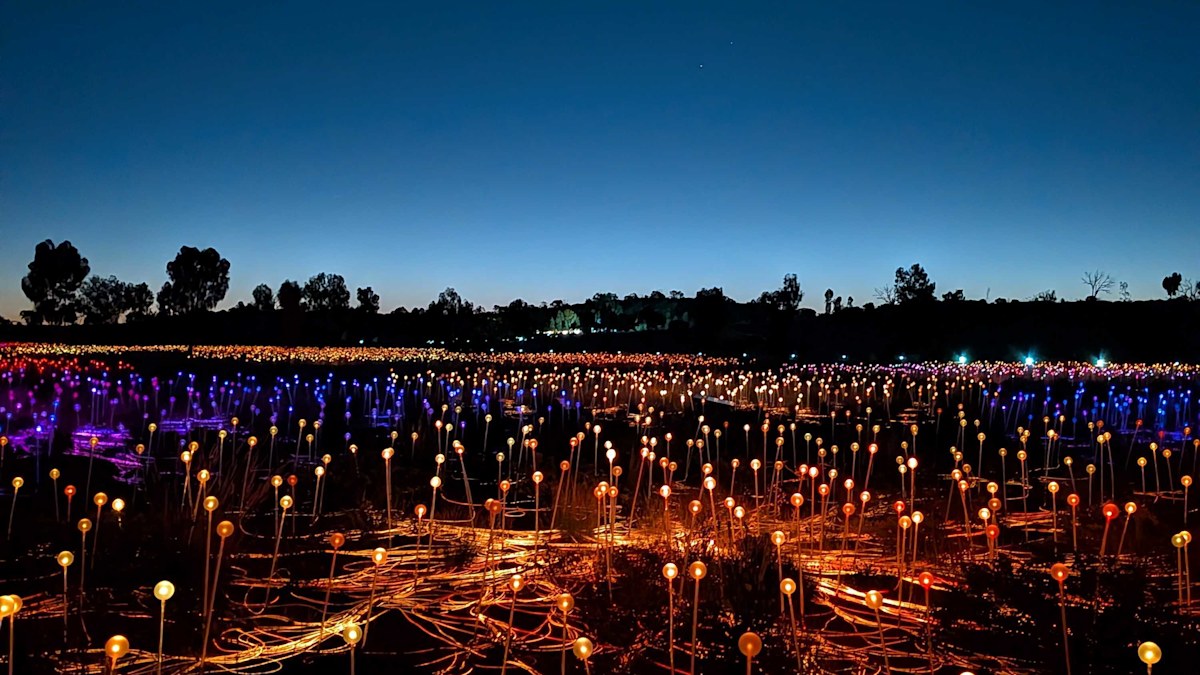
It’s one thing standing in the middle of nowhere, red dust under my boots, watching the twinkling stars spread out brighter than I’ve ever seen them in the darkening sky above.
But add to that thousands, no, tens of thousands, of colourful twinkling bulbs of light illuminating the sandy ground around me and the scene turned magical. The bulbs, inspired by desert wildflowers, spread out across an area the size of seven football fields.
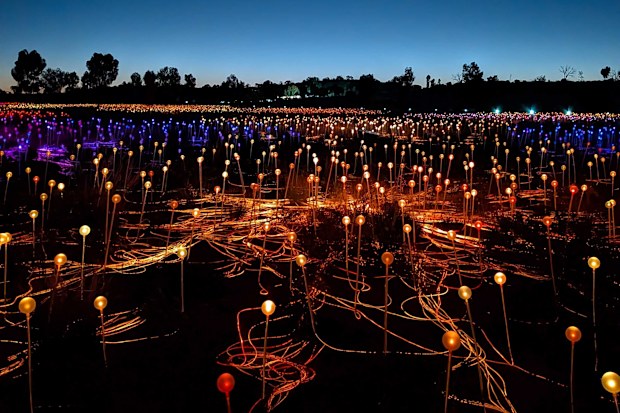
The Field of Light first came to life in 2016. Supplied/Kristine Tarbert
Right about this moment is when I realise why this spot has been drawing visitors from Australia and around the world for over 10 years.
What was first installed as a temporary exhibition in April 2016, the Field of Light on the outskirts of the Uluṟu-Kata Tjuṯa National Park has since welcomed more than 750,000 visitors.
On its 10-year anniversary, Voyages’ Ayers Rock Resort confirmed the installation, created by internationally renowned light artist Bruce Munro, will now remain on display until at least the end of 2029.
“Field of Light is now one of the region’s most powerful drawcards,” Matt Cameron Smith, CEO of Voyages Tourism Australia, said at the time.
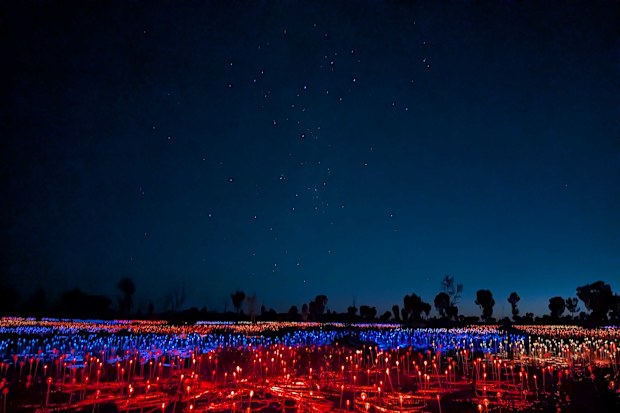
The installation was created by created by internationally renowned light artist Bruce Munro. Supplied/Kristine Tarbert
The red centre’s arts scene is even more in the spotlight now, after it was named one of Lonely Planet’s Top Experiences for 2027.
Jessica Lockhart, Lonely Planet Destination Editor Oceania, said although it was already recognised on an international stage for its art, the region “deserves to be just as lauded for its contemporary creativity”.
“These experiences aren’t just visually impressive – they also give travellers greater insight into the landscape and its Traditional Custodians,” she said.
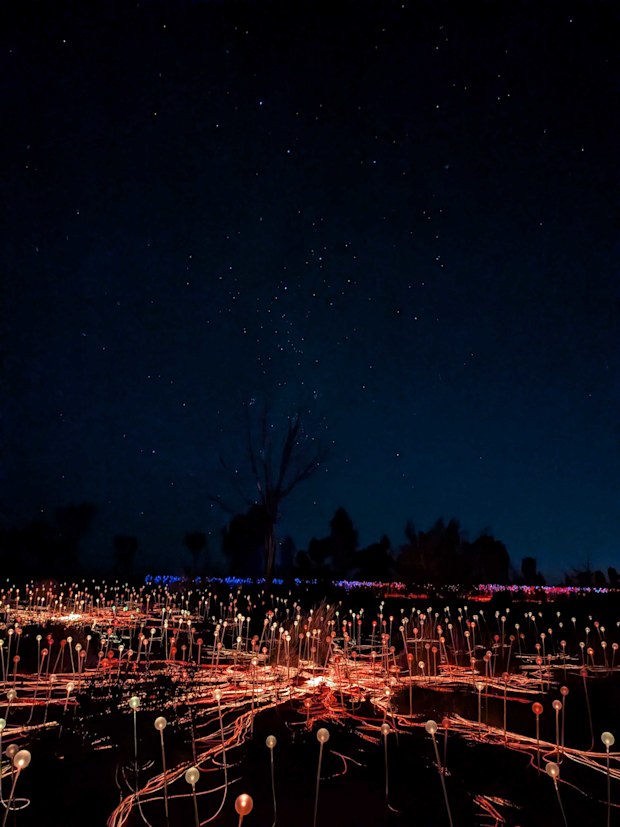
There are 50,000 bulbs that span an area the size of seven football fields. Supplied/Kristine Tarbert
How to visit the Field of Light
With the Field of Light Star Pass (which costs from $132 per adult) you are picked up at your hotel and driven a short way to a private dune top, which offers sweeping views of Uluru as the sun sets.
Outback-inspired canapés do the rounds with Australian wine, beer, and non-alcoholic drinks also on offer, as you watch the landscape slowly change colours from red, to orange, then grey.
We had our two-year-old with us, and she enjoyed the chance to run around the area playing in the dirt and rocks before the sun set fully, and our host announced it was time to head down the hill into the light installation.
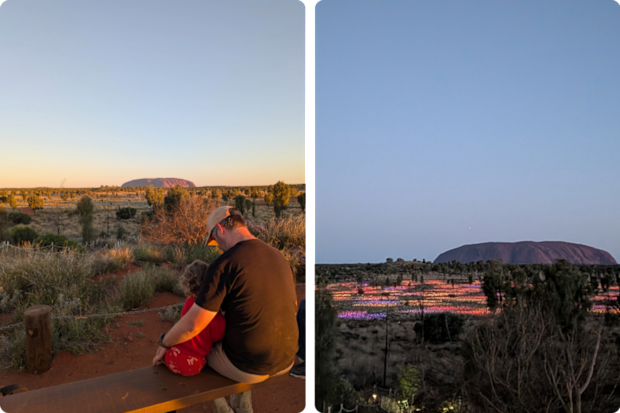
Watching the sunset over Uluru and the lightbulbs come to life. Supplied/Kristine Tarbert
Walking through the lights you have the choice of two routes, one slightly shorter than the other, with helpful staff members and torches scattered throughout so you don’t lose your way.
If you didn’t want to do the canapé sunset beforehand, there is also the option to just buy the $50 general admission for the Field of Light only.
By this stage of the night our toddler was getting a little restless, but she was happy enough to sit on dad’s shoulders giving us a chance to just take it all in (without worrying about losing her in the darkness).
Wintjiri Wiṟu drone show
The Field of Light was certainly an experience I won’t soon forget, but I had little time to dwell as the following evening we set out to experience the Wintjiri Wiṟu drone show.
It’s a world-first sound and light show that combines ancient Anangu storytelling with drone and laser-light technology.
The Wintjiri Wiṟu Sunset Dinner experience (from $315 per adult) kicked off before sunset with native-ingredient cocktails and canapés, like gin-soaked cucumber and green ants.
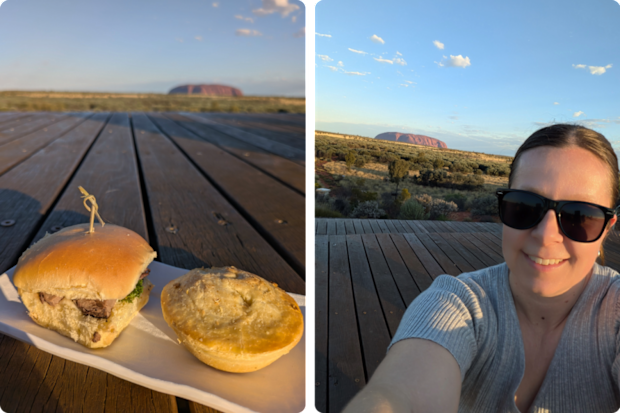
A crocodile and curry pie was one of the canapés on offer. Supplied/Kristine Tarbert

Wintjiri Wiru Sunset Dinner is curated by Indigenous chef Mark Olive. Ayres Rock Resort
As the sun dipped we were invited to take a seat on the viewing platform (blankets provided for cooler nights) and a gourmet dinner hamper, curated by Indigenous chef Mark Olive, was delivered.
The apple salad and smoked emu were highlights combined with a selection of dips, fresh bread and cheeses.
While we ate, we saw a handful of drones complete two wind tests, needed to ensure the show can go ahead without issues.
Launched in May 2023, Wintjiri Wiru was co-created in deep consultation with senior Anangu that lasted three-years.
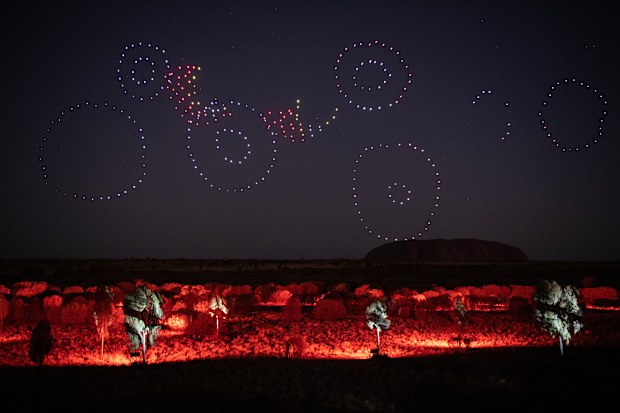
There are 1200 choreographed drones, lasers, and projections in the show. Photo by Getty Images for Voyages Tourism Australia
“Wintjiri Wiṟu” translates to “beautiful view out to the horizon” in the local Pitjantjatjara language.
There are 1200 choreographed drones, lasers, and projections that tell the traditional Anangu Mala story.
For 20-minutes you’re immersed in a powerful soundtrack and narration in the local Indigenous languages.
The Mala Story is sacred and can only be heard on Country, so it’s something you don’t want to miss while there.
Over $300 per person is fairly steep. There is an option to just join for the show with wine and desserts for $210 per adult, or an after dark version for the same price.
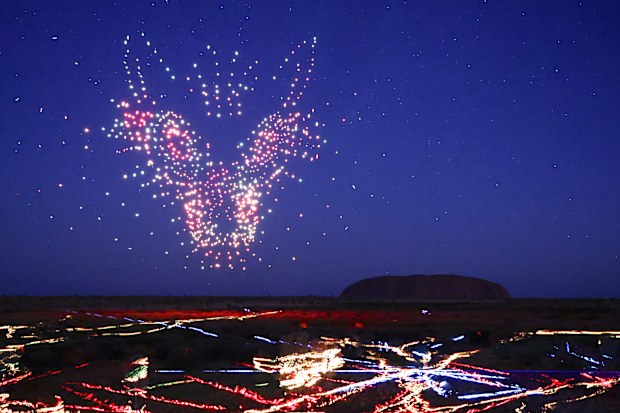
The show retells a sacred Mala Story and can only be heard on Country. Photo by Getty Images for Voyages Tourism Australia
The main event, but on wheels
While the evening events were a big drawcard to visit this world-famous Aussie destination, the main event was of course finally making it to Uluru itself for the very first time.
Seeing the sunset over the rock from a distance was mesmerising but getting up close and personal was something I’ve had on my bucket list for a long time (we had two trips cancelled during the COVID pandemic).
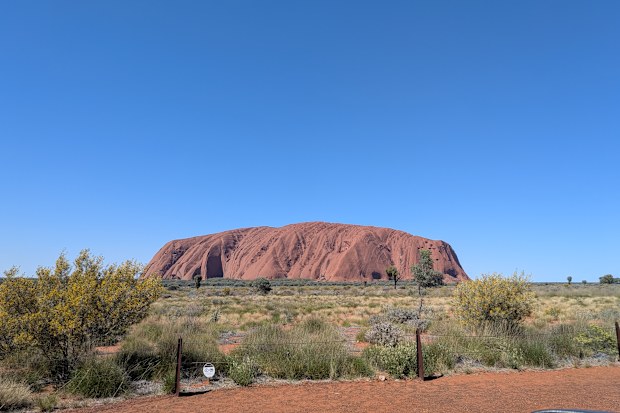
This was our very first visit to Uluṟu-Kata Tjuṯa National Park. Supplied/Kristine Tarbert
Depending on your walking ability and who you’re with there are a few different options of how to explore the rock. That also means you could visit multiple times (during the one trip or in future) and do something a little different each time.
A ranger guided walk can be organised via Voyages which takes you along the main 2km Mala walk, to visit Mala Puta, an Anangu site that details women’s business via paintings on the rock’s surface, and the Kantju Gorge.
If you’re keen to tackle the entire Uluru base walk, it’s just over 10km and can take about three to four hours.
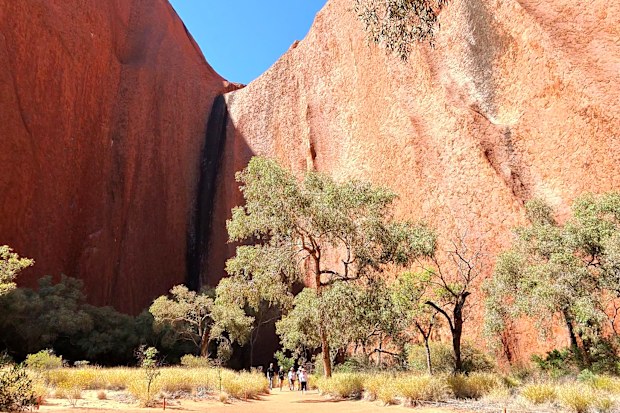
uluru cycling Supplied/Kristine Tarbert
That was not our plan with a toddler. So we decided to hire some wheels instead.
Outback Cycling offer bikes for hire, as well as guided or self-guided tours of Uluru. We hired two bikes and a toddler seat and were able to explore the base of the rock at our own pace stopping at the conveniently located bike racks along the way to visit the sites.
The ride starts at the Cultural Centre, which adds another 4km to the total (along the Liru walk) but we were able to do it in under two hours even with a few stops.
Take note of the signage along the way as some areas are sacred to the Anangu and no photos are allowed.
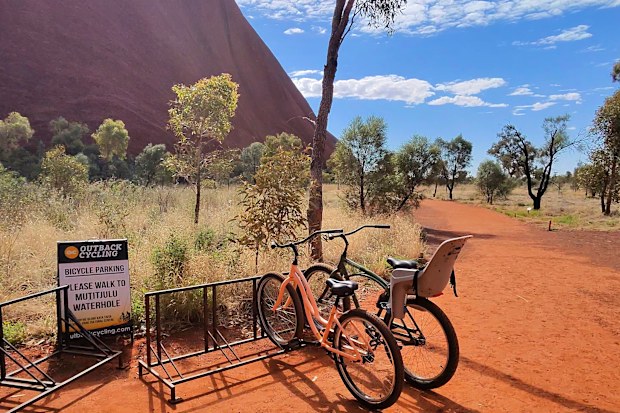
uluru cycling Supplied/Kristine Tarbert
You’ll need longer than you think
We were two nights down already, and quickly realised we’d barely scratched the surface of what was on offer when visiting this place.
Speaking to a couple visiting from Melbourne, they said they made sure to book five nights for the chance to actually relax and enjoy all the destination has to offer.
“We’ve seen people here for two days, and then they’re off again, and it seems like they are just running from one thing to another,” they told me.
It’s a sentiment that is slowly catching on. In fact, recent research from Voyages revealed that 52 per cent of past guests surveyed would stay longer if they were planning the trip again.
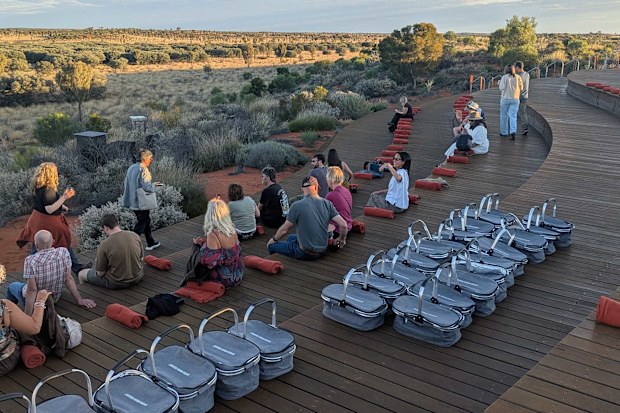
There is so much to do you’ll need more than two nights. Supplied/Kristine Tarbert
And 72 per cent of visitors said Uluru offered more to do than they expected.
So what’s the magic number? Well, according to the survey 68 per cent recommended those planning their first visit should stay at least four nights.
In the end we did three nights, which we could have easily stretched to another day. There are still things on my to-do list for next time.
Where to stay – Sails in the Desert
Voyages Ayres Rock Resort has a range of accommodation options to suit pretty much every budget.
Sails in the Desert is the five-star option you’ll recognise immediately thanks to the soaring white shade sails that complement the surrounding outback landscape.
There are 228 rooms and suites featuring Indigenous Australian art and design accents. Our room had two large beds, a huge balcony overlooking the central green and pool area. The bathroom was also spacious with a large shower and two sinks.
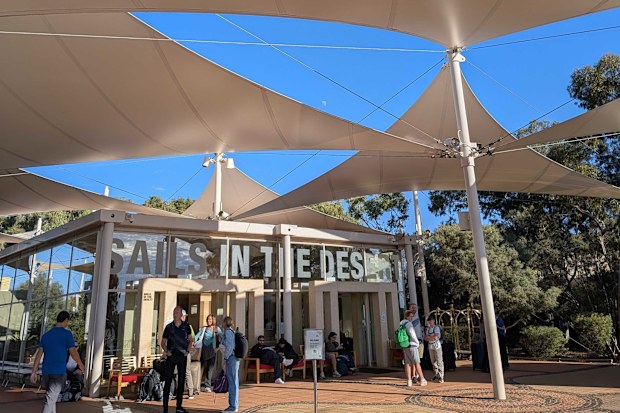
Voyages Ayres Rock Resort has a range of accommodation options including Sails. Supplied/Kristine Tarbert
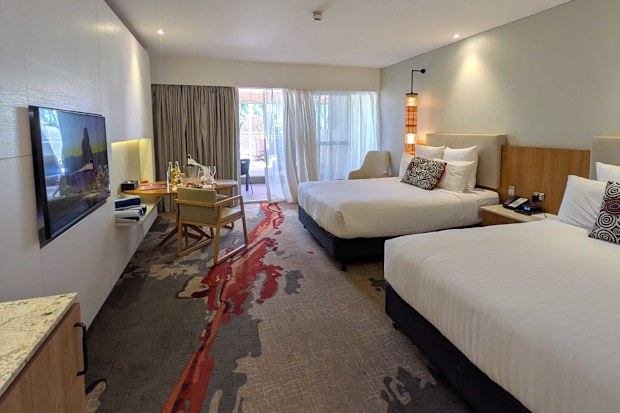
228 rooms and suites featuring Indigenous Australian art and design accents. Supplied/Kristine Tarbert
A buffet breakfast is served at Ilkari Restaurant just off the lobby. Room service is also available, though we used this more for our little one. The main meals were a little underwhelming, but the place is very remote.
Mangata Bistro & Bar located inside the Desert Gardens hotel was one spot we’d recommend if you wanted to venture out of the hotel, and don’t have an experience booked.
We also made use of the resort’s childminding service – ideal if you plan on attending adults-only evening events like the Sounds of Silence or Wintjiri Wiru dinner as we did.
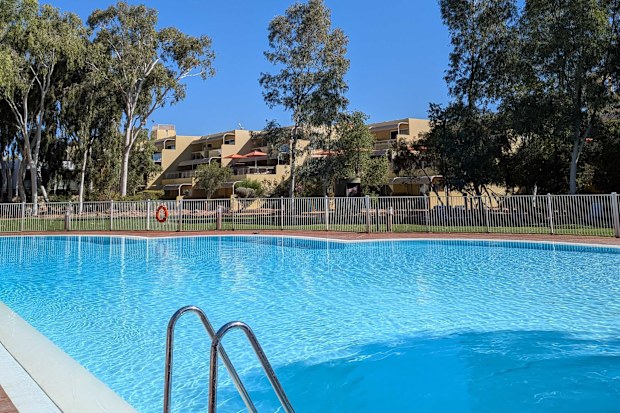
The gum-tree lined pool was ice cold which would be perfect on a very hot day. Supplied/Kristine Tarbert
How to get there
The resort itself is a 20-minute drive to the base of Uluṟu, and a 40-minute drive to Kata Tjuta (the Olgas).
It’s also only an eight-minute drive from Ayers Rock Airport (Connellan Airport), with free return airport transfers provided by the resort
If you’re driving from Alice Springs it will take you between four and five hours with route options that take you along the full-sealed red centre way or via a slightly shorter but unsealed route if you’re going via Kings Canyon (Watarrka National Park).
The verdict
Before we arrived someone described this as the “Disneyland of outback resorts” and they were right about one thing – there were endless activities (paid and free) that could keep just about any traveller happy.
To simultaneously feel like you’re in the middle of nowhere and yet have access the inspiration and exploration on offer was a stand-out for me.
Plus, finally witnessing Uluru, something I have been reading and writing about for decades, lends a special kind of significance to this family holiday.
This story was done in partnership with Voyages Ayres Rock Resort. The writer travelled to the Northern Territory at their own expense and stayed as a guest of Voyages. All opinions are our own.