
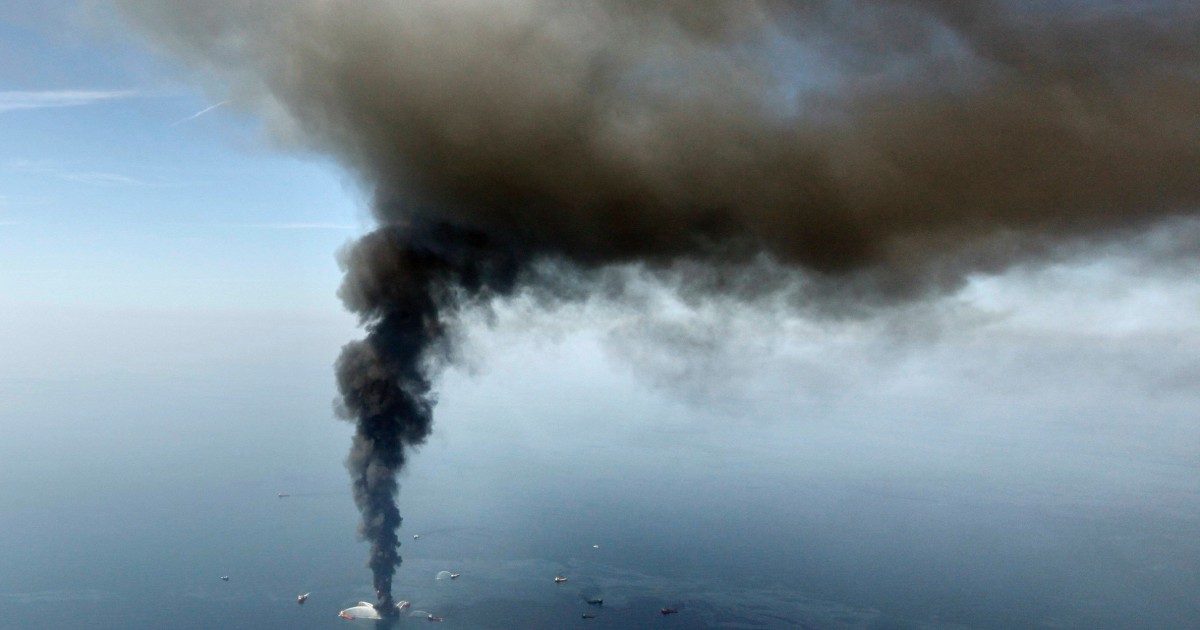
Researchers focused on the ocean’s “twilight zone,” a vast area above the seafloor, where much of the surface marine life, including dolphins and whales, feast on creatures. Yet little is known about this gigantic ecosystem, and this region of the Gulf had not been studied before the 2010 spill, said study lead author Tracey Sutton, a biological oceanographer at Nova Southeastern University.
A 2011 post-spill exploration cited in the research, which used six sets of nets at different depths and acoustic sonar, gave scientists a good sense of how much sea life was in the area between the surface and 5,000 feet deep. They returned to the same place with the same equipment three-and-a-half years later and found sea life was between one-third and one-quarter of what it was in 2011.
“We saw this big decline,” Sutton said. “The question was then why? So we looked at all of the natural variables we thought could account for it, namely temperature, oxygen supply and food. None of those vary with the decline. The event that did was the oil spill. So we think that’s the most likely cause of the decline.”
Researchers kept on sampling since 2015 and the low populations remained, with a slight rise in 2022 and 2023 that did not prove statistically significant or lasting, Sutton said.
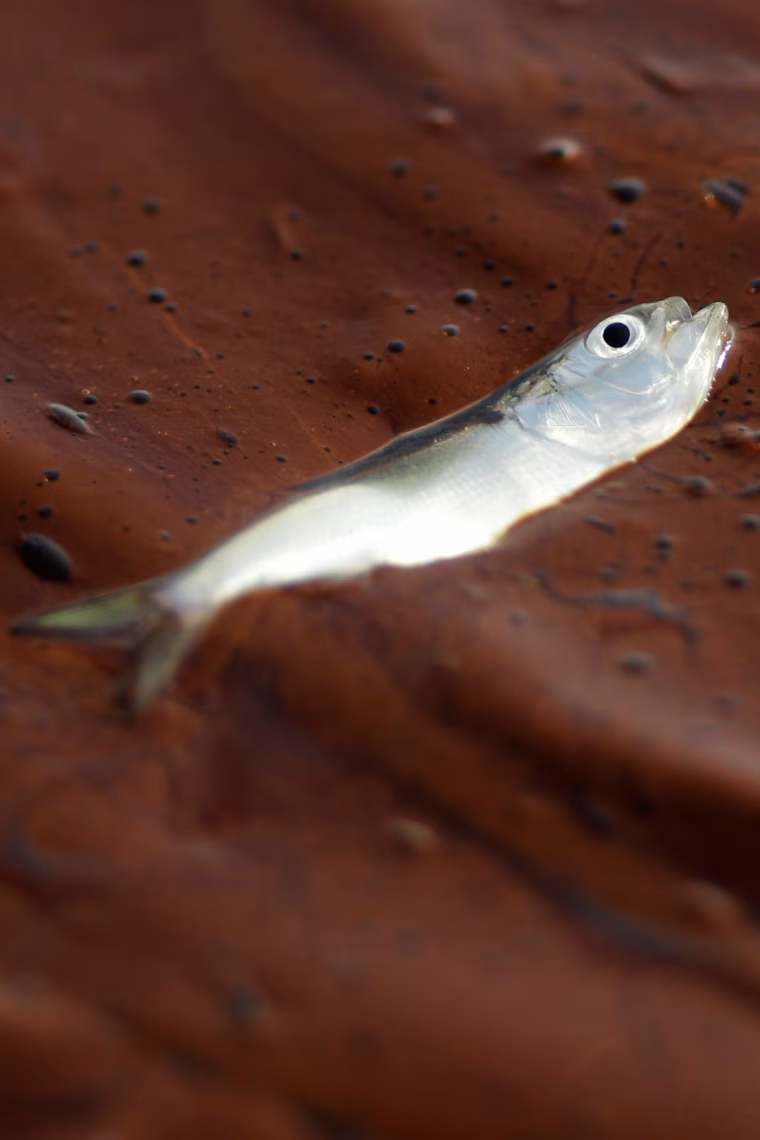 A dead fish floats on a pool of oil off Louisiana in June 2010.Charlie Riedel / APDocumenting the decline
Sutton’s team documented the population declines with three different lines of evidence: what they caught in the nets, what their acoustic sonar found and genetic studies showing the species losing genetic diversity because of inbreeding.
A lot of marine life died instantly after the explosion, which killed 11 workers, and from nearly five months of leaking oil and gas. Those pollutants got stored in the eggs of survivors and subsequent generations of critters got more compromised and weaker, Sutton said.
BP spokesperson Paul Takahashi said the accident “forever changed” the company: “We have made many changes intended to help prevent an event like this from ever happening again.”
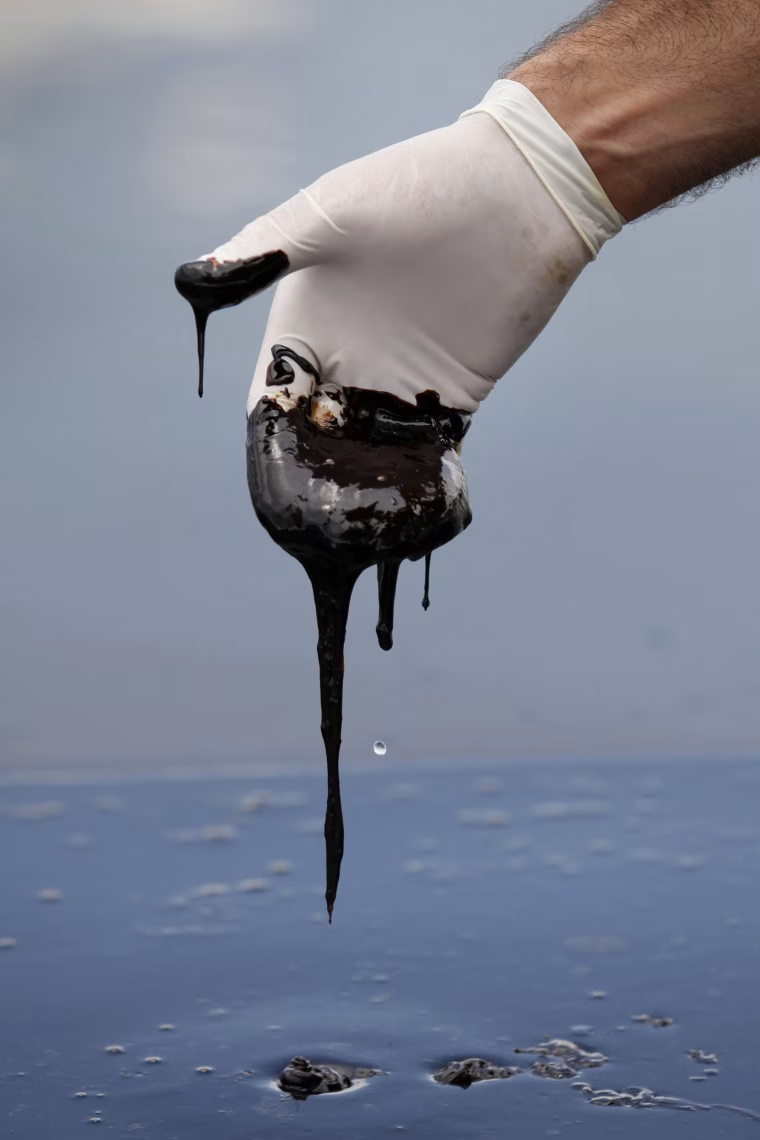 The explosion killed 11 workers. A lot of marine life died instantly and from leaking oil in subsequent months. Gerald Herbert / AP
Both the oil and the dispersants used to clean the spill hurt fish, but in different ways, said study co-author Isabel Romero, a chemical oceanographer at the University of South Carolina. Oil is more toxic and an overall threat, but the dispersant breaks the oil into smaller droplets, increasing the exposure of animals that live in the deeper water column, she said.
Dispersants caused many problems, and new studies show that in future accidents, it would be better to avoid those chemicals and instead add agents that increase oil-munching microbes, said former National Science Foundation Director Rita Colwell, a University of Maryland environmental microbiologist who headed a 10-year, $500 million BP-funded program to study spill effects.
Sutton said his team couldn’t prove an exact causal link to the BP oil spill, but by eliminating the other possibilities and looking at the timing, it’s logically clear that the spill caused the problem.
The krill population dropped 72%. Lanternfish — odd fish with blue-green lights embedded over their bodies — are a third of what they used to be, Sutton said. The stunning but scary dragonfish — with sharp teeth, light organs and a lure attached to its head — also had big losses, he said.
“These are foundational species,” Sutton said. “They’re the things most things eat. So it’s no wonder that we had wholesale changes across the community.”