
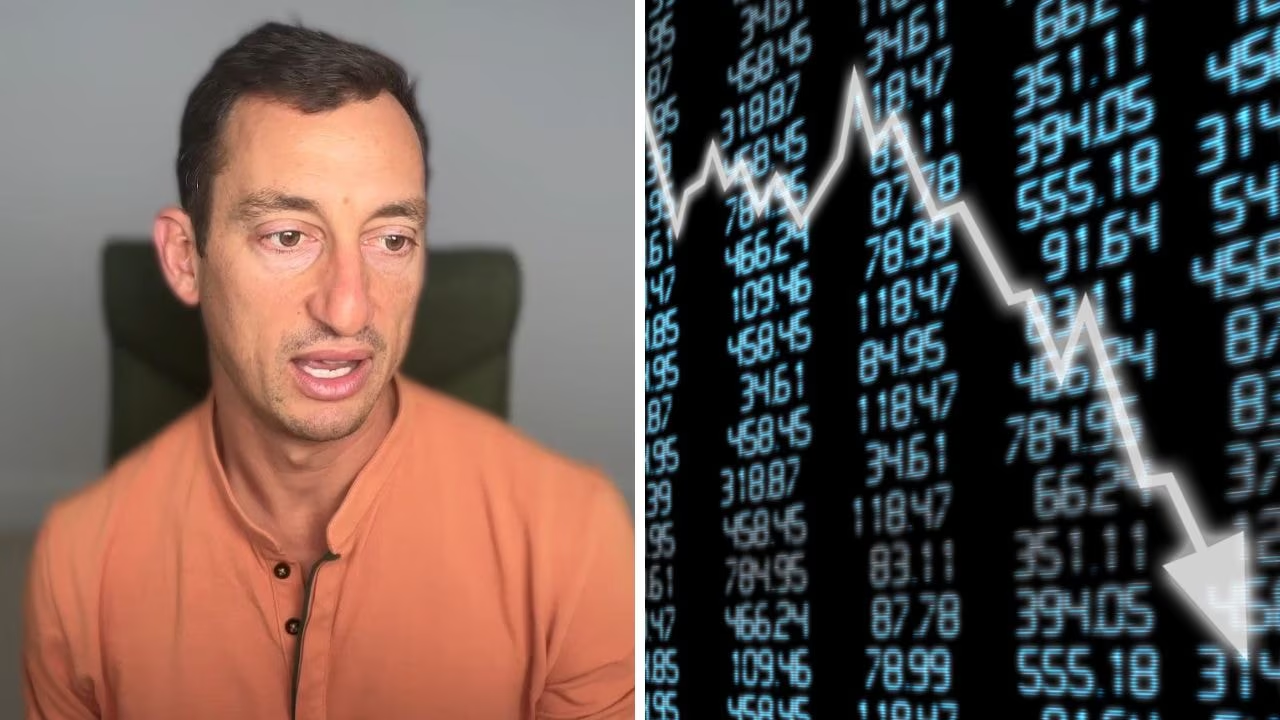
There is a classic piece of Wall Street advice used to describe buying an asset too early into a correction, Aussie investor Jason Pizzino tells news.com.au.
It’s called “catching a falling knife”, and he’s warning first homebuyers not to be tempted, saying it could wipe out their deposit and take an “entire generation” to recover from.
“It’s okay to buy the dip in a macro long term bull market,” Mr Pizzino, who runs TIA Investor, explains.
“But if you start to see signs that the market’s now turned for a longer period of time — and that can be a bit difficult if you’re new to the market — you don’t want to be buying the dip.
“The knife’s falling and you try to catch it, and it slices your hand. That’s buying it on the way down.”
Several banks and economists are now predicting a nationwide downturn in house prices of about 10 per cent, which “doesn’t seem so bad”.
But Mr Pizzino says localised drops could be far worse.
“You don’t have to be worried about a 10 per cent correction, really. But when you look at it from an individual basis regarding cities, suburbs and types of properties within those suburbs, then you’re looking more like 15 to 20 per cent,” he says.
“That is generally a lot of money. If you lose 20 per cent, that’s basically your entire deposit. If it’s a $1 million property, that’s $200,000.
“I don’t think people really know what losing $200,000 is like. It could be an entire generation of 20 years: 10 years to build the money, 10 years to lose the money; and then the time to get back to break even, which basically puts you in a really bad position for the next stage of your life.”
Some experts have said they expect a national peak-to-trough correction of up to 15 per cent, exceeding even HSBC’s forecast of a 13 per cent decline.
If realised, a 15 per cent drop would be the worst fall in nominal house prices that Australia has seen in the post-war period.
To spot the actual bottom of the market and avoid jumping in too early, Mr Pizzino advises buyers to monitor key metrics such as “days on the market”.
A genuine market recovery is signalled by available stock drying up as properties are snapped up at a faster pace, he says.
But current data tells a different story.
Pointing to recent SQM Research, Mr Pizzino notes that new property listings are currently outpacing sales, creating a bottleneck of unsold homes.
An increasing number of properties are languishing on the market for six months or longer.
Because this backlog of housing stock is no longer clearing out at the rapid pace seen in recent years, it will take time to absorb the excess stock.
Until that build-up is cleared, he says, the next real estate growth cycle cannot begin.
Why waiting for the ‘bottom’ could backfire
Metropole founder Michael Yardney agrees that house prices have further to drop, but says it’s difficult to “pick the exact bottom” and he’s more concerned about buyers overstretching themselves than buying into a falling market.
“My advice is to buy only if you have enough financial buffers to cope with one more interest rate rise, and the nerve to tune out the negative stories in the media over the next six to 12 months,” he says.
“If you’re buying a home to live in for the long term, a few per cent either side of the bottom won’t matter much in 10 years’ time, but being forced to sell during a downturn will.”
Mr Yardney expects buyer confidence to return in the second quarter of 2027, “once people feel interest rates won’t rise again and they start reading in the media that prices are rising”.
“However, by then the market will already have bottomed, because there’s always a lag between what the media reports and what’s actually happening on the ground,” he says.
“That’s why trying to pick the exact bottom is so difficult, and why those who wait for the headlines to turn positive usually end up paying a higher price.”
Like Mr Pizzino, Mr Yardney says he’s watching the data, placing an emphasis on auction clearance rates, the level of vendor discounting and the number of people attending inspections.
“I have no doubt today’s buyer’s market will look cheap in five years’ time, just as it did after the slump at the start of Covid, the 2017-18 downturn and the Global Financial Crisis in 2008.”