
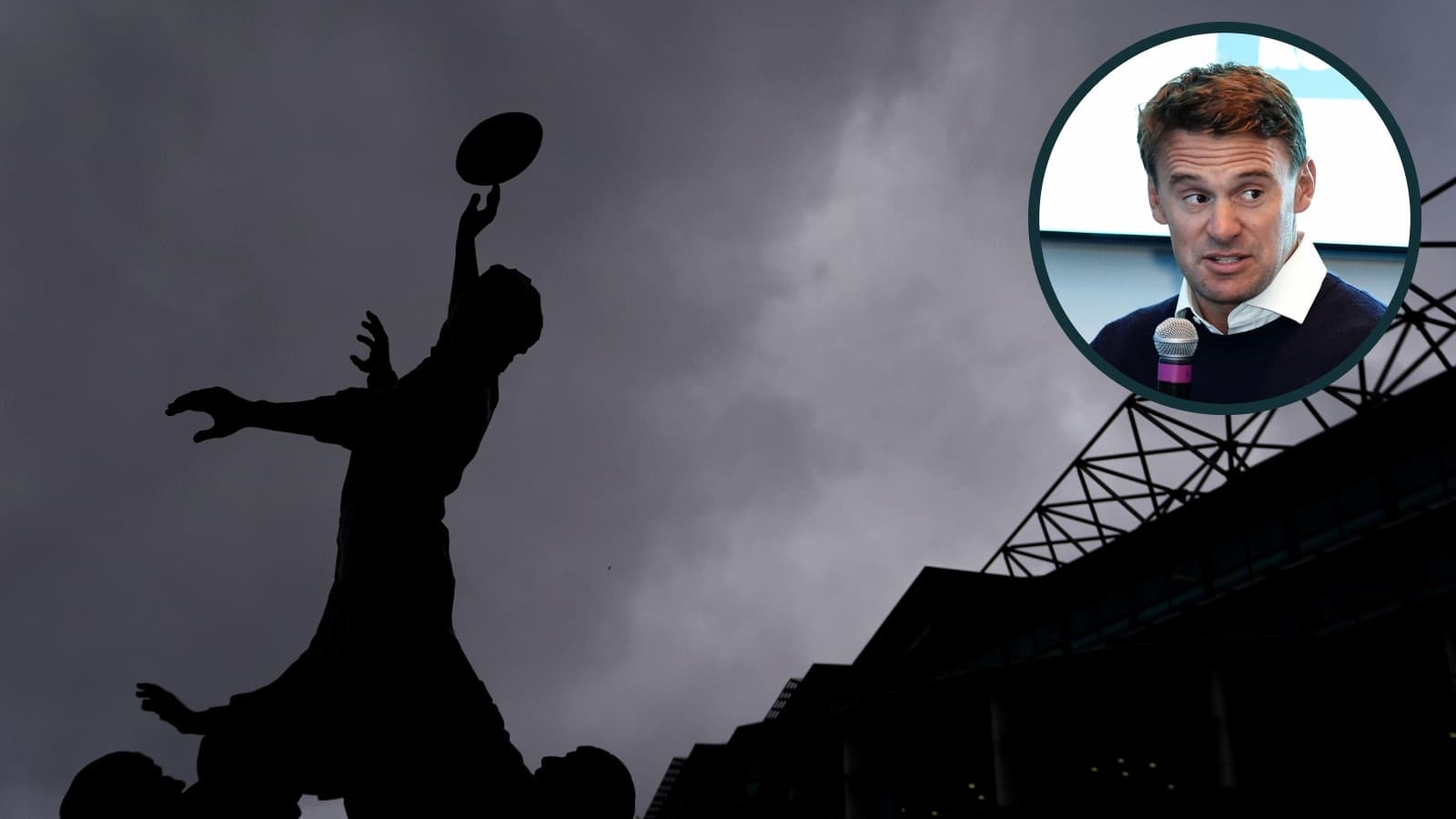
Project Chariot, a secret 2018 plan to fold the RFU and the Premiership clubs into one company running the professional game, surfaced in the Telegraph this morning, and the man who wrote it for Twickenham now runs the clubs.
Simon Massie-Taylor runs Premiership Rugby these days, but in the autumn of 2018 he was the RFU’s chief commercial officer, sat in Twickenham with a team from Lazard and a brief to solve the one problem English rugby has carried around since the game went open in 1995: the clubs own the players, the Union owns the money, and the two have been arguing over the same weekends ever since.
It was a grim autumn, mind you. The Union had just posted a loss of more than £30m and made 54 people redundant, the once-in-a-generation grassroots fund promised out of the 2015 World Cup profits had quietly stopped paying out, and Steve Brown, the chief executive, was counting the weeks. Down the road at the clubs, 12 of them in those days, it was no better; they’d turned down £275m from CVC for 51 per cent of the league because it undervalued them and handed over control, whilst still needing the money rather badly.
What Massie-Taylor and Lazard produced, as Gavin Mairs reports in the Telegraph this morning, was a paper called Project Chariot, and it’s about as radical a document as English rugby has seen since 1995: a joint venture between the RFU and the Prem clubs, a new company to run the whole professional game, and close to £500m, reportedly from a bank, to pay for it.
What Chariot would have done
In simple terms, it was a buyout with the Union keeping the keys. The clubs would’ve taken a guaranteed up-front payment in place of the annual RFU cheque, and in return handed over the thing they’ve guarded since 1995, the right to run a league on a calendar of their own choosing; the Union kept the community game under its own roof with its funding protected, its seat at World Rugby and its say over Twickenham. With a bank funding the new company neither side needed private equity, and in the autumn of 2018 CVC was courting both of them.
The rugby benefits, as the paper set them out, follow from that. One employer means full central contracts for the England squad rather than the hybrid version eventually agreed in 2024, costed at several million pounds in savings, and fewer league games for the top players so they peak for the Six Nations and the Champions Cup knockouts. One owner of the fixtures means a shorter league that stops colliding with the Test windows and a single broadcast package of Test and Prem rugby, which the paper reckoned would fetch more than the two sold separately. It also claimed a brake on wage inflation, and that’s the one I’d argue with, because a single English employer still has to outbid Toulouse and Toulon for the same players. The rest of it, in real terms, is the Irish and New Zealand model, with the governing body sat above a professional company it half owns.
Why it died in 2018
The board at Twickenham backed it and the paper went across to Ian Ritchie, who’d left the RFU as chief executive in 2017 and turned up as chairman of the clubs in the time it takes most men to clear their desk. Small world, English rugby. Then the losses did for Brown in November, the momentum went out of the door with him, and the clubs took CVC’s revised £200m for 27 per cent instead; by 2021 the Union and its Six Nations partners had sold 14 per cent of the championship to the same firm for £365m. So the only joint venture anybody actually signed in the end was with CVC.
Why it’s back
Mairs reports that the blueprint was looked at hard again before the RFU and PRL signed the Professional Game Partnership in 2024, and once you know that, the PGP reads like a first instalment: eight years, £33m a season from the Union to the clubs for the first four of them and 26 per cent of the Union’s profit before rugby investment for the second four, enhanced contracts for up to 25 England players and a professional rugby board to run the lot, which is most of a joint venture without the shared ownership.
Want more from Planet Rugby? Add us as a preferred source on Google to your favourites list for world-class coverage you can trust.
Since then the clubs have moved a good way towards it on their own. The framework the RFU Council approved in February replaced automatic promotion and relegation with managed expansion and demotion from this season, targets up to 12 clubs by 2029-30 subject to readiness assessments, tapers the Union’s payments as commercial income grows, and asks every club from 2030 to run a women’s team or fund a regional women’s plan and to guarantee a level of grassroots investment. The people have changed too: Massie-Taylor wrote Chariot for Twickenham and now runs the clubs, so the man who knows exactly what the Union would accept is sat across the table from it, and the RFU is likely to have a new chief executive once next year’s World Cup is done. The Telegraph’s reading is that the merger comes back on the table once Australia is over. And it may very well be a volte face from Massie-Taylor who could find himself on the other side of the table once again, as he’s surely in the running to succeed Sweeney, in rugby’s most complex game of musical chairs.
The questions it doesn’t answer
Let’s be honest, the rugby case for alignment makes itself; Ireland and New Zealand are the proof points and England, for 30 years, have been the evidence for the prosecution. But a merger is a transaction, its terms decide who comes out ahead, and three questions underneath this one have never been answered in public.
Does it address culture? In Dublin the IRFU employs the provincial coaches and academy managers and expects the provinces to produce players for the way Ireland want to play; in New Zealand the whole pathway, from the schoolboy in Whangarei to the All Black, answers to the same people; Toulouse manage it inside one club, with an academy that has been producing their own players for a generation. Each of them has somebody whose job it is. Chariot, from what’s been reported, bolted the Prem to the England team at the top and left everything beneath it where it was, academies with the clubs and community clubs with the Union, and the question it leaves open is who, in the merged company, would be responsible for coaching development and for lining the academies up with the way England want to play. Nothing Mairs reports from the paper names anybody.
Does it address participation? The new company was designed to run the professional game and nothing else, with the community side left under the Union’s roof and its funding “protected”, a word that has done a great deal of work at Twickenham over the years. Nothing reported from the 2018 paper says whether a penny of the £500m goes past the professional clubs to the best part of 2,000 beneath them that actually produce the players, and if the answer is no, then Chariot refinances a dozen businesses and the Twickenham ticket office whilst the clubs that feed them keep the budget they had before.
And whom does it actually benefit? Start with the money, because somebody is expecting a return on it. The Telegraph calls the £500m an investment and doesn’t say whether that means a loan or a stake, and the difference matters: a lender wants its capital back with interest on a schedule, a shareholder wants a dividend and a bigger company to sell on. Either way the only income to pay them from is the broadcast, ticket and sponsorship money the game runs on now, so the real question is how much of that goes to the financier each year and whether the growth the paper promised, from the combined broadcast package and the shorter league, would cover it. Swapping the Union’s annual cheque for a lump sum puts a financier at the table for years, and the reported paper doesn’t say what that costs the rugby. Beyond the bank, the owners get the lump sum and a wage cap they can finally police; the Union gets its players back and a bigger broadcast number; and private equity, which Chariot was written to keep out, now holds 27 per cent of the league and 14 per cent of the Six Nations through Global Sport Group, the fund CVC’s rugby money sits in, so any new company has to accommodate it, and what its agreement would cost depends on rights nobody outside the two boardrooms has seen. The 25 contracted England players get fewer games and better management, which is right; what a shorter season does to the other 400 or so professionals in the league, and to the price of a season ticket at Kingsholm, nobody has answered either.
For 30 years the Union and the clubs have batted like two men calling for the same single and finishing at the same end, and the one run out has usually been wearing an England shirt. Chariot, or whatever it’s called next time, would at least put them in the same dressing room. What that company would owe the best part of 2,000 clubs beneath it is the number nobody has written down: the February framework promised a guaranteed level of grassroots investment and attached no figure to it, and the 2018 paper, from what’s been reported, never got as far as the actual question.
READ MORE: England prop on how a chance encounter with Ox Nche set him on the road to international rugby