
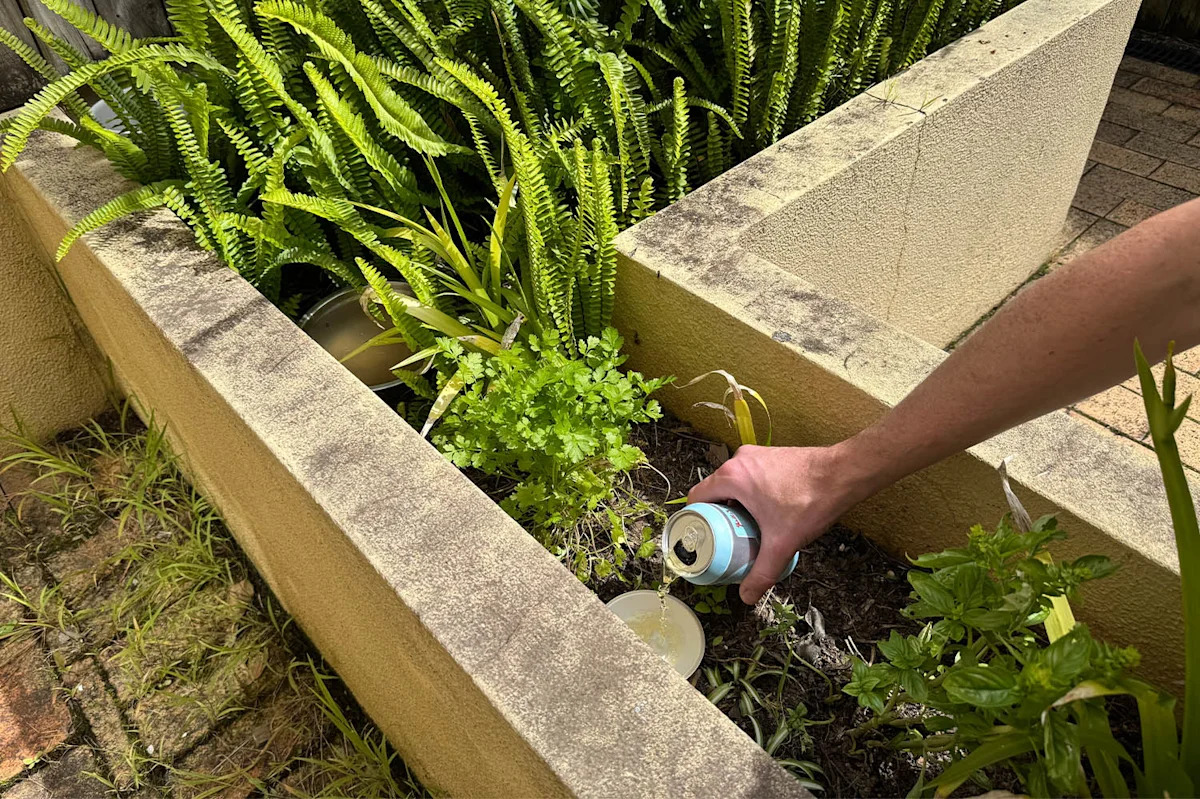
Australians are pouring beer into their gardens to stop unwanted pests from invading their garden beds and eating their precious plants.
With spring in full swing, many are turning to makeshift solutions to keep pests at bay, and one unique tactic is on the rise again.
It simply involves pouring beer into a dish and setting it up inside your house or in your backyard.
As the weather warms across the country, there’s a burst of life that‘s celebrated by millions, but it also signals a rise in unwanted pests in and around the home.
Green-thumbed Aussies hoping to plant some flowers or even herbs and veggies in the garden may find themselves with more hungry mouths, including slugs.
Do you have a clever gardening hack? Contact newsroomau@yahoonews.com

Irregular holes chewed in the leaves, flowers, herbs, or fruit, along with shiny, silvery slime trails left behind, are an indication that slugs have made a residence in your backyard.
To get rid of them, one pest controller told Yahoo News that beer is a good slug catcher and killer.
“They are attracted to the yeast in the beer and drown,” Jhy Carroll explained.
“It’s a humane way to kill them, as the other alternative is to use poisons on them.”
RELATED:
Are slugs native or invasive in Australia?
Whether slugs are native or invasive to Australia depends, according to Carroll.
“Most slugs do eat plants, roots, and leaves, but not all of them are pests,” he explained.
While there are several native slug species, including the incredibly cool and extremely rare pink slug, which is native to NSW, most of those found around our homes are introduced.

The yeast in beer attracts slugs. Source: Yahoo News Australia
What else can I do to stop slugs in my backyard?
Carroll added that when you water your garden can also help reduce the number of slugs.
“Watering plants and gardens in the mornings will help reduce numbers as the ground will dry out before the slugs are active at night when they are feeding and moving around,” he explained.
He added that while the “beer trick” will “work for most backyards”, if the place is riddled, it may be time to use chemicals or call in help from experts.
You can also follow us on Facebook, Instagram, TikTok, X and YouTube.