
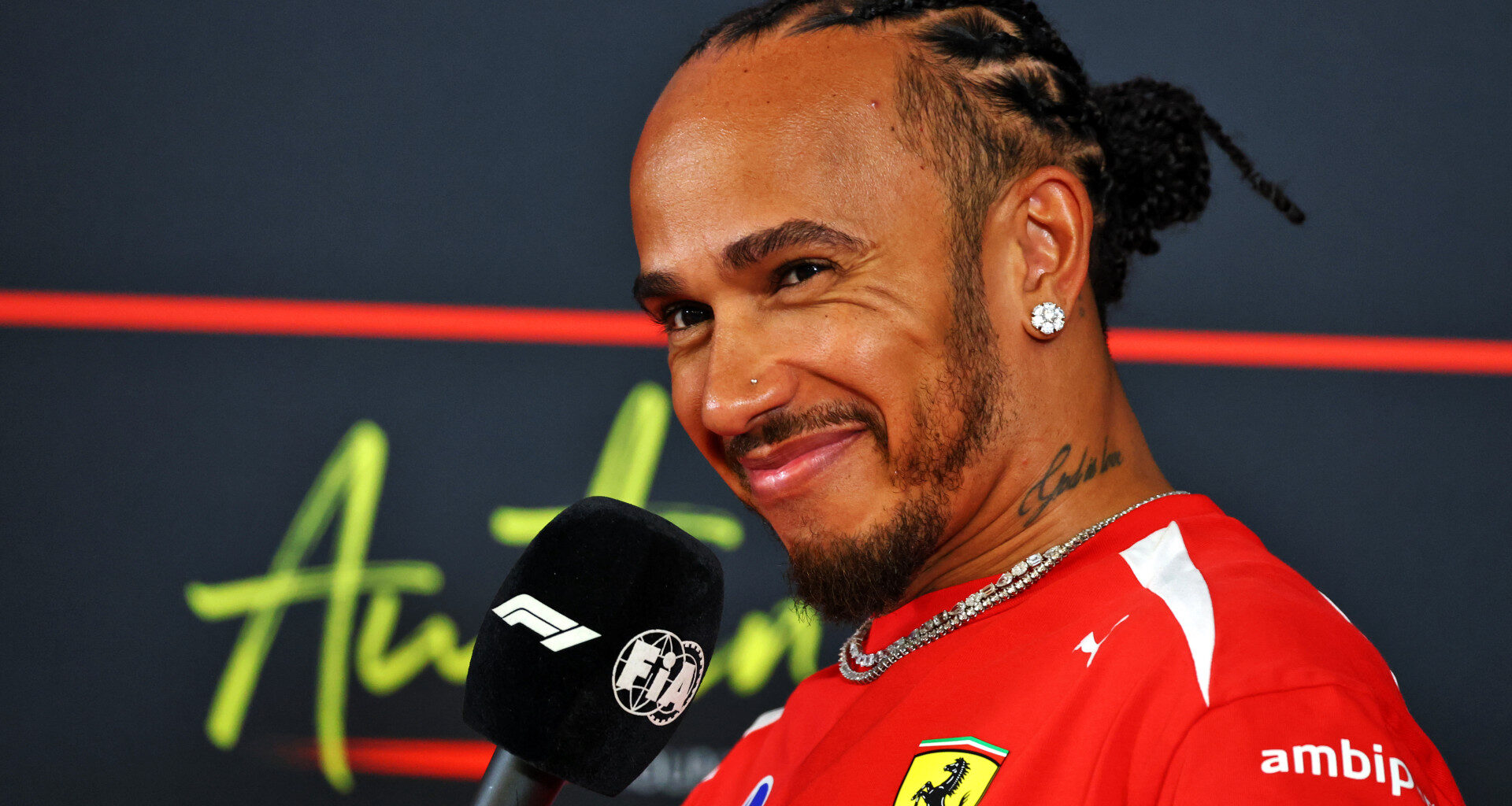
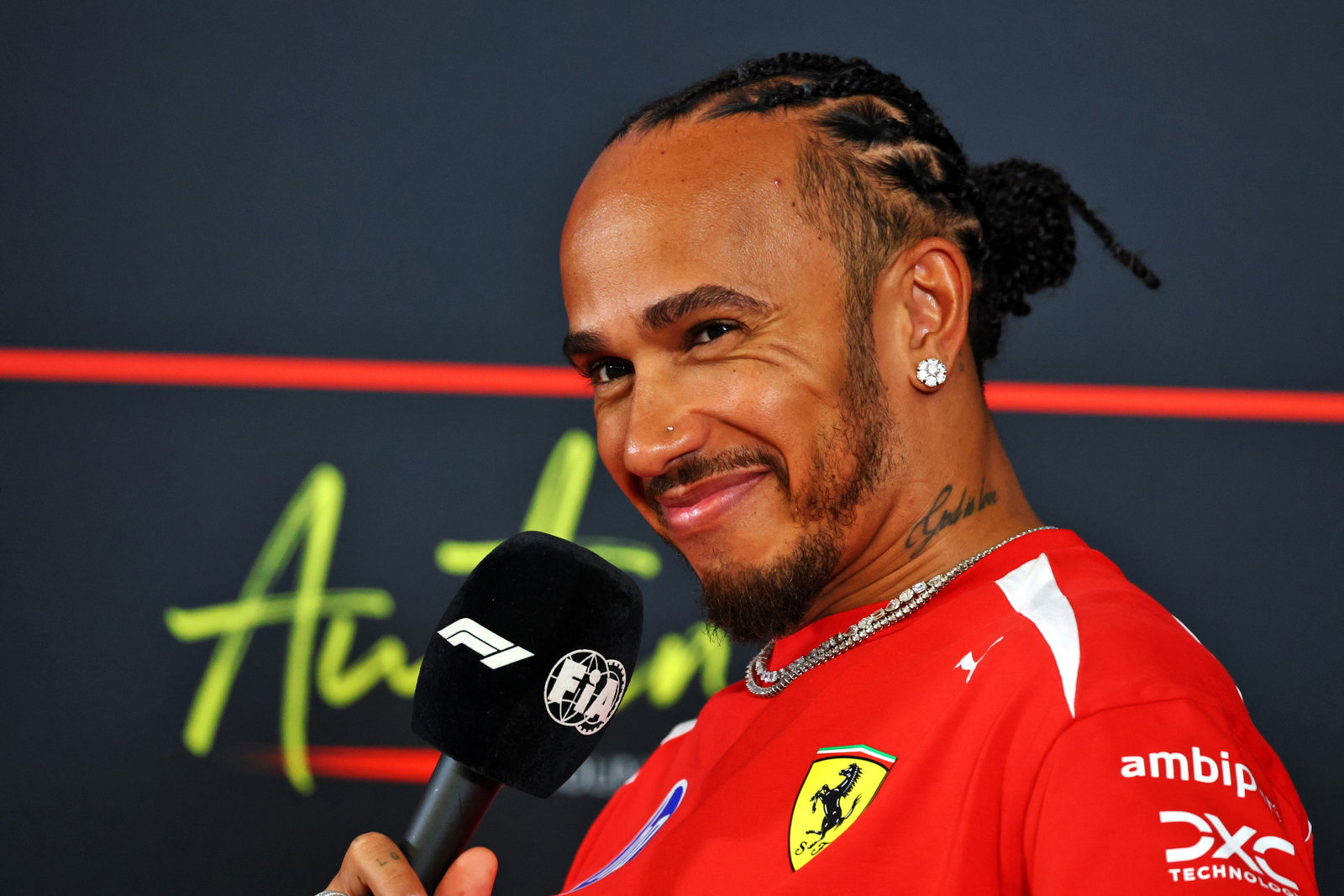
 Lewis Hamilton wants to race at the first African GP in the 2030s. Image: XPB Images
The seven-time world champion has spent years calling for a grand prix on the continent and had previously made it a personal goal to race there before retiring.
That ambition now has a possible timeline following the recent announcement of a 10-year agreement for an African Grand Prix in Rwanda, with the first event planned for the early 2030s.
Hamilton is currently 41 and would be 45 if the race begins in 2030, the earliest possible year. A later debut would require him to continue racing even further into his 40s.
Speaking in Austin ahead of the United States Grand Prix, the Ferrari driver joked that the agreement had given him another reason to prolong his career.
“I’m now forced to have to stay a lot longer because we have a race in Africa and that’s been my dream, to be able to race in Africa,” he said.
His comments came during a press conference alongside Mercedes championship leader Kimi Antonelli, with Hamilton initially discussing his hopes of competing against the Italian for longer.
Antonelli also encouraged the 41-year-old to make it to Rwanda’s inaugural race.
“You got to do at least the first,” Antonelli said.
Despite his enthusiasm, Hamilton made clear that continuing to deliver competitive results would remain important in deciding how long he stays in F1.
“I have to keep fighting to try and stay fit if I can, if I can still punch out good results over the next year, we’ll keep it going,” he said.
New details emerge about ‘roller coaster’ African Grand Prix track
A place on the grid in 2030 would take Hamilton into a 24th consecutive Formula 1 season, having made his debut in 2007.
He has not, however, committed to racing until Rwanda’s first grand prix, for which an exact date has yet to be announced.
Earlier this year, before the deal was confirmed, Hamilton had already linked his retirement plans to the championship’s return to Africa.
“I don’t want to leave the sport without having a grand prix there, without getting to race there,” he said at the time.
For Hamilton, the significance of the agreement extends beyond the prospect of prolonging his own driving career.
“I’ve been advocating for a race in Africa for many, many, many years, and countless meetings with the stakeholders, so many meetings with [CEO of F1] Stefano [Domenicali] at his office in London, but also race weekends, countless calls, what’s happening, where are we going, who are you meeting with, many meetings with different presidents from different countries,” he explained.
“Lots of phone calls with different presidents from different countries within Africa. I think, for me, it’s a place that deserves to have a Grand Prix. It’s more than just about one country, it’s about the continent itself, and there’s so many beautiful countries within it, and the people are so lovely.
“The culture is so rich, and I think it’s important that we get to show that to the world, and we get to do that with our sport. We get to go to all these different countries, and people see some of these countries they didn’t really know too much about, and all of a sudden it becomes, it’s on the screen, and kids are talking about it, they go to school talking about it, and so I’m really, really hopeful for that grand prix.”
Rwanda plans to build a new circuit in Bugesera, south of the capital Kigali, although the project’s construction requirements mean the championship has not yet settled on a debut season.
Africa has been absent from the Formula 1 calendar since the 1993 South African Grand Prix at Kyalami, won by Alain Prost.