
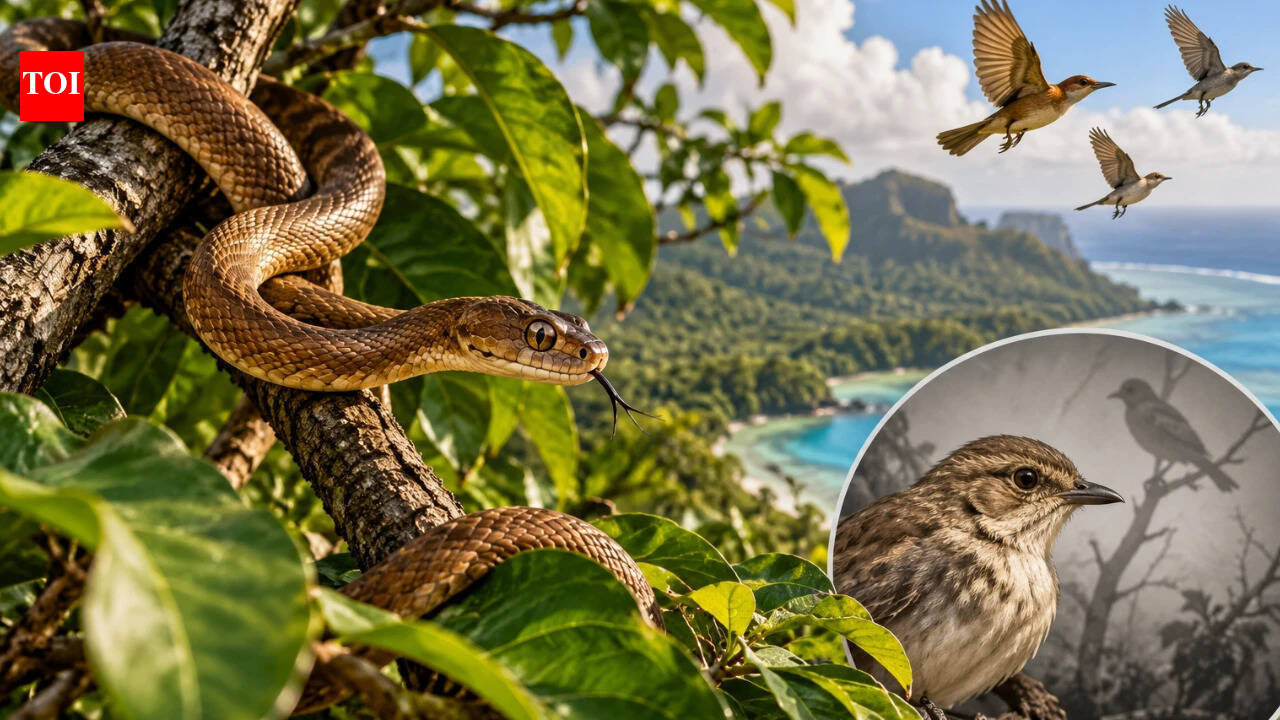
 Representative Image of brown tree snakes and their devastating impact on Guam’s native bird populations (AI-generated image) Scientists in the United States are developing a rapid DNA test to detect invasive brown tree snakes before they spread from Guam to other Pacific islands. According to a US Geological Survey (USGS) project update published on August 4, 2026, the research aims to produce a field-ready test that can identify traces of the snake’s DNA within minutes, without specialised equipment or laboratory training. The work addresses a longstanding biosecurity problem on Guam, where the invasive snake has suppressed or eliminated most native forest bird populations and contributed to frequent power outages. Because the island is a major transportation and military hub in the western Pacific, snakes could be accidentally transported to places such as Hawaii and the Commonwealth of the Northern Mariana Islands. The proposed test is intended to support inspections and help agencies detect the species at potential entry points.
How the brown tree snake environmental DNA test works
Environmental DNA, or eDNA, refers to genetic material that organisms leave behind in their surroundings. Scientists can collect it by swabbing surfaces where an animal may have been, potentially detecting its presence without having to see or capture it. USGS researchers have developed methods to collect terrestrial eDNA and a laboratory-based polymerase chain reaction (PCR) assay to detect brown tree snake DNA. However, the agency’s August 2026 project update describes the delays associated with laboratory testing, which can take days to weeks. The project aims to reduce that waiting time by developing a point-of-use test that can be operated in the field.The researchers are combining two molecular technologies: loop-mediated isothermal amplification (LAMP) and CRISPR-Cas. LAMP amplifies selected DNA sequences at a constant temperature, while CRISPR-Cas technology can identify a matching genetic target. The team aims to combine the processes in a single reaction so that DNA amplification and target detection can take place together. The approach uses an enhanced CRISPR-associated enzyme called eBrCas12b. According to USGS, the enzyme can function at the elevated temperatures required for LAMP, allowing both processes to operate in the same reaction tube. Combining them could simplify sample processing and reduce the risk of contamination associated with handling samples across separate steps. The test is designed to produce a detectable signal when brown tree snake DNA is present. Researchers from the University of Otago in New Zealand, including Benjamín Durán Vinet and Robert Fagerlund, are contributing to the development of the detection system. The project’s stated goal is to make the test suitable for rapid use outside a conventional laboratory.
Developing a field kit for Hawaii and the Northern Mariana Islands
The development process begins with identifying suitable sections of the snake’s mitochondrial DNA. Researchers use computer-based analyses to find candidate sequences that can be amplified by LAMP and recognised by the CRISPR enzyme. They then assess candidate combinations for speed and sensitivity before selecting the most promising version of the test. The selected assay is intended to be freeze-dried to improve its stability for field use. Researchers are also testing rapid DNA extraction methods on samples collected from terrestrial surfaces, since the complete process must work from the initial swab through to the final result.Field validation is a key stage of the project. According to the USGS project description, researchers plan to assess the test in locations where brown tree snakes are known to occur and in areas where they are absent. The work will also examine the probability of detecting the snake’s DNA and how the test could fit into existing inspection and monitoring procedures. The project aims to develop an on-demand kit for agencies involved in border inspections and invasive-species management, including US Customs and Border Protection. Potential applications include swabbing shipping containers and military equipment during regional exercises. The Hawaii Department of Agriculture and the Department of the Navy are among the organisations that could use the technology. Other potential users include the National Park Service and Guam’s Division of Aquatic and Wildlife Resources. The test could help these agencies check for signs of brown tree snakes following control or eradication work.
Why Guam’s brown tree snake problem matters across the Pacific
Brown tree snakes (Boiga irregularis) were accidentally introduced to Guam after the Second World War. Their population grew substantially, and the species has suppressed or contributed to the loss of most native forest bird populations on the island. The snakes are also associated with repeated power outages when they come into contact with electrical infrastructure. Their bites pose risks to people as well. The threat extends beyond Guam because the island is an important transportation hub for the western Pacific. Snakes could travel accidentally in cargo or equipment, creating a risk of introduction to islands that do not currently have established populations. Hawaii and the Commonwealth of the Northern Mariana Islands are particular concerns for regional biosecurity efforts.The rapid-test research builds on an earlier USGS project described in an April 2025 update. That initiative involved four USGS science centres and also received funding from the Department of the Navy’s Joint Region Marianas. The August 2026 project page describes the combined LAMP and CRISPR-Cas approach in greater detail, including its development for field use and potential applications in border inspections. The work is funded by the USGS Ecosystems Mission Area and the Navy’s Joint Region Marianas. By developing a test that can be used closer to the point of inspection, the researchers aim to give agencies a practical tool for detecting brown tree snake DNA as goods and equipment move between islands.