
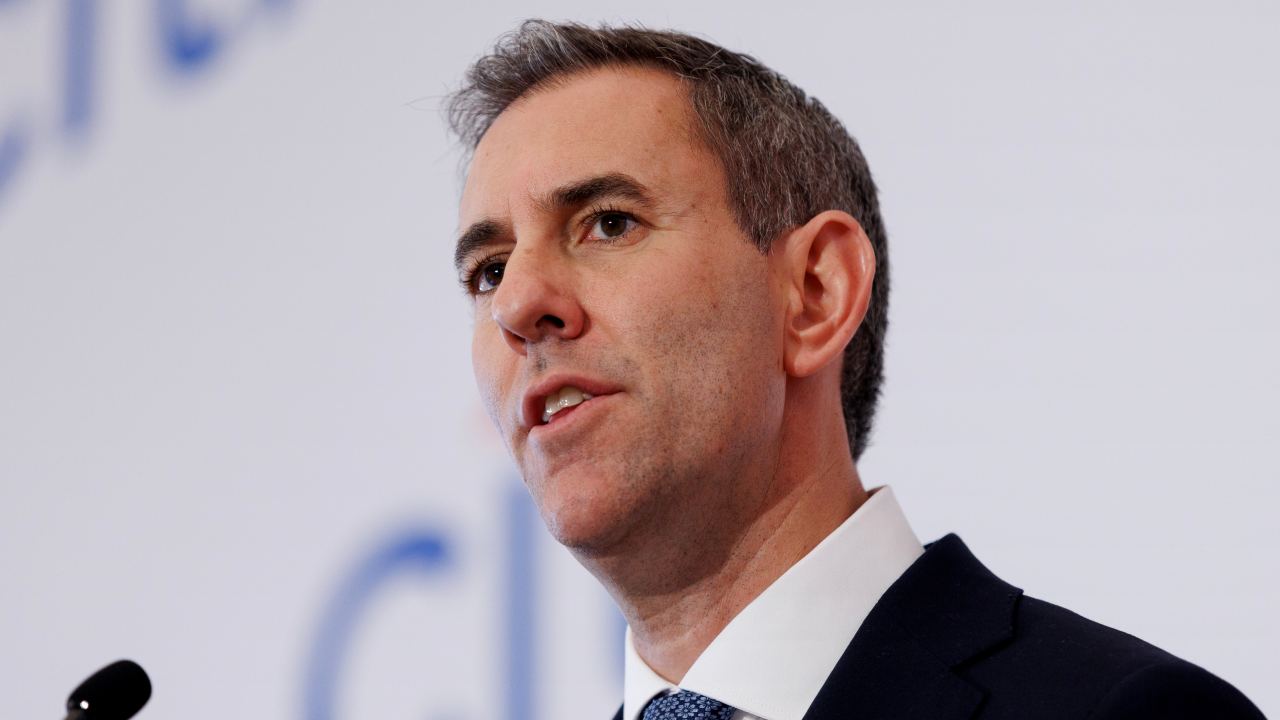
Treasurer Jim Chalmers has warned Australia faces a higher unemployment and slower growth as higher inflation and interest rates eat away at living standards.
Raging cost of living pressures stemming from consistently elevated inflation have depleted household budgets.
This comes as underlying inflation has remained mostly outside the Reserve Bank of Australia’s 2-3 per cent target band for about five years and is expected to stay elevated going forward.
Mr Chalmers told the Citi A50 Economic Forum that Treasury was examining these pressures as it revises its numbers ahead of the December budget update.
“Treasury is in the process of revising all the numbers for the mid-year update,” he said.
“Higher interest rates and higher inflation are likely to mean softer growth and slightly higher unemployment.”
He has also pointed the finger at international conflicts rattling both Australia’s and the global economy.
“We’re not immune from the consequences of two wars, both impacting almost every economy in one way or another, posing risks to global growth, pushing up global inflation, and pushing up borrowing costs,” Mr Chalmers said.
Australia already struggles with weak growth at about 2.1 per cent that has only slowed over the past year.
It comes as productivity, which measures GDP against the number of hours worked, went backwards in the year to the June quarter.
Productivity is crucial to tackling inflation while a nation’s economy grows.
Meanwhile, the unemployment rate has gradually lifted to 4.7 per cent, its highest point in five years.
Australians were also warned the economy could continue to sink when RBA deputy governor Andrew Hauser said the nation’s inflation outlook is “materially worse” than projected.
Mr Hauser stopped short of pre-committing to another move, but noted that the same three upside risks the bank identified in August had all intensified.
The first was the Middle East crisis, which has pushed oil prices about a third higher than the RBA had assumed in its August forecasts.
The second was the accelerating artificial intelligence and technology boom, which he said was feeding through into prices and driving a major data centre investment surge in Australia.
The third was persistent domestic capacity pressure, with weak productivity and sticky services inflation suggesting the economy may be running hotter than previously thought.
“By September, we judged that those three risks had crystallised,” Mr Hauser said, noting the board had unanimously backed a rate rise at that meeting and had made clear it stood ready to do more if required.
He said the concern was no longer just about current inflation readings, but about whether expectations were starting to drift away from the RBA’s 2-3 per cent target.
Business liaisons and surveys now suggest a growing share of firms are beginning to think inflation of 3-3.5 per cent may be the “new normal”.
“That is the central banker’s nightmare,” Mr Hauser said.
“We can’t allow expectations to shift away from the target.”