
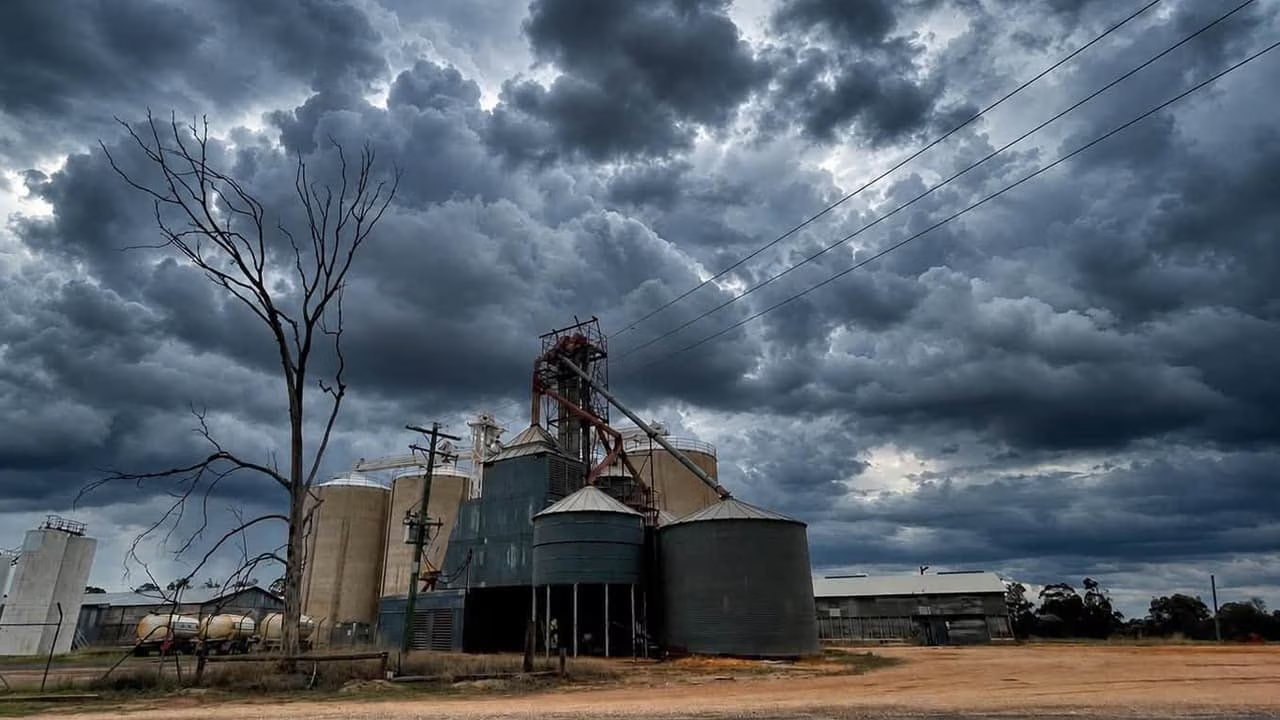
Western towns of Central Queensland recorded some whooping rainfall yesterday, leading to the Theresa Creek Dam near Clermont overflowing, and a flood warning for the Bruce Highway at one point.
The Dingo Mount Flora Road, north of Dingo, is currently closed due to floodwater, according to the QLD Traffic website, along with the Blackdown Tablelands Road, Marian Eton Road at Eton, and Clermont Rubyvale Road at Tomahawk Creek and Theresa Creek.
Blackdown Tablelands recorded a whopping 128.8mm, according to the Bureau of Meteorology website, while Peakvale Station recorded 81.6mm and Kulumur Range recorded 87mm.
The Marlborough, St Lawrence and Carmilla areas recorded some mighty rainfall, with Marlborough recording 84mm, St Lawrence recording 81.8mm and Carmilla 68.8.
A ‘floodwater on road’ warning was issued for the Bruce Highway at Kuttabul about 3pm after a large storm swept across the town.
Rockhampton, Mackay and Gladstone missed out on the large rainfall records, each recording under 20mm of rain – Rockhampton Airport only recording two millimetres of rain.
Yeppoon recorded 14mm and Gladstone Airport recorded 17mm.
Clermont recorded 30.6mm of rainfall yesterday, while Moranbah recorded 43.8mm, Emerald 23.2mm and Capella 26mm.
The Theresa Creek Dam has overflowed, and water levels are expected to continue rising, prompting emergency flood warnings from the Isaac Regional Council.
Residents of the 3,000-person town have faced tap water issues since October 12.
According to the local council, the problem stems from recent pump failures at Theresa Creek Dam and years of sediment build-up in the raw water network, which led to elevated levels of manganese — a hard, silvery metal.
It’s the most rain the region has seen since March.
In January 2026, ex-Tropical Cyclone Koji dumped more than 200mm of rain on Clermont within 24 hours, its wettest day in 109 years.
While the flooding caused severe damage, the outcome was far less tragic than the town’s history.
In December 1916, Clermont suffered Australia’s deadliest flood when more than 500mm of rain fell overnight, killing more than 60 people and sweeping away entire buildings.
Following the 1916 disaster, authorities relocated the town centre, businesses, and homes to higher ground.
This strategic policy, alongside modern building codes and upgraded infrastructure, prevented significant loss of life in the 2026 floods.