
It seems Major League Baseball should learn from the KBO League. Consecutive days of check-swing controversies in the World Series left an unpleasant aftertaste.
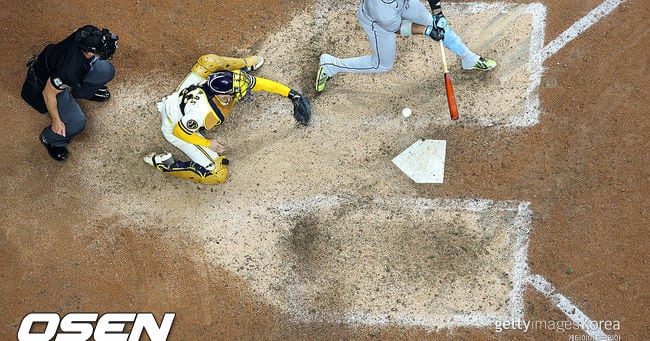
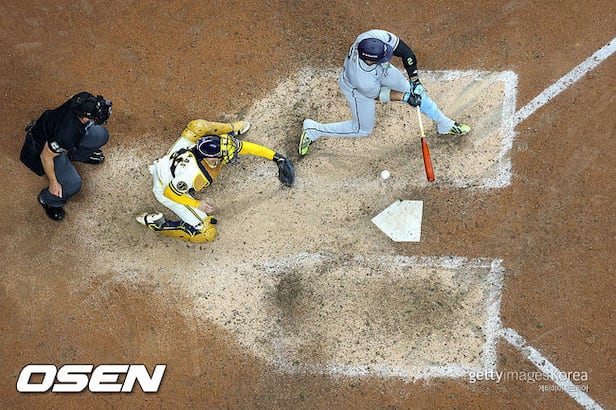
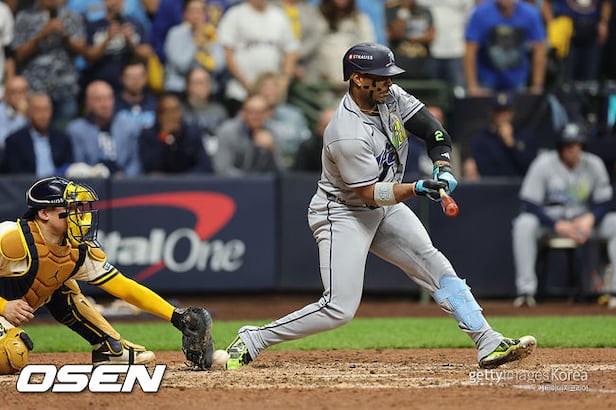
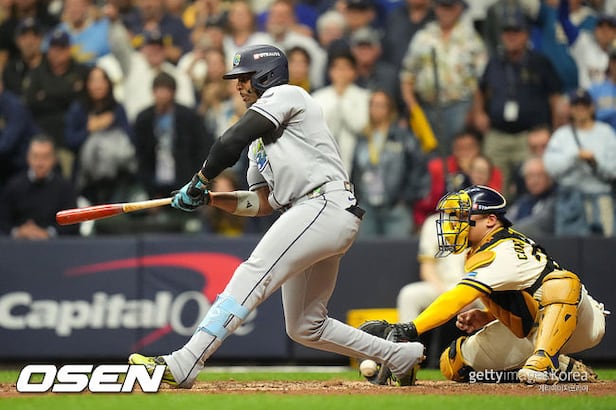
On Oct. 25 (all times Korea time), in Game 2 of the 2026 World Series at American Family Field in Milwaukee, Wisconsin, the Tampa Bay Rays were trailing 4-5 in the top of the ninth with two outs and a runner on third when Yandy Díaz engaged in a full-count battle with Milwaukee Brewers pitcher Aaron Ashby. On the sixth pitch, Ashby’s curveball dropped low and inside, and Díaz began a swing but barely stopped his bat.
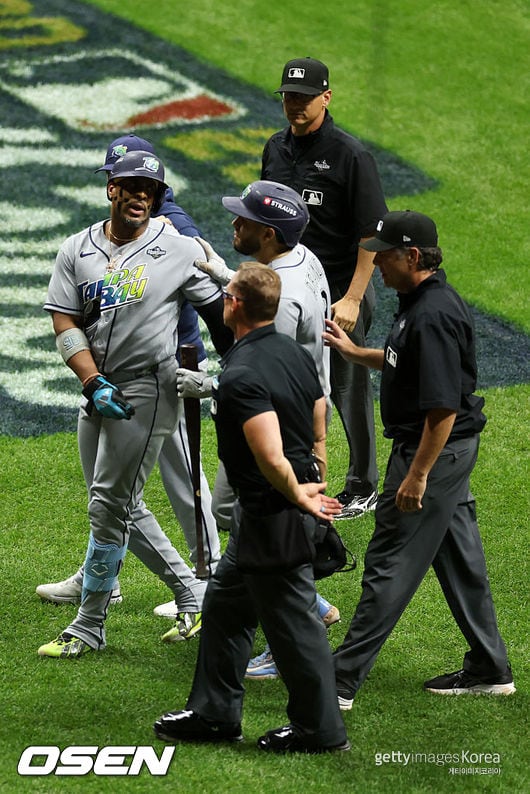
Thinking it was no swing, Díaz started to walk toward first base, but first-base umpire James Hoye called it a swing and the game ended as Milwaukee’s 5-4 victory. Díaz raised both arms and shook his head in protest, looking aggrieved. He lingered near the batter’s box for some time, but the call did not change. In Major League Baseball, check swings are not subject to video review and cannot be challenged.
If video review like in the KBO League had been available, the outcome of the game might have been different. Replay footage shows the end of Díaz’s bat fully turned, leaving no room for controversy. But under the “check swing challenge (Automatic Check Swing·ACS)” rule being used in the minor leagues, Díaz’s swing could have been judged a no-swing. Baseball America editor JJ Cooper said on social media, “Under the check-swing rule currently applied in the minor leagues, it would not have been ruled a swing.”
Major League Baseball first trialed it in the Arizona Fall League in 2024, then expanded it last year through Single-A Florida State League and this year implemented it in Triple-A Pacific Coast League starting in May. Like ABS, each team gets two challenges (one additional in extra innings) for batters, pitchers and catchers, and a failed challenge costs one. The Hawk-Eye tracking system reviews check swings from above rather than from the side.
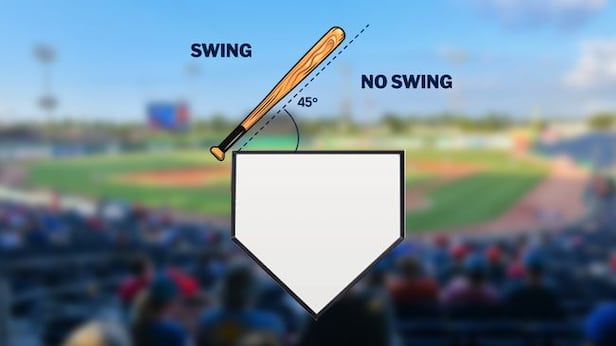
The important thing is the standard for judgment. In the KBO League, a swing is called if the end of the bat crosses the benchmark line toward the pitcher side from a line parallel to the front of the home plate. From the batter’s box, anything exceeding 90 degrees is judged a swing, but in the current minor league standard a swing is judged if it exceeds 45 degrees. Generally perceived 90 degrees plus 45 degrees equals 135 degrees, which becomes the Major League check-swing standard. If the bat does not cross the foul line on the third-base/first-base opposite side and remains parallel, it is a no-swing. This standard is much more favorable to the batter than in Korea, and Díaz’s swing that day could have been judged a no-swing contrary to common opinion.
This difference exists because baseball rules do not provide a precise standard for check swings. Usually umpires determine check swings by seeing if the end of the bat passed in front of the home plate or if the batter’s wrists turned, but those are only guidelines for umpires and not specified in the rulebook. Because it remains an area of subjective umpire judgment, it has always been accompanied by controversy. There is also the limitation that it is difficult for the human eye to judge accurately.
In response, the KBO League abruptly introduced check-swing video review on Aug. 19 last year. As controversies over check swings intensified and field dissatisfaction exploded, the league implemented it midseason ahead of schedule. Despite concerns about technical stability, the controversy surrounding check swings disappeared and the measure quickly landed smoothly.
By contrast, Major League Baseball is behind the KBO League. ABS was implemented two years later, and even then it took the form of a challenge rather than full implementation. Commissioner Rob Manfred said last June that after ABS settled he planned to expand the check-swing challenge in stages, but he has not announced a precise implementation date.
The sooner the better. In Game 1 of the World Series, in the top of the ninth with one out and runners on first and second, Tampa Bay’s Junior Caminero nearly turned his bat on the fourth pitch, Trevor Megill’s curve for Milwaukee, but it was ruled a no-swing. It should have been a strikeout, but the at-bat continued to a six-pitch battle that ended in a walk, nearly costing Milwaukee a win it had in hand. On the World Series stage that decides a season’s fortunes, questionable check-swing moments in two consecutive games increase the need to adopt a challenge.
After Game 2, in a postgame interview, Tampa Bay manager Kevin Cash said of Díaz’s strong frustration over the swing call, “It was probably the emotion of wanting to get it solved in that moment. Díaz thought it was not a swing. I haven’t confirmed it yet, but from where I was it looked like a swing.” Díaz calmed down and reflected on the situation. He said, “At that moment I disagreed with the call, but the umpire ruled it a swing. There’s nothing we can do about it, and it won’t be controversial. In the end, we lost,” accepting the call.
[OSEN]
※ This article has been translated by AI. Share your feedback here.