
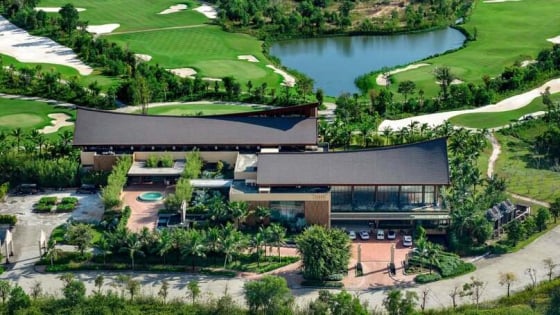
From unwinding at the clubhouse and enjoying a post-round meal to discovering Phu Quoc’s seaside shows after dark, the “19th hole” opens up a whole new set of experiences for golfers once their round at Eschuri Vung Bau Golf is over.
In golf culture, the “19th hole” is a familiar term for the place where players gather after a round, usually at the clubhouse bar or restaurant. Once the final scores are in, golfers can sit down together, raise a glass and replay the shots they will remember most.
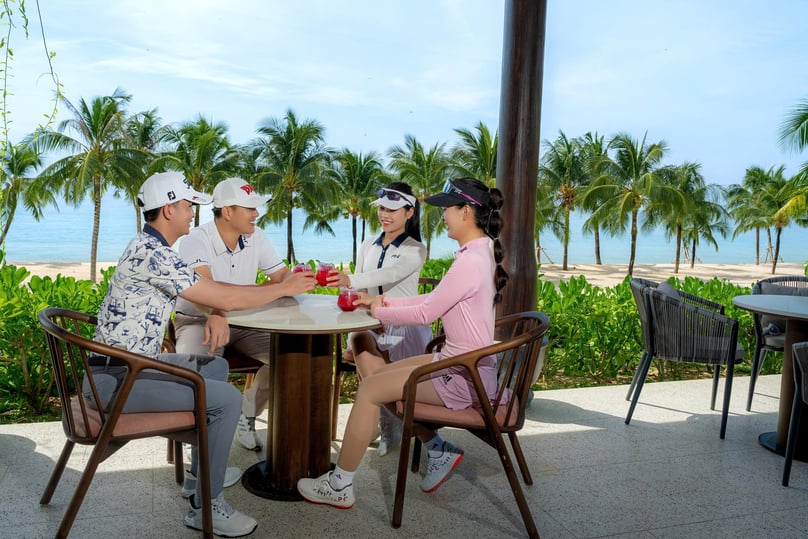 After a round, the “19th hole” gives golfers time to relax, catch up and extend the experience with their playing partners at the clubhouse.
That time off the course is becoming increasingly important as golf evolves into part of a broader holiday experience. Beyond course quality and the challenge of the fairways, golfers are also paying closer attention to where they stay, what they eat after a round and what they can enjoy with family and friends.
According to Mordor Intelligence, the golf resort segment accounted for 52.3% of global golf tourism revenue in 2025. Holidays combining golf with accommodation, dining and wellness continue to hold strong appeal among players.
At Eschuri Vung Bau Golf in Phu Quoc, the “19th hole” begins with the facilities inside the clubhouse and can extend into a wider journey around the island. A morning on the course, lunch overlooking the greens and an evening of seaside entertainment can all become part of the same holiday.
From rainforest to sea: a round worth talking about
Post-round conversations often begin with the challenges players have just faced on the course. At Eschuri Vung Bau Golf, the 18-hole, 84-hectare course, introduced as meeting U.S.G.A. standards, takes golfers through a changing landscape that moves from tropical forest toward the sea.
Designed by golf-course architect Steven McFarlane of IMG, the course has two distinct personalities built around a journey “from forest to sea.”
Across the first nine holes, players enter a lush tropical setting where mature trees line the fairways, demanding accuracy and careful shot selection.
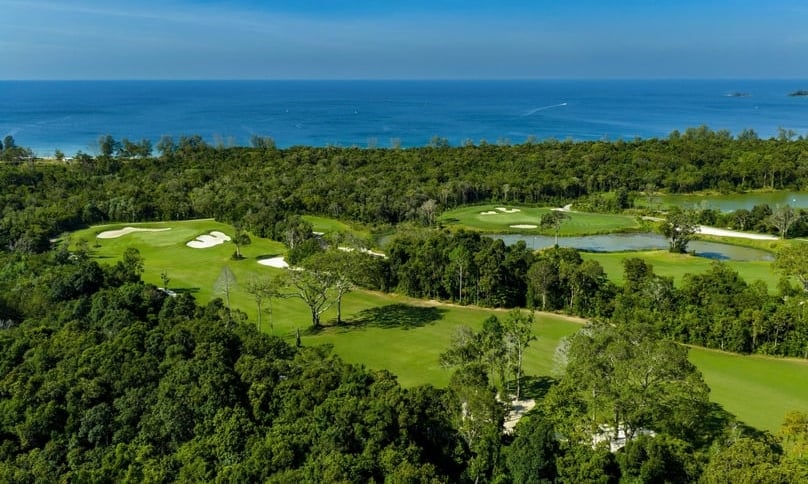 Eschuri Vung Bau Golf stands out for its “forest-to-sea” journey, taking golfers from tropical woodland to open fairways overlooking the Phu Quoc coastline.
The back nine opens up toward the sea, with broader fairways, expansive bunkers and an added challenge from the coastal winds.
One of the highlights is the 14th hole, which offers direct views of the ocean. For golfers playing late in the afternoon, it can also become a sunset stop, with the light changing over the water between shots.
The round finishes at the 18th hole, where a water hazard runs along the right-hand side from tee to green, while bunkers around the approach increase the pressure on the final shots of the day.
For golfers who want to keep playing after dark, the course’s lighting system, combined with Tackle Ball technology, offers greater flexibility in tee times.
Focused lighting and ground-up illumination help players track the ball, while the cooler night air offers a different way to experience the forest-and-sea landscape of Vung Bau.
From an award-winning clubhouse to seaside evening
Once golfers leave the 18th green, the “19th hole” can begin immediately at the Eschuri Vung Bau Golf clubhouse.
In September 2026, the course was honored in the “Most Impressive Clubhouse” category at the Vietnam Golf & Leisure Awards 2026, recognizing the quality of its spaces and overall player experience.
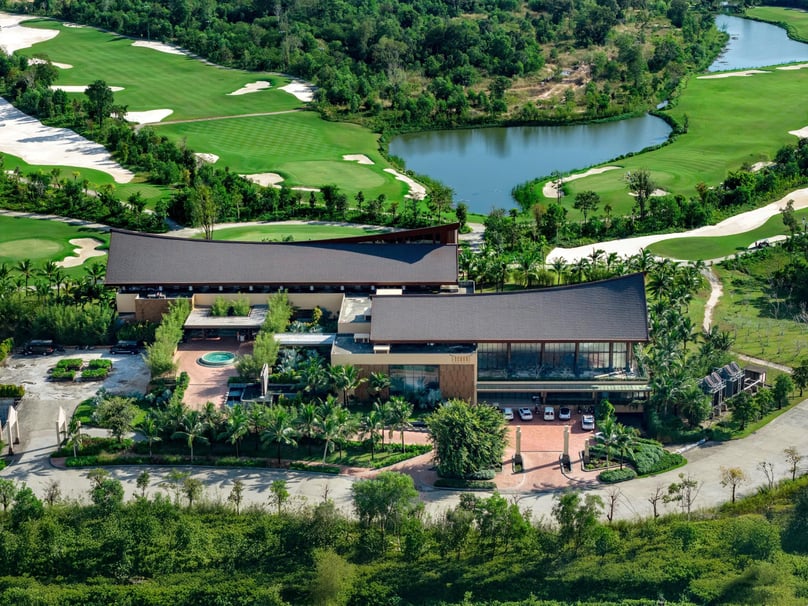 The Eschuri Vung Bau Golf clubhouse was developed around a “smart luxury” concept, blending contemporary architecture with details inspired by Vietnamese culture.
Designed in the spirit of “smart luxury,” the clubhouse combines contemporary architecture with visual references to Vietnamese culture.
From the moment guests enter the lobby, motifs inspired by the traditional three-entrance gate, or tam quan, create a sense of scale while retaining a strong sense of local identity.
After several hours on the course, the changing and relaxation areas offer golfers a place to recharge before moving on to the next part of the day.
Players can unwind in a Jacuzzi or opt for a dry or steam sauna, taking time to recover before heading to the table.
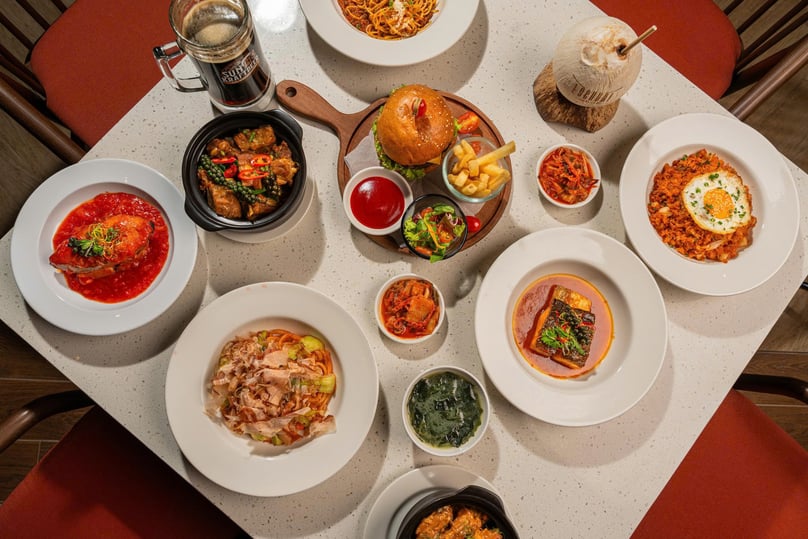 A wide selection of Asian and Western dishes is served at Eschuri Vung Bau Golf.
CoCo Restaurant carries the social spirit of the “19th hole” forward. Inspired by the refined aesthetics of Hue imperial architecture and overlooking the golf course, the restaurant accommodates up to 150 guests and serves a varied menu of Asian and Western cuisine.
In this setting, a post-round meal becomes more than simply a chance to refuel. It is also an opportunity for playing partners to linger over stories from the course, revisit decisive moments and perhaps arrange their next round together.
Golfers who spend the morning on the course can also plan an afternoon and evening in Sunset Town in southern Phu Quoc. Here, the spirit of the “19th hole” continues through seaside dinners and social gatherings in a more festive setting.
Sun Bavaria GastroPub, recognized by Guinness World Records as the world’s largest seaside beer restaurant, offers one place for groups to gather over craft beer and dinner.
The evening can then continue with Symphony of the Sea, featuring extreme sports performances on the water, or the multimedia spectacular Kiss of the Sea, followed by fireworks over the ocean.
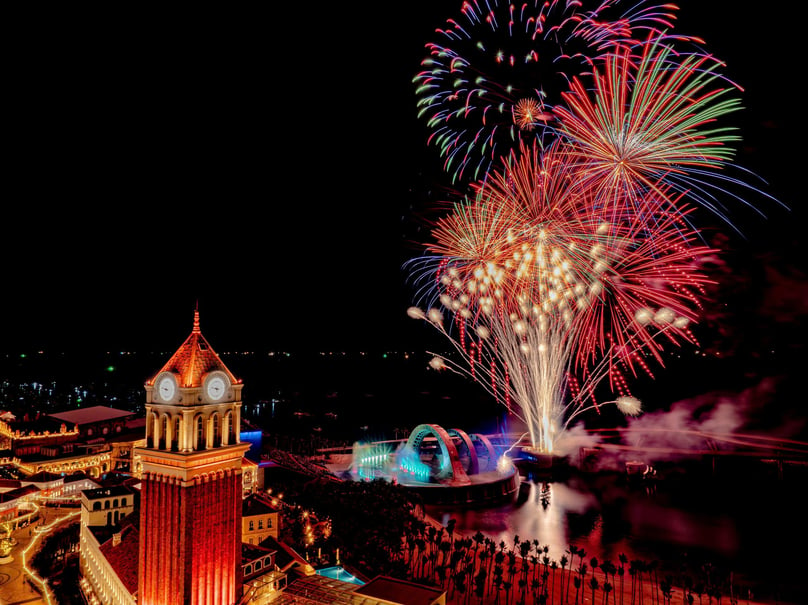 Beyond the golf course, the “19th hole” experience can continue in southern Phu Quoc with seaside dining, live shows and nighttime fireworks.
From the clubhouse to destinations beyond the course, the appeal of a golf holiday often lies in the time players get to spend together.
Even after the final putt drops, the story of the round can carry on over dinner, in the clink of glasses or beneath a Phu Quoc sky lit by fireworks.
That is what makes the “19th hole” not simply an afterthought, but one of the experiences golfers can look forward to most on a trip to Eschuri Vung Bau Golf.