
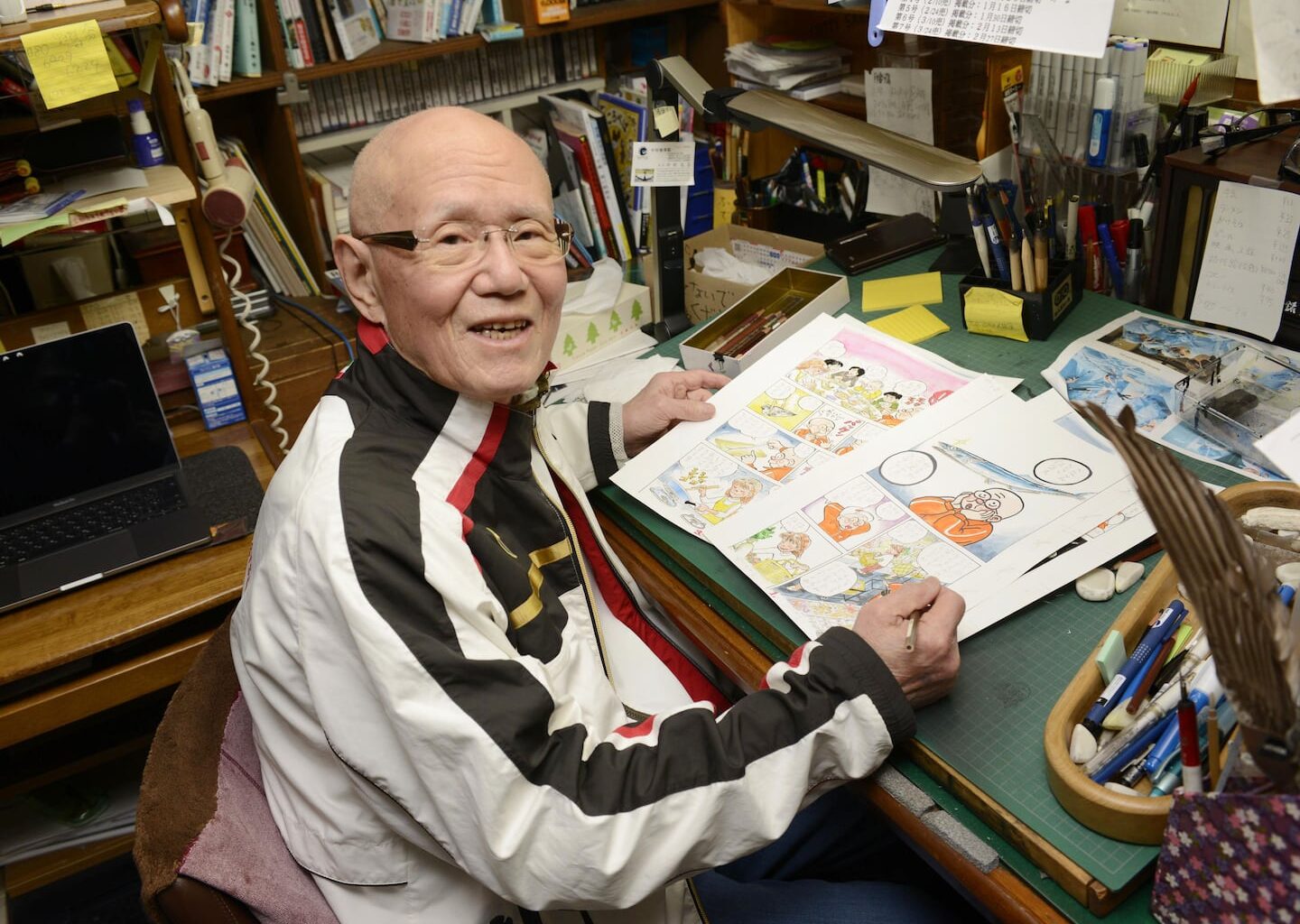
TOKYO — Legendary Japanese manga artist Tetsuya Chiba, who sparked a national sensation with his boxing series “Ashita no Joe” (“Fighting for Tomorrow”), a story about an orphan who becomes a professional boxer, has died. He was 87.
Mr. Chiba’s masterpiece series became so popular that fans even attended a mock funeral for the protagonist Joe Yabuki’s rival.
Mr. Chiba died at a Tokyo hospital last Thursday, his publisher Kodansha Ltd. said Tuesday, without specifying the cause of his death.
While he depicted aspiring young athletes fighting for their lives and careers, Mr. Chiba was a vocal supporter of peace and freedom of expression, telling stories of his harrowing memories of war as a child in autobiographical stories and manga.
Months after he was born in Tokyo in January 1939, his family moved to northeastern China, and Mr. Chiba spent his early childhood there during Japan’s occupation in the region, where his father worked at a printing factory.
Get Starting Point
A guide through the most important stories of the morning, delivered Monday through Friday.
At age 6, Mr. Chiba and his family marked Japan’s surrender on Aug. 15, 1945, while they were still in China. There, they faced danger and hunger in the face of anti-Japanese riots, but survived with the help of his father’s Chinese translator, who hid the family in an attic, where Mr. Chiba drew pictures for his three younger brothers.
The family eventually fled to China’s port city of Huludao and returned to Japan in 1946.
The harrowing memories later influenced his work and activity with an anti-war theme.
Mr. Chiba debuted as a manga artist in 1956, initially drawing comic books for girls and later moving on to works for boys in the early 1960s.
In 1961, he debuted in a boys’ comic magazine with a baseball manga, “Chikai no Makyu (The Magic Ball),” paving the way for a new genre of sports-themed manga in Japan.
Mr. Chiba’s sports-themed manga also included “Ore wa Teppei” (“I’m Teppei”), the story of a high school student training in the martial art of kendo, “Notari Matsutaro,” about sumo wrestling, and “Ashita Tenki ni Naare (Let’s hope the weather’s fine tomorrow)” about a teenage golfer.