
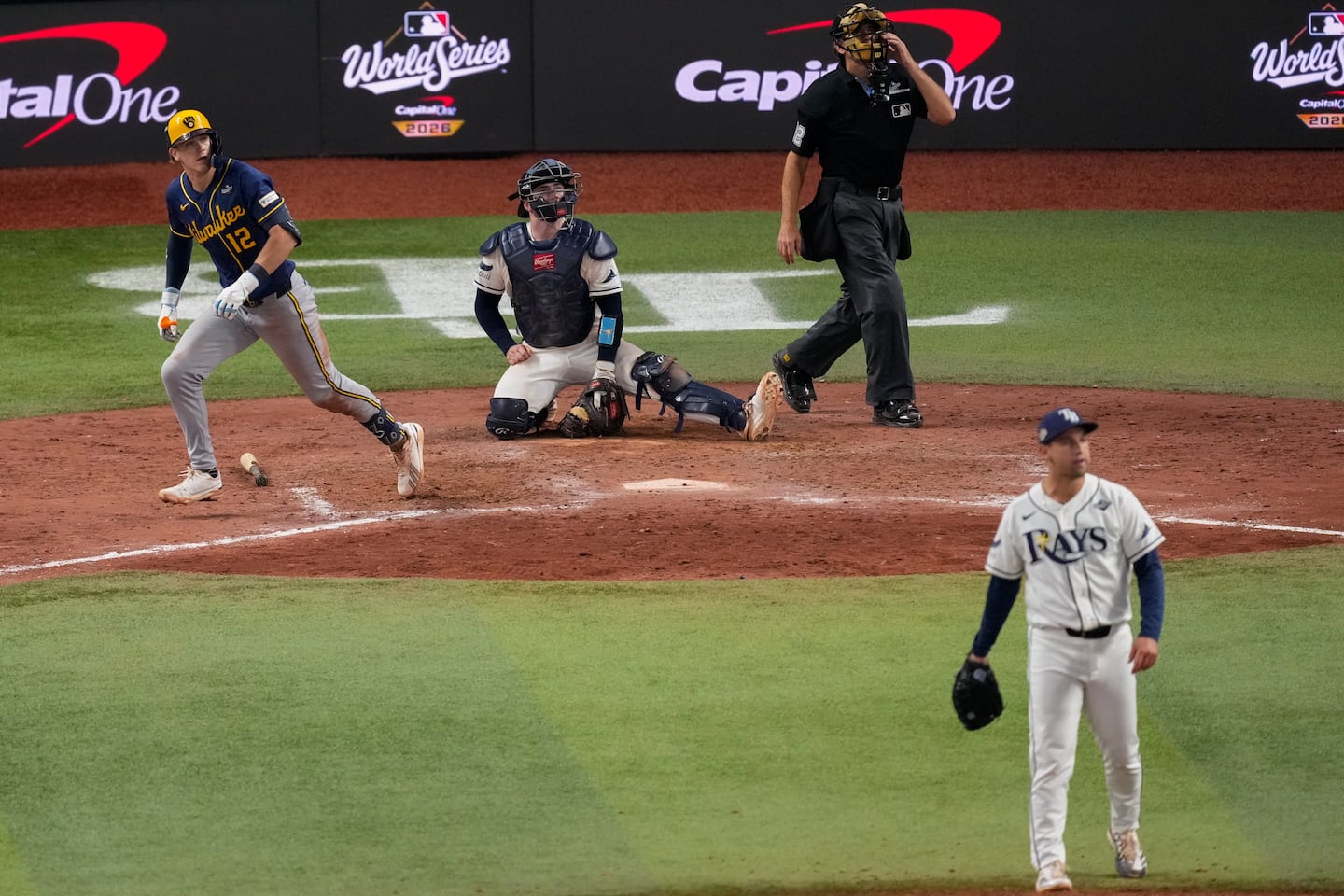
We see with our World Series-watching eyes that MLB’s push for a salary cap has less to do with increasing parity and more to do with procuring cost certainty. Cash doesn’t rule everything around MLB. The 103-win Brewers, who play in its smallest market, romping their way through the postseason provide a stirring rebuttal to this contrived crisis.
Get 108 Stitches
Receive the Globe’s best reporting and commentary on the Red Sox every weekday.
We got a final four featuring the Brewers (who swept the almighty dollar Dodgers in the National League Championship Series), Rays, and Guardians, stripping the salary cap competitive integrity conceit down to its Calvin Kleins.
With the collective bargaining agreement expiring on Dec. 1, we’re on course for a CBA nuclear winter on a scale greater than anything baseball has experienced since 1994-95, when a strike wiped out the World Series and led to an abbreviated 144-game 1995 campaign.
Let’s cross our hearts and don our rally caps hoping that doesn’t happen. Pray the sides reach a compromise without political-style polemics and empty fields come February.
But the idea of a salary cap is anathema to the MLB Players Association, which isn’t the roaring lion it once was after being bested at the bargaining table during the disastrous tenure of Tony Clark. A salary cap is the MLBPA’s red line. Cross it, and the feared MLBPA of Marvin Miller is officially a collective bargaining cadaver.
Owners have every right to try to reorient the economics of the game and secure greater cost certainty. All their brethren — the NFL, NBA, and NHL — feature some form of a salary cap. The problem is not in the ask. It’s the duplicitous argument used to push it.
It’s the presentations that count the Chicago White Sox, who rebounded from three consecutive 100-loss seasons to make the playoffs this season, as a small-market team for recent payroll purposes. Yet, also as one of the clubs from the top half of MLB’s 30 markets to win a World Series since 2000.
MLB disseminated an explainer on payroll disparity in January with some compelling numbers. One of the graphics pointed out that the Dodgers spent $515 million in 2025, including their luxury tax bill, more than the combined payroll of the six lowest clubs. One problem: three of those clubs — the Guardians, White Sox, and Rays — made the playoffs this season. Another, the Pirates, posted their first winning season since 2018.
The Rays have crossed the playoff velvet rope in six of the last eight seasons; the Guardians in eight of the last 11.
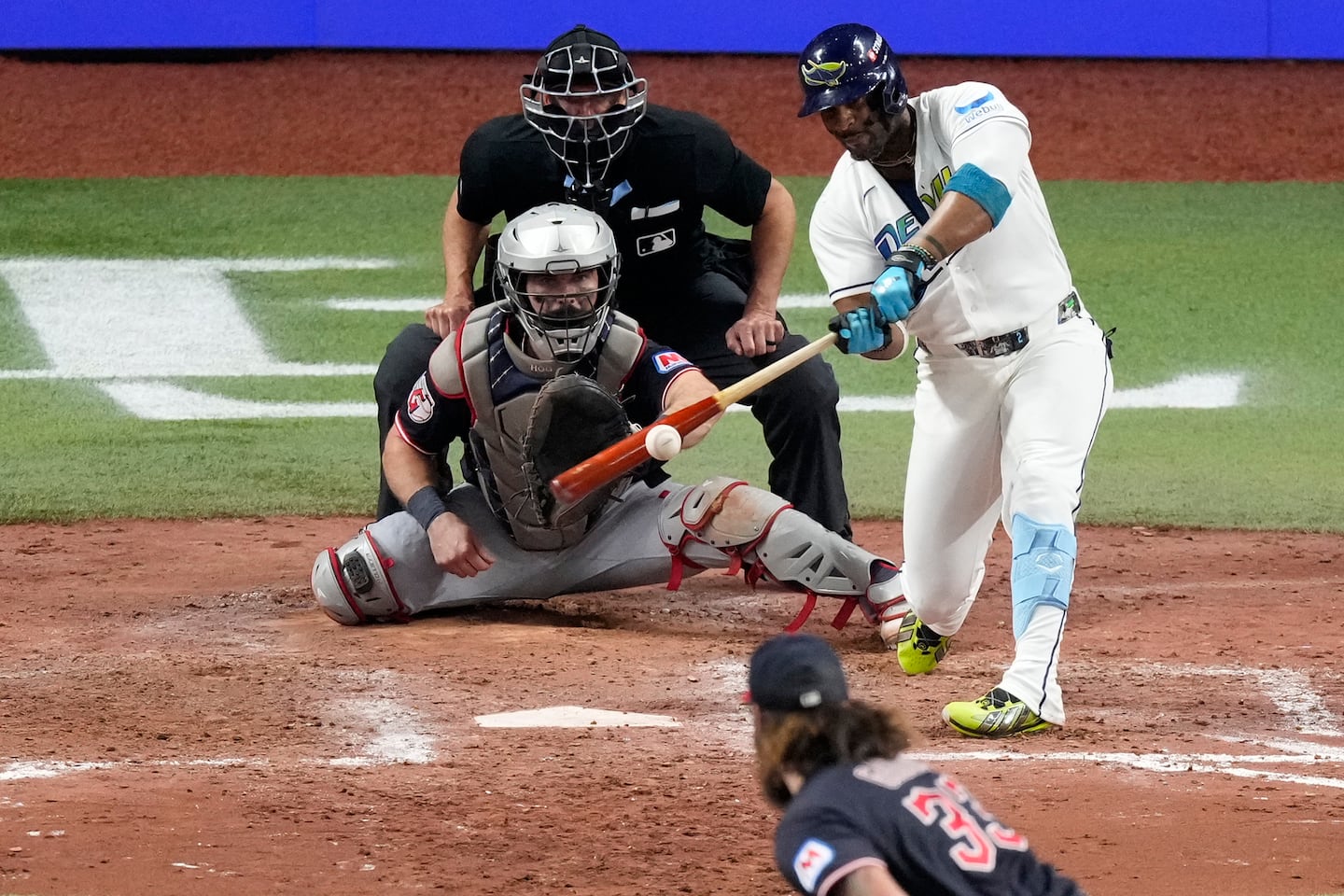 Yandy Díaz and the Rays beat the Guardians, another small market team, in six games in the American League Championship Series.Chris O’Meara/AP Photo/Chris O’Meara
There’s also the matter of overlooking the spendthrift franchises that don’t receive ROI in the standings. Since buying the Mets in 2020, Steve Cohen has spared no expense. Yet all of Cohen’s cash has yielded zero World Series appearances, zero division titles, two playoff berths, and eight playoff games won. That’s the same number of playoff games the Brewers had won consecutively this postseason entering a clinching Game 4 of the World Series on Tuesday night at Tropicana Field.
Even with payroll disparities, baseball is a healthy industry. The Padres, the Dodgers eternal SoCal little brother and one of four clubs that will enter 2027 never having won a World Series, sold for a record $3.9 billion in August.
It would be disingenuous to claim there is no correlation between payroll and probability of success. More money equals greater margin for error.
As colleague Alex Speier reported, former Red Sox assistant GM Zack Scott quantified the impact that spending demonstrated on team success under the current CBA, implemented in 2022. Scott calculated a correlation coefficient of 0.31, equivalent to saying that 31 percent of the recipe for a successful team relates to the ability to spend.
But it’s also disingenuous to position the upcoming CBA negotiations as some binary choice — instituting a salary cap or competitive doomsday. All of the best practices used by clubs were inspired by teams with fewer resources seeking greater efficiencies — from the Moneyball A’s to the resourceful Rays.
The middle ground might be taking a page out of the NBA’s book and modeling its dreaded second apron with a 1998 Mark McGwire juiced-up MLB luxury tax. One that forces teams to heed it like a de facto salary cap, splitting up superstars (hello, Celtics) and causing mega-market owners to avoid it like the plague.
The actual existential threat to baseball would be shutting the game down due to labor strife following a season that clearly undercut MLB’s cap argument.
Christopher L. Gasper is a Globe columnist. He can be reached at christopher.gasper@globe.com. Follow him @cgasper and on Instagram @cgaspersports.