
In briefAustralians have paid more than $500 extra for fuel amid the global fuel crisis.Experts say that industry is driving Australia’s reliance on diesel.
Surging fuel prices amid the war in the Middle East have cost Australians more than $500 per person on average, with the national impact of fuel price shocks exceeding $14 billion since March this year according to a report.
Australians have seen the third-highest fuel price increases compared to other countries, with individuals paying on average $546 more than usual, according to analysis from the Centre for Research on Energy and Clean Air (CREA).
The analysis, which compared average fuel prices in January to February, before the disruption of shipments through the Strait of Hormuz, with prices during March to October, found that price shocks had cost 169 countries, including Australia, $665 billion.
The country paying the most amid global fuel shocks was the United States, with more than $226 billion in additional costs.
Americans paid an extra $666 per person, Canadians $597, and New Zealand’s motorists followed close behind Australians at $484 per person.
Your trusted source for staying up-to-date with the world around you. Get free daily news updates and analysis, straight to your inbox.
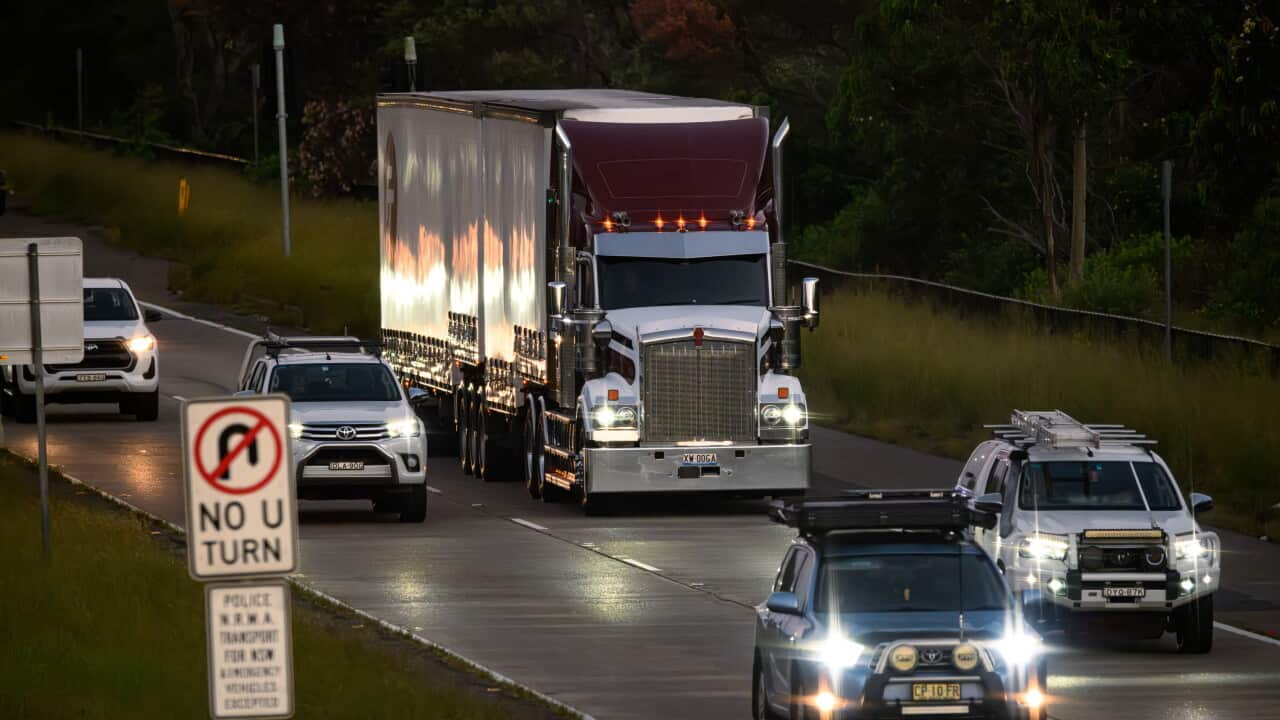
Senior economist at the University of Sydney Luke Hartigan said Australia’s position in the top four alongside Canada, the US and New Zealand made sense, considering Australia has the highest per capita diesel usage rates in the world, driven by high use in mining and farming.
“That’s why similar patterns appear in the US, Canada and New Zealand, all of which have large agricultural sectors, and Canada also has a significant mining industry,” Hartigan told SBS News.
 Australia was among the top three countries for fuel expenditure per person, with the bulk of the cost coming from diesel. Source: SBS News / CREA
Geography was also an important factor, he said.
“Apart from New Zealand, these countries are vast, and distances between production centres and consumers are enormous.”
“Moving fruit and vegetables from Queensland to Sydney, or freight from the Northern Territory to major cities, can involve distances comparable to crossing Europe.”
Diesel costs blow out
Australia imports more than 90 per cent of its refined and crude oil, leaving it particularly vulnerable to fuel price shocks amid ongoing conflict in the Middle East.
But another issue contributing to Australia’s vulnerability was its increasing use of diesel, which Institute for Energy Economics and Financial Analysis (IEEFA) CEO Amandine Denis-Ryan said was “really at odds” with the rest of the world.
“Between 2000 and recent years, Australia increased its diesel intensity by 33 per cent, while the world decreased it by 30 per cent, and countries like the US and Japan reduced it by 50 per cent,” she told SBS News.
As the world’s largest importer of diesel, Australia represents 10 per cent of the global seaborne diesel trade and is also the third-largest importer of petrol and jet fuel.
When compared with Australia’s share of global GDP and population, Denis-Ryan said, “These numbers are enormous.”
 Australia paid almost $15 billion more for fuel from March to October. Source: SBS News / CREA
Diesel use has been trending upwards this century according to government figures, that show diesel comprises 44.1 per cent of transport energy use. It’s the most used road and rail transport fuel and is a popular ship fuel.
“We’ve been shifting away from rail freight towards road freight, and we’ve also been shifting from underground coal mines, which mostly use electricity, to open-cut coal mines, which mostly use diesel,” Denis-Ryan said.
And there are geological factors as well: “As we exhaust our best and most easily accessible mineral resources, we need more diesel for each tonne of coal produced and each tonne of ore produced,” Denis-Ryan said, adding that Australia’s vehicles were largely “really old and quite inefficient”.
Australian households paying the price
Recent research from IEEFA assessed the link between inflation and oil shocks, and found that “in the last six inflation flare-ups in Australia since 2000, oil price shocks were a key contributor every time”.
READ MORE
A reduction in the impact of oil price shocks on Australia’s economy could provide broader economic benefits, Denis-Ryan said, noting that households would be less vulnerable to inflation if they switched to electric cars.
The CREA report found that while the US experienced enormous fuel costs, US electric vehicle (EV) drivers had seen just a $17 increase in charging costs since the start of March.
Hartigan said there has been an “enormous” uptake of EVs in Australia, starting at the height of the fuel crisis in March. Data from the National Australia Bank showed that EV loans doubled as Australians sought to dodge soaring petrol and diesel prices.
READ MORE
Senior economist at the left-wing thinktank the Australia Institute Matt Grudnoff said that governments could reduce or offset the upfront purchase cost of EVs.
But he said the bid to electrify Australia’s roads should focus on industry.
READ MORE
“The public conversation tends to focus on household fuel costs because that’s where people notice the impact most directly when they fill up their cars.
“But the data shows that a large share of the economic impact happens behind the scenes through freight and transport.
“Higher fuel prices increase the cost of moving goods around the country, which then contributes to inflation across the economy.”
A move toward EVs
A recent report from the Climate Council found Australia paid more than twice as much as any other nation in additional diesel import costs during the global fuel crisis, putting the toll at $9 billion over six months.
Moves to renewable energy had saved Australians from some higher costs, the report found, with electric and hybrid cars cutting $1.7 billion in costs and saving the equivalent of 17.4 million litres of petrol and diesel per week.
READ MORE
Denis-Ryan said she hoped the fuel crisis would be a “wake-up call” for Australia, “particularly in terms of accelerating transport electrification, but also in looking at how we can slow the growth of oil use, and diesel use in particular, throughout Australia”.
For the latest from SBS News, download our app and subscribe to our newsletter.