
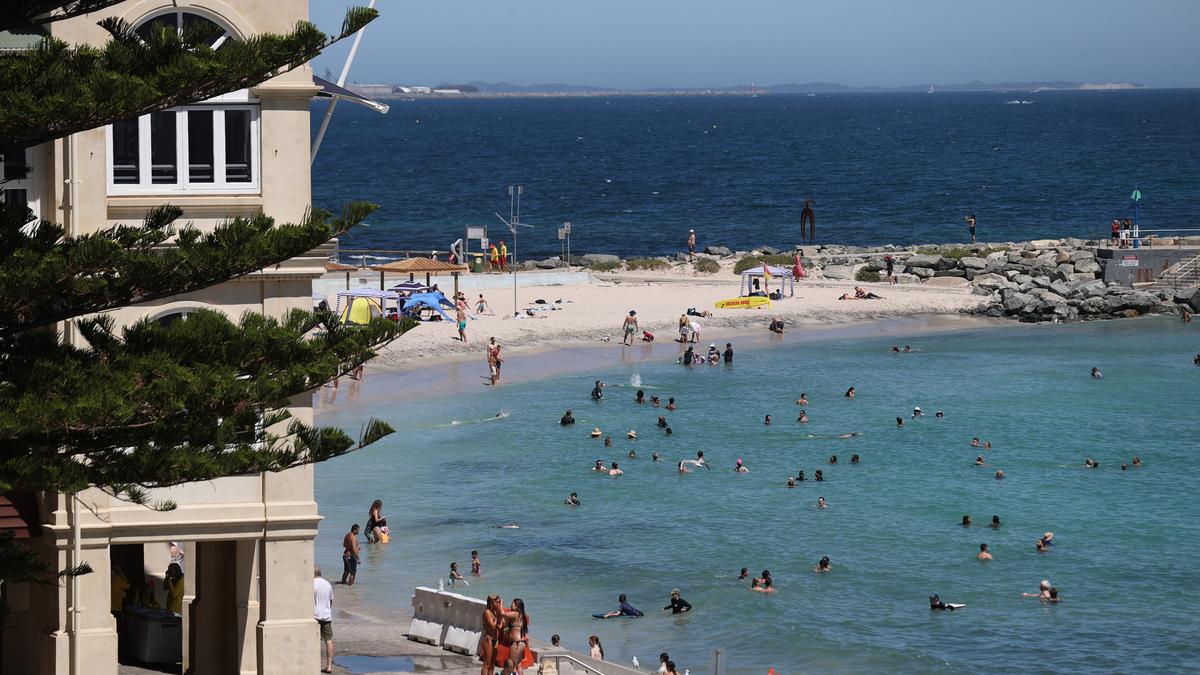
Perth’s coastal councils are calling on the State Government to take on more of the financial burden that comes with maintaining WA’s beaches, as whale carcass removals leave ratepayers facing bills of up to $180,000.
The bills are on top of the millions some councils already dish out to maintain Perth’s picture-perfect beaches, with one western suburbs council revealing it spends 15 per cent of its budget keeping its coastline clean and safe.
From shark barriers and lifeguard patrols to rubbish collection and beach access, the cost of running some of WA’s most popular beaches is placing a financial headache on their ratepayers — prompting questions about if the State Government should be contributing to the bills.
The Town of Cottesloe, home to one of the nation’s most famous beaches, has revealed to the Western Suburbs Weekly it spends about $2.5 million each year maintaining its beaches, equating to about $12.5 million over five years and 15 per cent of the city’s budget.
The town forks out $400,000 for shark mitigation and beach safety alone, with the shark barrier costing $120,000 annually, as well as $250,000 for professional lifesavers and $30,000 for ranger patrols and beach closures.
A spokesperson said while the State Government funded the $400,000 shark barrier in 2024, the town was in charge of its ongoing installation and maintenance costs.
The town spokesperson said it also maintains 58 beach access paths at a cost of about $55,000 annually, along with beach cleaning, waste management, toilets, shelters and coastal infrastructure.
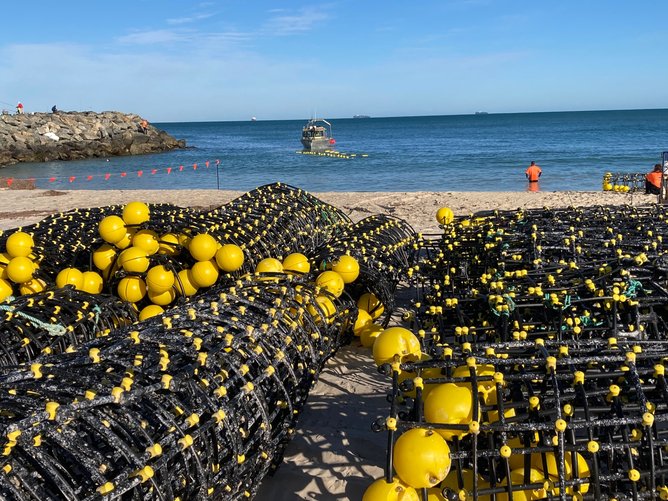 Camera IconInstallation of the shark barrier at Cottesloe Beach was delayed this year due to unsafe weather conditions. Credit: Town of Cottesloe
The spokesperson said its beaches were enjoyed by visitors from across WA, not just local residents.
“The beaches are for all West Australians and we welcome visitors,” the spokesperson said.
“We are lucky to have such a magnificent coastline.”
The City of Stirling spends $1.45m annually on its team of more than 20 beach inspectors and lifeguards, who patrol its 7.5km coastline 365 days a year.
It is the only local government in the State that provides year-round lifeguard patrols, which has cost the city about $7.25m over five years.
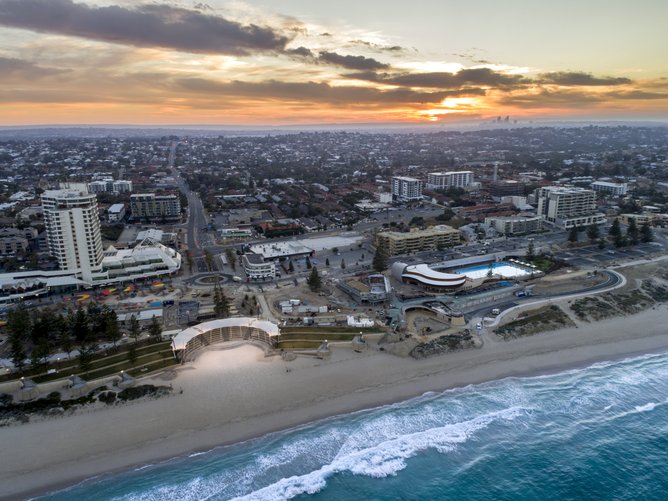 Camera IconThe City of Stirling provides year-round lifeguard patrols. Credit: Luke Williams/Luke Williams
Stirling’s beaches attract more than two million visitors annually, with Scarborough and Trigg beaches also hosting major sporting events.
Over the past two financial years, the city’s lifeguard team has carried out more than 1500 rescues and 60,000 preventative actions.
Stirling mayor Mark Irwin said the city recognised the responsibility that came with managing some of the State’s most popular beaches.
“We agree that it’s a privilege to have 7.5km of coastline in our local government area and we invest strongly in making sure it’s a safe, clean and enjoyable place for locals and visitors,” he said.
“WA’s coastline is the envy of the world and caring for it is a responsibility for all of us, including local councils and the State Government.”
The financial burden to these coastline councils does not stop at everyday maintenance and patrols, with unexpected coastal emergencies capable of adding hundreds of thousands of dollars to the bill.
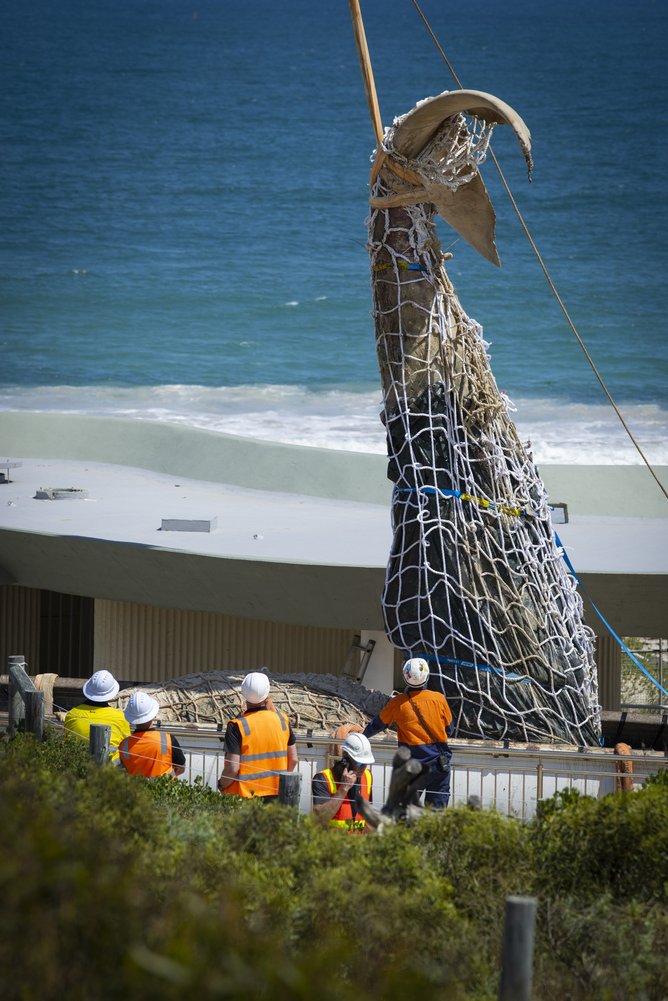 Camera IconA beached whale loaded onto a truck in City Beach. Credit: Ross Swanborough/The West Australian
The Town of Cambridge recently faced a $180,000 bill after a 31-tonne whale carcass washed ashore at South City Beach in September.
A second whale carcass then washed up at Dutch Inn Beach in Cottesloe October 22, with the town confirming its removal costs totalled $10,795.
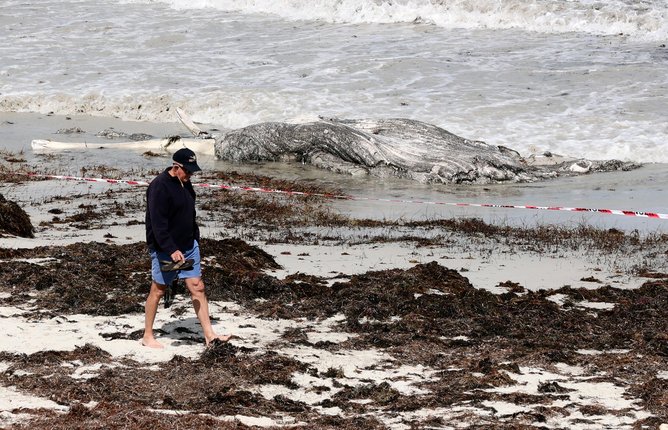 Camera IconPeople were warned to stay out of the water when a whale carcass washed up at Dutch Inn Beach. Credit: Ian Munro/The West Australian
Mr Irwin said in 2014 the city spent $188,000 to remove a 30-tonne whale carcass from Scarborough Beach, with the State Government agreeing to cover half the bill.
“At the time, the city advocated for the State Government to pick up the costs and develop a more proactive strategy for dealing with whale carcasses,” he said.
Mr Irwin said the council should not be expected to absorb such unpredictable expenses on their own.
“It isn’t reasonable for local governments to be expected to absorb the full costs of whale carcass removals when those costs can be well over $100,000,” he said.
“While these situations are dynamic and unpredictable, we believe there should be a broader strategy in place to provide more consistency and clarity for all parties involved in dealing with whale carcasses before or after they reach the shore.”
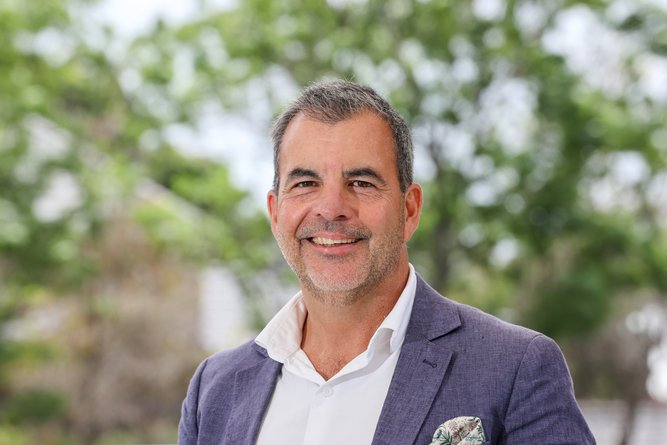 Camera IconCity of Stirling mayor Mark Irwin. Credit: Carwyn Monck/The West Australian
The Town of Mosman Park also raised concerns about financial strain of the unexpected coastal emergencies, with mayor Paul Shaw warning smaller councils had limited capacity to absorb the costs.
“Our community values its beaches and foreshore, and we invest in maintaining them, including dune care, access, cleaning and safety, as part of our everyday work for ratepayers,” Mr Shaw said.
“However, some coastal events are unpredictable, specialised and very expensive, and whale carcass removal is one of them.”
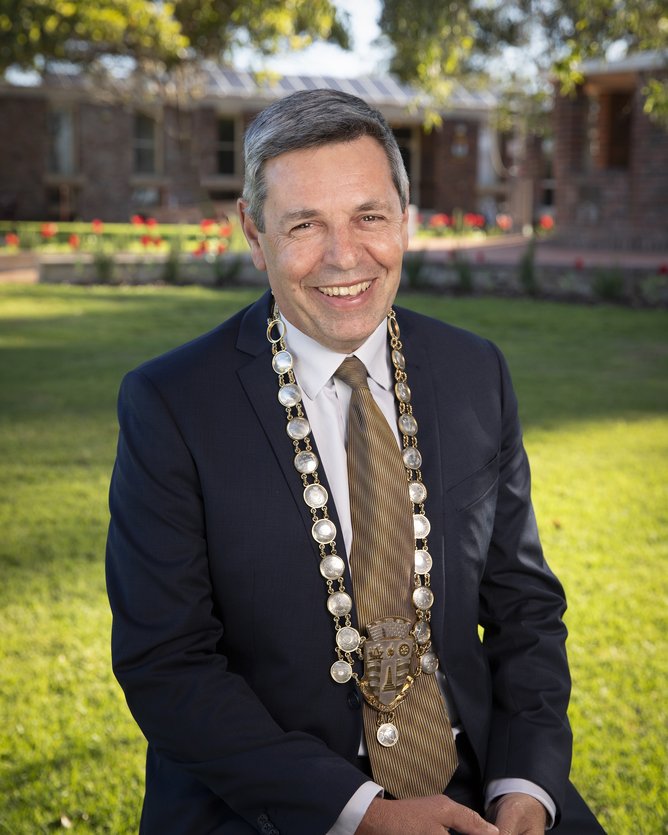 Camera IconTown of Mosman Park mayor Paul Shaw. Credit: Savarna Nizich/RegionalHUB
Mr Shaw said operations could include heavy machinery, specialist contractors and complex safety requirements, which could leave ratepayers covering costs that can reach tens of thousands of dollars.
“That is well beyond what a small local government can plan for within its budget, and it would ultimately be funded by our ratepayers,” he said.
The Cottesloe spokesperson said they should adopt a cost-share model for whale carcass removals.
Under the proposed model, councils would pay the first $10,000 and split the next $20,000 with the State. Costs of more than $30,000 would be fully covered by the State.
Mr Shaw also backed greater State Government involvement.
“Shared responsibility and sustainable funding is key here,” Mr Shaw said.
“We believe responsibility for events like this is best shared with the State, which has the expertise, resources and regulatory role to respond at scale.
“We would certainly consider advocating to the State Government for a clear, consistent and properly resourced approach to removing a whale carcass.”
In response to a question from Cambridge deputy mayor Ben Mayes about how mush it cost the town to maintain beaches, planning and community services director Luke Gibson said the town dedicates “significant financial resources” to the management, maintenance and safety at its two beaches.
Mr Gibson said the total expenditure in the last financial year was $1.322m, which comprised professional year-round lifeguard services, support for volunteers surf lifesaving clubs, beach and dune maintenance, beach emergency signage renewal and association operational costs.
“A further $1.291m has been budgeted for 2026-27 to continue these services and deliver additional beach safety initiatives,” he said.
“These figures reflect the town’s substantial and continuing commitment to maintaining its coastal assets and ensuring that local beaches remain safe, accessible and well cared for throughout the year.”
At its meeting on Tuesday night, the town’s council unanimously voted to advocate for the State to assume the “primary responsibility for funding” for the $180,000 bill for its whale carcass removal.