
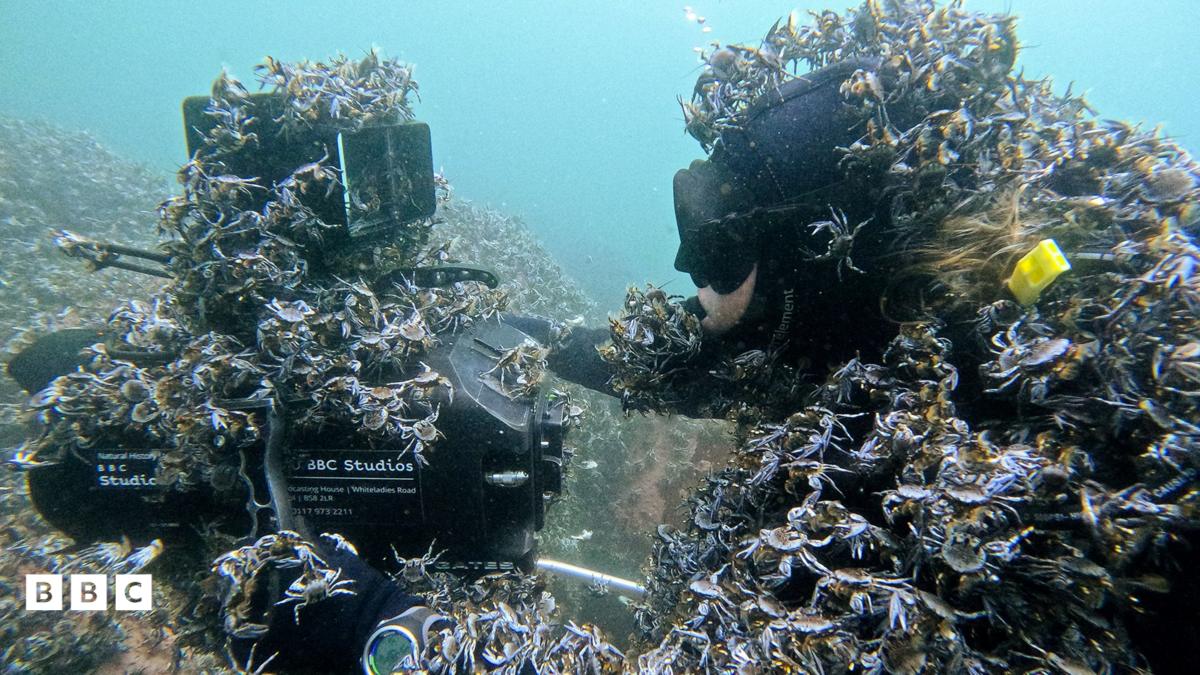
Unlike many wildlife shoots, we didn’t have to search for our animals. There was no waiting for them to appear, inching closer bit by bit, or spending hours waiting to see the behaviour we had come to film. The crabs were everywhere.
Instead, we faced a very different set of challenges.
The water was cold, really cold. Even in drysuits, thick hoods and dry gloves, our fingers soon became numb.
The surge was relentless. Filming with macro lenses and diving on rebreathers, it was like trying to focus on a target that was constantly moving. As the swell intensified, keeping a steady shot became almost impossible.
It was time to pivot!
We swapped out our rebreathers (a system that recycles the air we breathe, meaning no bubbles and longer dive times) for a nimbler open-circuit SCUBA set up. We loaded our tripods with as much weight as we could carry underwater, hoping to give ourselves at least a fighting chance of keeping the camera steady.
After weeks on location and countless hours underwater, I was really beginning to feel the fatigue. Even the crabs appeared to be feeling it – barely moving all day. Then suddenly, I caught a flash of silver out of the corner of my eye.
Baitfish.
Following them came the cormorants, diving between our legs and weaving around the cameras, looking straight at us with inquisitive eyes as they snatched individual fish from the shoal.
Then came the sea lions.
Four or five massive adults circled us in the pursuit of lunch. I hadn’t moved an inch but for a few minutes, I found myself in the middle of a feeding frenzy.
I had never experienced anything like it underwater. And to top it off, the changai began to filter feed in perfect unison. As if sensing the moment we needed it most – nature suddenly put on an extraordinary show.