
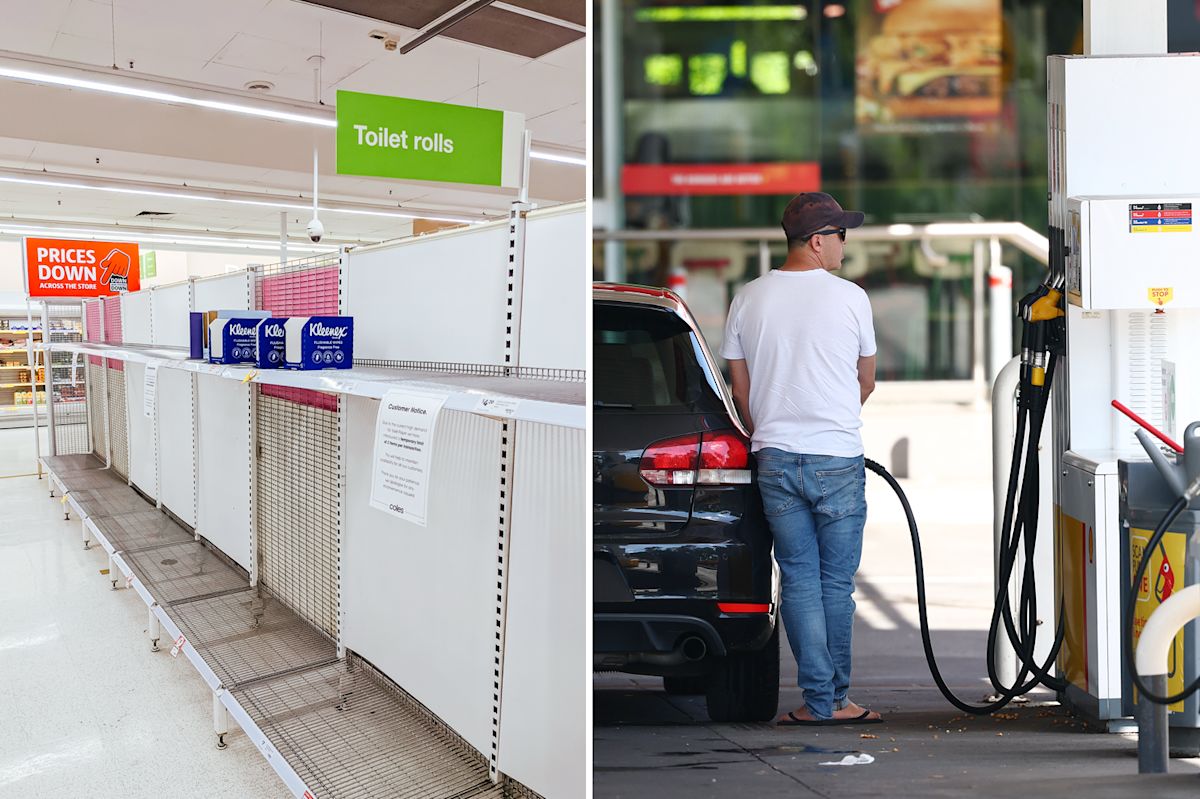
From filling up the car to buying groceries, Australians rely on a complex network of digital systems to keep everyday life running smoothly — often without giving them a second thought.
But recent disruptions to supermarket deliveries and shipping operations have highlighted just how interconnected these essential services have become, with a leading cybersecurity expert pointing to vulnerabilities Australia needs to address.
The issue comes amid a growing focus on emergency preparedness overseas, where households in the UK and Europe have been encouraged to keep basic supplies on hand in case of unexpected disruptions, including extreme weather, power outages and cyber incidents.

Ahead of the cyclone season in northern Australia, Woolworths, in conjunction with state governments in Queensland, Northern Territory and Western Australia, is marketing an emergency kit checklist.
While traditional warnings focused on natural disasters, leading security experts warn Australia’s modern vulnerability lies in its digital backbone.
What would be impacted by a cyberattack on Australia?
Dr Jill Slay, who was appointed by the federal government to review Australia’s critical infrastructure security laws this year, warned the consequences of a major cyberattack could extend far beyond electricity and water supplies.
“If you wanted to paralyse the country, there are so many ways to do it,” she told Yahoo News Australia.
“You can stop the electricity. You can stop the water. You can stop the cars.
“It’s a kind of an acceptance of an inevitability that one day there will be such a breach that you’ll have nothing left.”
The warning comes as the Australian Signals Directorate’s latest cyber threat report reveals authorities responded to 154 cybersecurity incidents involving critical infrastructure during the 2025–26 financial year.
Do you have a hacking story? Contact newsroomau@yahoonews.com

Items for emergency supply kits include soap, rice, nappies, tinned food and first aid. Source: Queensland Government
How the whole supply chain could break down
With over 25 years spent researching digital threats, Slay warned a targeted strike on the power grid would reach far beyond blacked-out living rooms.
“Because there’s no electricity, there’s no petrol and because there’s no electricity, there’s no water, there’s no gas,” she explained of a worst-case scenario.
“Because there’s no petrol, you can’t supply shops — the whole supply chain breaks down.”
RELATED:
Modern grocery supply chains depend heavily on digital infrastructure, meaning small disruptions trigger major delays.
In July 2024, a faulty CrowdStrike update crippled Woolworths distribution centres for 48 hours, causing a delivery backlog across NSW, Queensland, and South Australia that took a week to clear.
A year earlier, a cyberattack on DP World froze major Australian ports, stranding over 30,000 containers for 10 days.
While neither event knocked out the entire power grid of the country, both exposed how rapidly digital disruptions can choke the supply of essential goods.

Modern grocery supply chains depend heavily on digital infrastructure. Source: Getty
Smaller businesses exposed to growing cyber threats
While Australia’s cybersecurity protections focus heavily on major electricity providers, telecommunications networks and other critical infrastructure, Slay warned smaller businesses and regional operators risk being overlooked.
“There’s nobody looking after farmers or small businesses, or any of the kind of petrol stations,” she said.
“Once you get out of big towns and sort of the defence and those big sectors, you see. So we haven’t got anything set up to look after it.”
Slay warned that expanding protections across the country would require enormous investment, particularly as emerging technologies create new vulnerabilities.
“Everything will cost so much money if the government is to take this all seriously,” she said.
She also urged Australia to update critical infrastructure laws for emerging threats like AI, quantum computing, and space tech.
“I don’t think that’s science fiction. I think that’s a potential reality,” she said.
You can also follow us on Facebook, Instagram, TikTok, X and YouTube.