
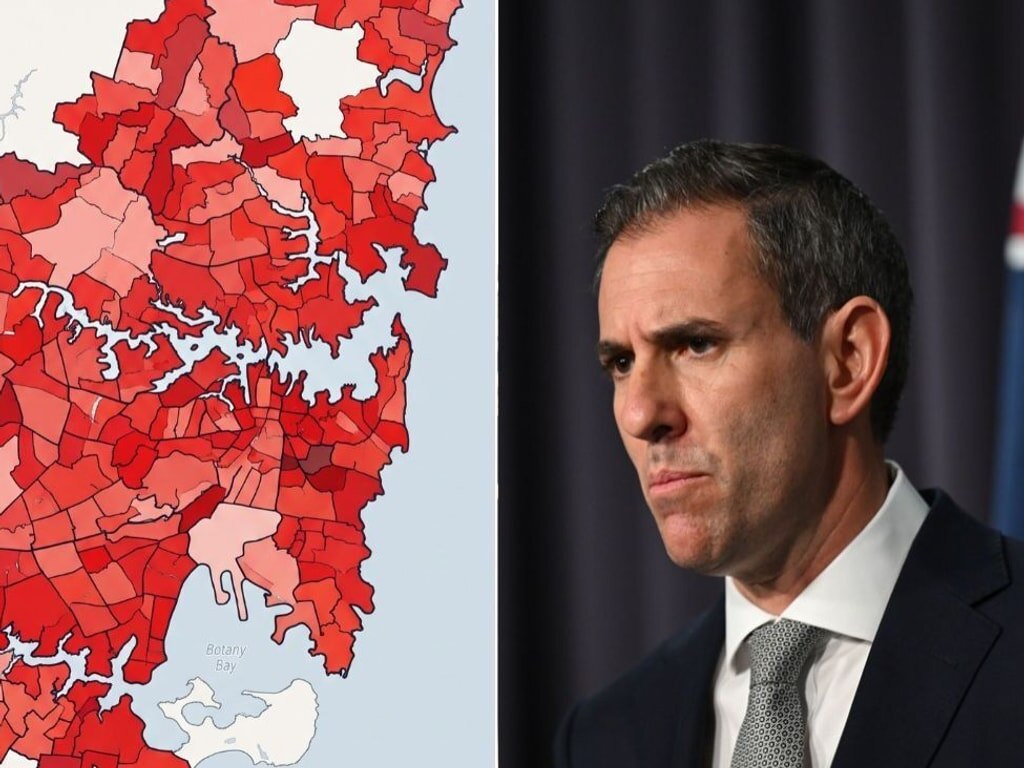

Federal Treasurer Jim Chalmers announced policies to level the playing field for first-home buyers, but so far affordability has got worse. Picture: Martin Ollman
Federal government promises to “level the playing field” for home buyers are looking more threadbare by the month: even with prices falling, buying a home has become harder.
And now it’s not just singles being frozen out but ordinary couples too, new analysis of median prices and interest rates has revealed.
The figures from Compare the Market paint a bruising picture of a housing market where lower prices haven’t delivered relief, because bigger mortgages and rate hikes have swallowed any benefit.
Couples on typical salaries were now only able to afford a median-priced property in just 38.61 per cent of suburbs nationally over September, according to the Compare the Market study.
If RBA governor Michele Bullock announces another rate hike, it could freeze couples on $135,000 out of the market. Picture: Martin Ollman/NewsWire
This was down sharply from 53.63 percent of suburbs a year earlier.
Couples on a combined income of about $135,000 a year, the median household income in some areas, could afford a home in only 5 per cent of the market nationally.
And with the Reserve Bank of Australia widely expected to announce another rate hike on Melbourne Cup Day, home buyers on this income tier could have their choices hollowed further.
MORE: Brisbane named nation’s least affordable capital
‘Unattainable’: bad news for Sydney singles
Property expert Andrew Winter said the market was behaving in a way many buyers would find baffling at first glance.
“It’s a weird time,” he said. “Property values are coming down, which should make homes more affordable, but higher interest rates are wiping out those gains by squeezing borrowing power.”
David Koch, Compare the Market Economic Director, said housing affordability was now about much more than just prices.
For singles, just 2.83 per cent of suburbs were deemed affordable, down from 6.24 per cent in 2025, according to Compare the Market.
The findings analysed median values across 3,363 suburbs using median price data.
Affordability was measured by a simple test: if repayments on an 80 per cent loan rose above 30 per cent of household income, the property was deemed out of reach.
MORE: Hated money move fuels recession fears
Compare the Market economic director David Koch said price was only half the story.
“Every rate rise cuts into borrowing power and pushes repayments higher. Falling values will help balance the picture a bit, but we’re starting from such a high base we would need significant drops to make a difference,” Mr Koch said.
Home prices have been falling nationally since about March. Picture: Sarah Wilson
“And really, we are talking about drops that would be hugely disruptive and potentially devastating for people who have recently purchased a house. Negative equity is something nobody wants.”
Declining affordability at a time of falling home prices cut to the heart of the political problem for the housing market, Mr Winter added.
Buyers were told that policies aimed at helping people into homes would make a difference, such as the 5 per cent deposit scheme. Yet the evidence suggests the obstacle has shifted, he said.
Mr Winter explained that the deposit was still daunting, but the real pain now came after purchase, when borrowers face monthly repayments that are chewing through household budgets.
Markets are now pricing in an 80 per cent chance of another interest rate hike when the Reserve Bank next meets on Melbourne Cup Day, this Tuesday.