

Unemployment rose 5.7% from 5.6%About 4000 jobs lost in quarter; labour force shrinks, participation fallsUnderutilisation rate steady at 13.8%; Long term and youth unemployment risesSouth Island unemployment generally lower than North IslandAnnual wage growth remains at 2.1%; average weekly earnings rise annually 3.3%Data worse than expected
Unemployment rose to its highest level in nearly 11 years as the economy shed jobs, and there are signs some people may have stopped looking for work.
Stats NZ said the unemployment rate was 5.7 percent in the three months ended September, up from 5.6 percent in the previous quarter.
A total of 174,000 people were unemployed, a rise of 3000 on the previous quarter and 14,000 higher than a year ago.
The data was above most forecasts.
Unemployment has held at decade highs as businesses have generally held on to staff, but been cautious about hiring because of weak demand and higher costs.
The numbers also showed a marked rise in the number of long term unemployed – those out of work for a year or more – making up about 21.5 percent of the total, and the highest since mid-1994.
Labour market spokesperson Abby Johnston said the level of employment had changed little from the previous quarter, but there had been changes to how people were employed.
“Casual and fixed term roles increased over the year, while there was a shift towards part-time employment over the quarter.”
The number of casual employees increased by nearly 20 percent over the year, and those in fixed term jobs rose 19 percent.
Fewer participate in workforce
The labour force fell by 1000 over the quarter, but was up 34,000 on a year ago.
However, the number not in the labour force increased, as did the working age population, while the participation rate fell slightly.
The level of underutilisation, including the unemployed and under-employed, used as a measure of slack in the jobs market, stayed at a 12-year high of 13.8 percent.
The number employed fell by about 4000 in the quarter, but with 19,000 more people in work than a year ago.
The number of people between 15 and 24 years who were unemployed, not in education or training increased to 14.1 percent from 13.8 percent.
The regions with the highest unemployment were Northland at 8.3 percent, Auckland, Waikato, and Manawatu-Whanganui with rates above 6 percent. Most South Island regions were below 5 percent.
The broad measure of wages showed overall growth remaining near a five year low of 2.1 percent.
An alternate wages measure showed take home pay rose 3.3 percent compared to the 3.7 percent inflation rate.
There was a drop in the number of hours worked, which Stats NZ noted may be connected to an increase in those saying it was for holiday reasons.
Uncertainty and caution halt hiring – Willis
National’s finance spokesperson Nicola Willis said the numbers reflected uncertainty but would improve.
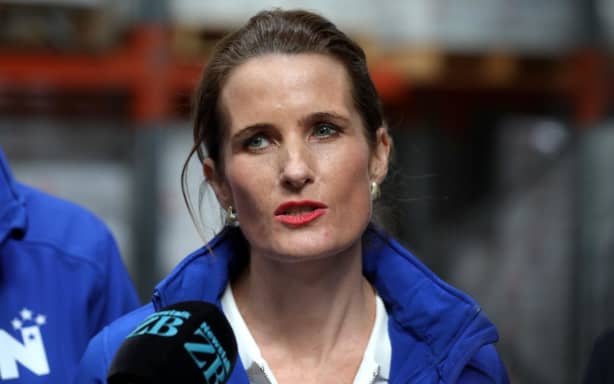
National’s finance spokesperson Nicola Willis
RNZ / Nick Monro
“The economy is strengthening but businesses have been understandably cautious about employing more people while oil prices remain high and the outcome of the New Zealand election remains unknown.”
Willis was optimistic about a labour market improvement.
“Recent business surveys have shown optimism and hiring intentions increasing and Treasury says 220,000 jobs are on the way.”
She said that would be threatened by a Labour Party-led coalition.
Unemployment was 4 percent and the underutilisation rate 10.8 percent when the National-led coalition took power in 2023.
Council of Trade Unions president Sandra Grey called the unemployment rate a “shocking record” of the government’s management of the job market.
“Long-term unemployment is at crisis levels … people in long-term unemployment make up 43 percent of total unemployed, the highest this rate has been since 1995.”
Slow employment filter
Economists’ forecasts had been for a steady or slight improvement in the state of the labour market.
ASB senior economist Mark Smith said the weak numbers were consistent with uneven economic activity and recovery.
“[The] figures confirmed that the economic recovery is only partly filtering through into labour demand, with a sizeable … fall in full-time employment … the fall in hours worked suggests that higher costs from the Middle East may be impacting economic activity.”
He said the fall in workforce participation pointed to people finding it tougher to find work.

Michael Gordon
Supplied / Westpac
Kiwibank economists said they believed there was worse to come for the labour market with high oil prices adding to business costs and squeezing consumer spending.
“We need a substantial reduction in business costs in order for the labour market to have a chance of a true revival.”
Westpac senior economist Michael Gordon said the data was “soft” from the Reserve Bank’s point of view, with the labour market softer than expected, and wage growth constrained.
“The doves on the policy committee will be encouraged in their view that there is limited scope for headline inflation shocks to pass through into second-round effects.”
The RBNZ has said subdued wage growth is needed to reduce inflation pressures.
The latest figures, released on Wednesday, had been expected to stay at around the same rate as growth in the workforce matches the jobs on offer.