
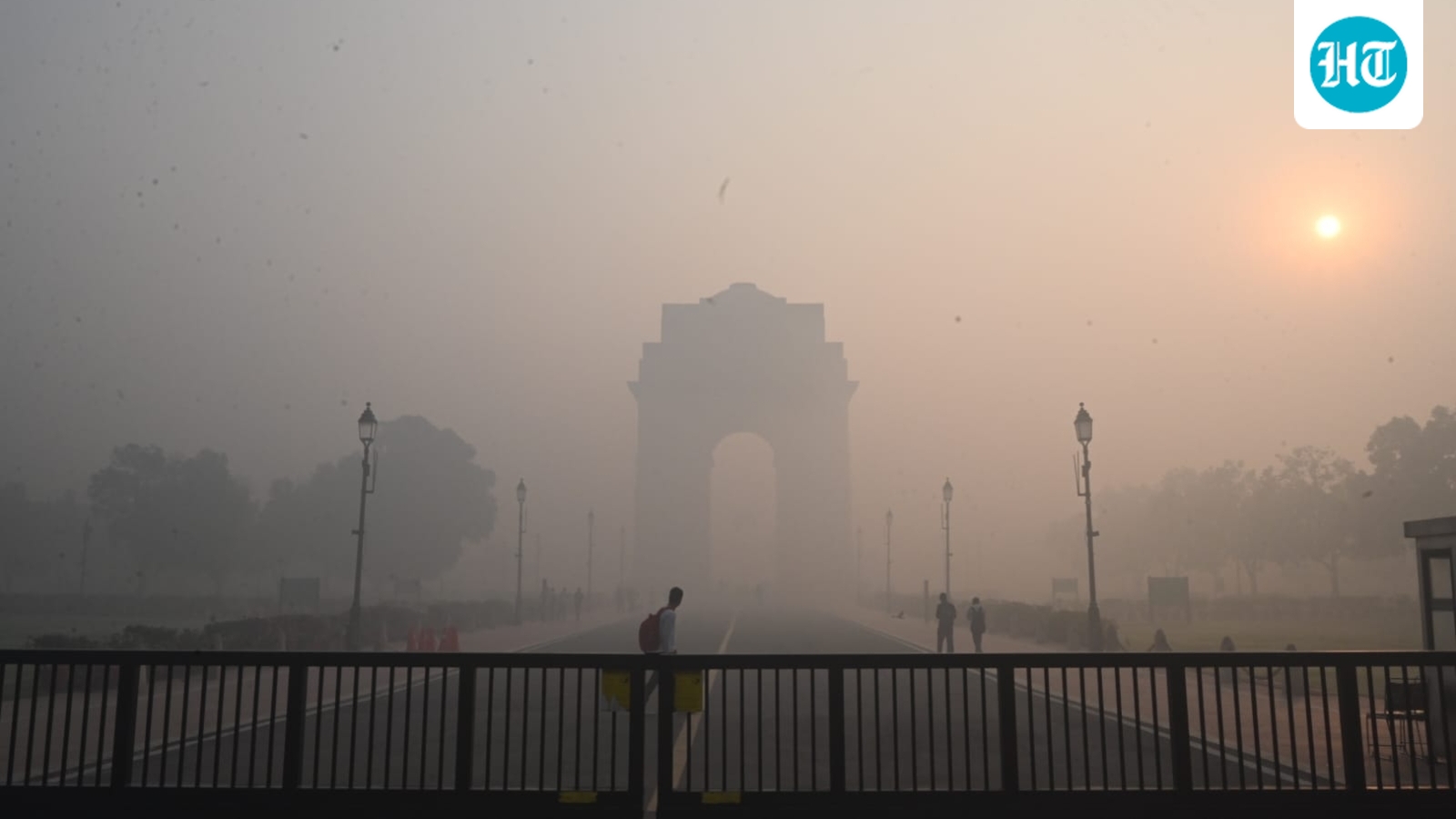
The third worst Diwali night since at least 2021
While data gaps make comparison across years difficult (the stations that go dark are not necessarily the same every year), HT has overcome this problem by looking at six stations that have reported data for most of Diwali’s peak hours in all years since 2021: Alipur, Aya Nagar, Bawana, IHBAS-Dilshad Garden, Narela, and Punjabi Bagh. Going further back reduces the number of stations further. The average of these six stations shows that Delhi’s air has been the third most polluted for most hours since Diwali night. The peak PM2.5 sub-index at these stations averaged 655 – recorded at the hour ending 1am in the early morning after Diwali. The only higher peak pollution – in terms of hourly averages – was recorded in 2021 and 2025, when these values were 812 and 752. The number was much lower in the 2022-2024 period, when the peak was 483,583, and 489. To be sure, there are two hours after the peak – the hour ending 4am and 5am – when pollution this year was the second highest after 2021. However, that is possible because of gaps in data which is available. The stations were selected if they had data for at least 9 hours in the period starting 6pm on Diwali and ending at 6am the morning after.