
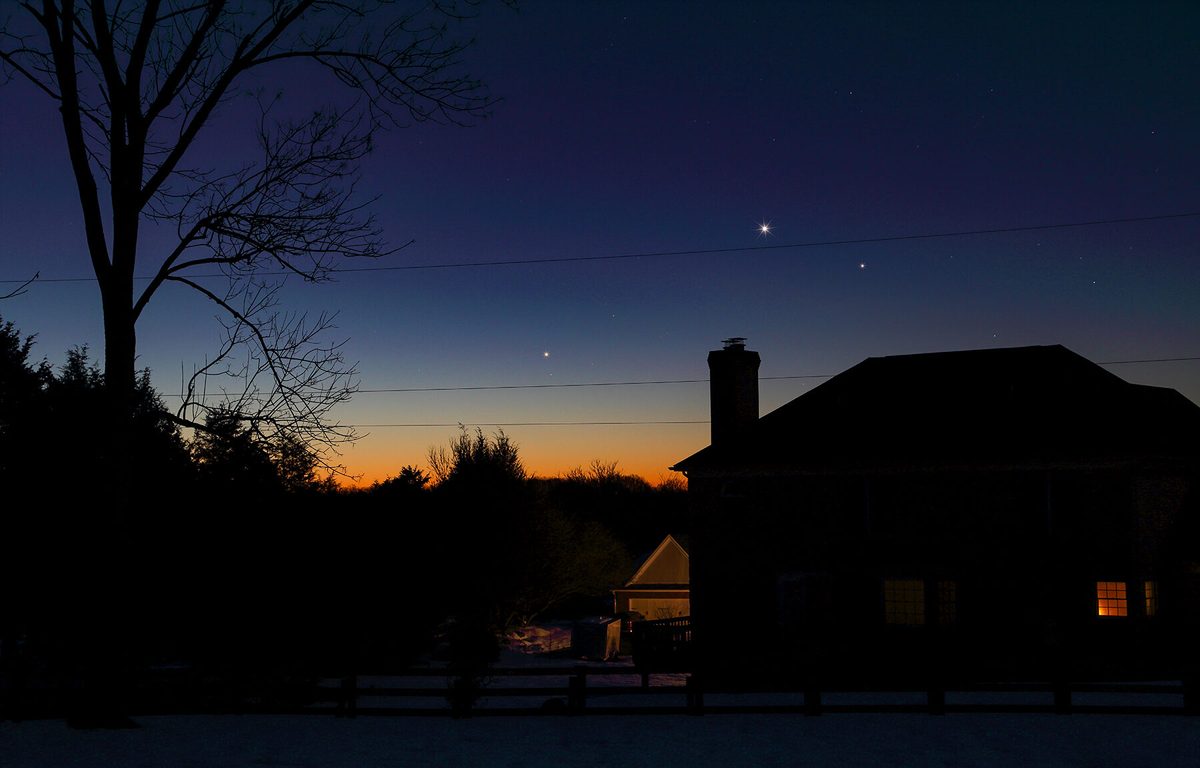
Four planets are aligning in a rare planet parade – or planet alignment – this weekend, 14–15 Novemeber 2026.
Here’s how to see them.
 Credit: M-Gucci / Getty Images
Planet alignment this weekend – at a glance
Peak dates: Mid-to-late November 2026 (coinciding with the Mars–Jupiter conjunction on 15–16 November)
Time to took: 45 to 60 minutes before sunrise
Where to look: Low in the southeast
The line-up (from ground upwards): Mercury, Venus, Jupiter and Mars
November 2026 four-planet alignment: all you need to know
As of mid-November 2026, four planets – Mercury, Venus, Jupiter and Mars – will be seen in a diagonal line stretching upwards from the southeastern horizon before dawn.
While it seems we’re always hearing about ‘planet alignments’ in the sky, this is a genuinely easy-to-see alignment. It’s happening this weekend and throughout the rest of November into December.
As well as this, because Saturn, Uranus and Neptune are visible in the morning sky, it’s possible to catch all seven worlds of the Solar System (i.e. not including Earth) in the sky in the space of 24 hours.
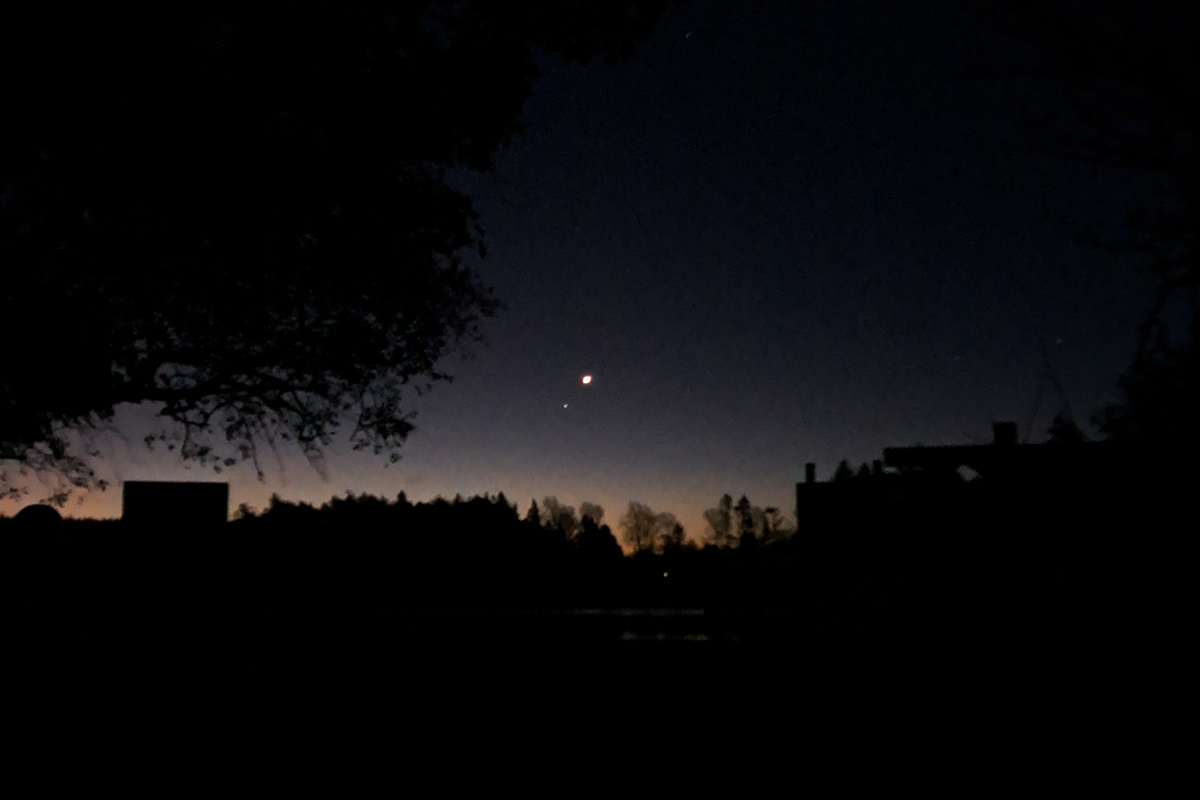 Venus and Spica captured with a Samsung Galaxy A53 5G smartphone in Pro mode from the UK, 12 November 2026, 06:24 UTC
Where, when and how to see the four planets
Look 45 to 60 minutes before sunrise, mid-to-late November 2026. Stop observing the eastern horizon before sunrise to avoid accidentally catching a glimpse of the Sun with your naked eye.
You’ll need as clear a view as possible to see the lower planets, Mercury and Venus.
Look towards the southeast before dawn. You’ll see the planets stretching upwards from the horizon in this order:
Mercury: The lowest of the four. It requires a clear, flat eastern/southeastern horizon to spot. It will be the hardest to see.
Venus: Positioned above and to the right of Mercury. It’s much brighter and higher up, making it easier to spot (and you might catch Spica, the brightest star in Virgo, very close to Venus).
Jupiter and Mars: Positioned higher up in the sky, bunched closely together and looking like a bright double star (with Mars sitting the highest of the two).
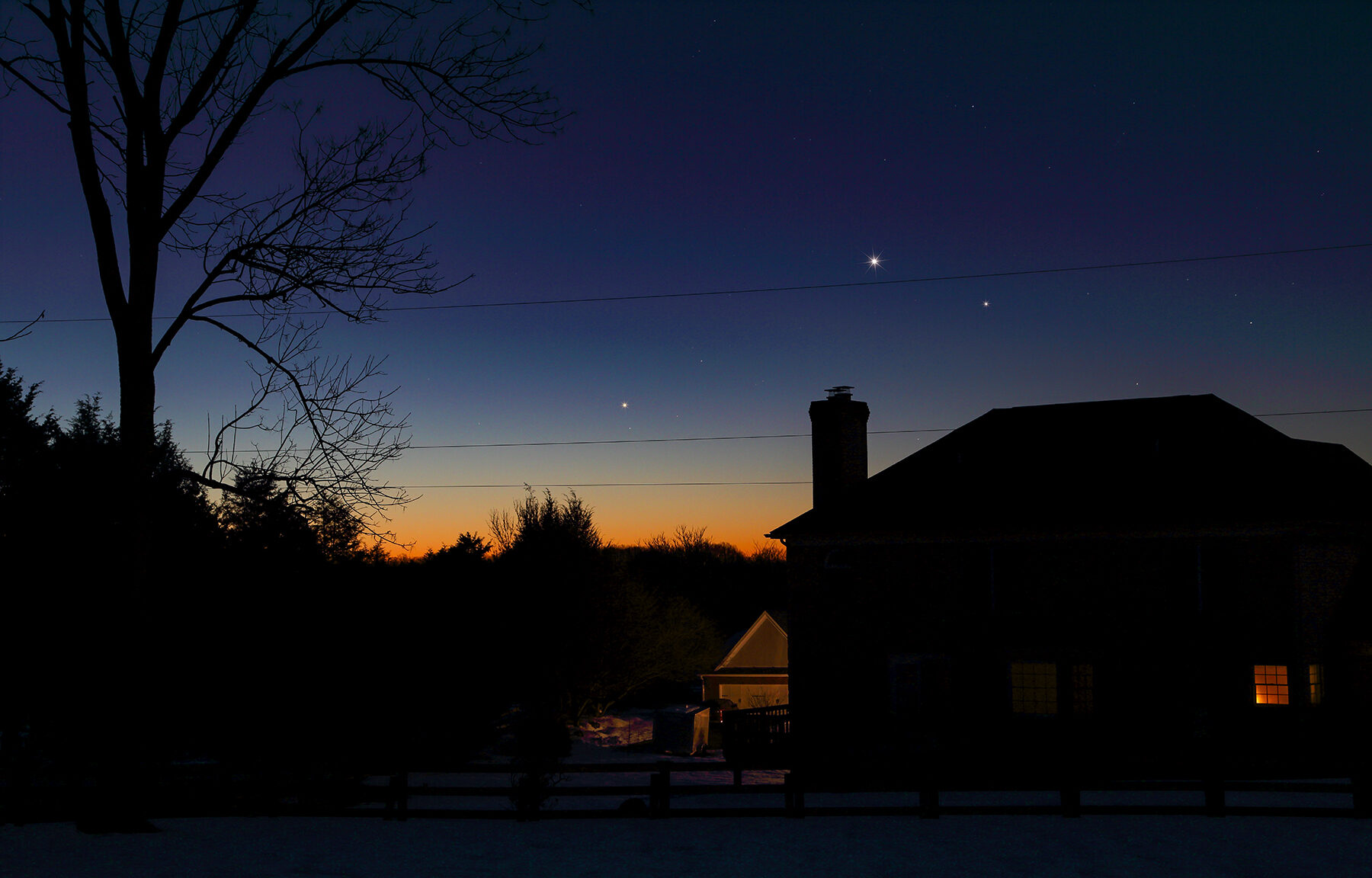 Mercury and Venus at Dawn by John Chumack, Warrenton, Virginia, USA. Equipment: Canon 6D, 55mm lens
Share your planet alignment images and observations with us this weekend by emailing contactus@skyatnightmagazine.com