

November 15, 2026 — 7:00pm
Save
You have reached your maximum number of saved items.
Remove items from your saved list to add more.
No gift articles left
You’ve used all of your gift articles. 3 more will become available on the 1st of every month.
Close
AAA
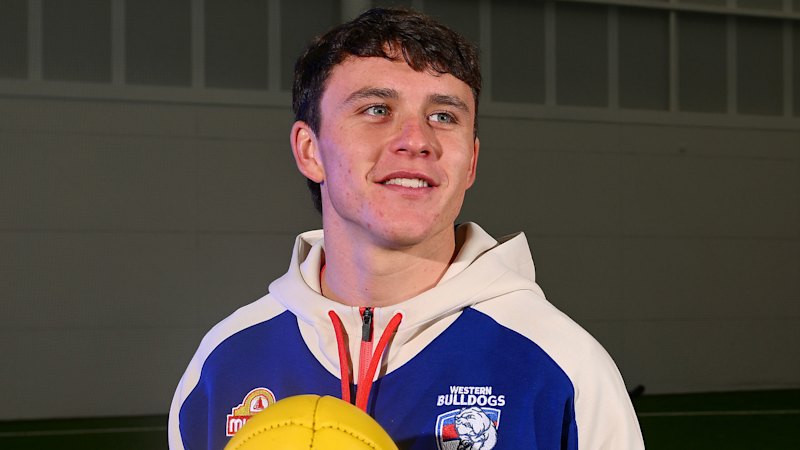
A former player who was forced into medical retirement after suffering eight brain bleeds and a fractured skull has been left shocked after an AFL-ordered clinical assessment ruled that he had sustained only a “mild” brain injury.
That clinical reclassification – delivered more than two years after Western Bulldogs draftee Aiden O’Driscoll was forced out of the game before playing a senior match – has left the 21-year-old traumatised, derailed his bid for a $600,000 severe injury payout and put his management on a collision course with the league.
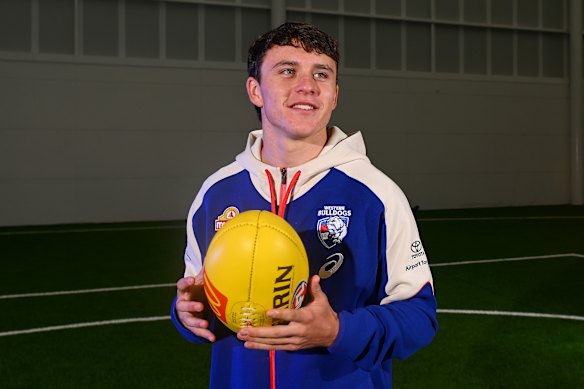 Seeking recompense: Bulldogs draftee Aiden O’Driscoll was forced to retire without playing an AFL game.Getty
O’Driscoll retired at just 18 in May 2024 before he had made his senior AFL debut, having suffered a major “head-on-head” concussion during a pre-season match simulation session and rushed to The Alfred hospital. He suffered a seizure and a fracture behind his ear, an MRI later revealing that the collision had left him with eight brain bleeds.
While he received a career-ending injury payment of more than $150,000 in 2024, his application for a $600,000 severe injury benefit (SIB) payment was rejected this year by the AFL and AFL Players’ Association, which found he did not meet the criteria.
Related Article
That decision was based on a neuropsychological assessment report completed in Perth in March by a group of clinicians specialising in the diagnosis and management of neuropsychological and behavioural conditions, which concluded that O’Driscoll suffered only a “mild TBI [traumatic brain injury]” – leaving O’Driscoll and his agent Peter Jess in shock.
An AFL medical panel’s report in April 2024 revealed the extent of O’Driscoll’s injury, going as far as declaring “Aiden has more micro-haemorrhages than the panel has seen in other athletes”. He was medically retired by the AFL’s independent concussion panel.
He struggles with daily memory loss, nausea and anxiety, dizziness and has difficulty sleeping as a result of the brain trauma stemming from the training incident.
“It [mild assessment] does not add up. My memory for basic things is shocking, really bad. It has progressively got worse over time. It’s a horrible thing for a 21-year-old to go through. Literally yesterday, when I went to the shops for three things … avocado, it literally took me 15 minutes to remember, and it was one of three things. But I forgot one of the things, which was the reason for going to the shops, and that was the dishwashing liquid,” O’Driscoll told this masthead.
“Things like that have happened to me a lot since I had the hit.
“I have lost a couple of girlfriends [relationship break-ups] along the way, and I honestly think it’s to do with this as well.
“The basic things I forget. I obviously can’t live a normal life.”
AFL chief medical officer Michael Makdissi, in a discharge summary letter dated May 18, 2026, did not comment on the “mild TBI” assessment, leaving Jess stunned.
Related Article
“The medical classification for Aiden’s type of injury is moderate/severe TBI, not a mild brain trauma as assessed … the assessment is flawed and cannot be relied upon,” Jess, a prominent concussion campaigner for athletes in all sports, said.
The neuropsychological report, which Jess gave to this masthead on behalf of O’Driscoll, said: “He [O’Driscoll] sustained a mild TBI on 26/01/2024 during a pre-season simulation match, which resulted in a single seizure episode and loss of consciousness. Neuroimaging scans have identified micro-haemorrhages primarily in his right temporal lobe.
“After medical assessments and review by an independent concussion panel, Aiden retired from professional football and contact sport in May 2024.
“Prior to his TBI, Aiden underwent cognitive evaluation as part of the Western Bulldogs baseline cognitive testing program. At baseline, Aiden was observed to display variability across his results, with weaknesses more apparent on memory tasks and when the complexity and attentional demands were greater.
Related Article
“These outcomes largely reflected a long-standing pattern of cognitive strengths and weaknesses, noting his pre-existing ADHD and dyslexia diagnoses.
“At 41 days post-TBI, neuropsychological review noted that Aiden had generally been making a good recovery. Formal testing revealed largely stable results compared to his baseline, though memory scores were slightly weaker. On the current assessment, Aiden’s basic attention processing speed, visual spatial skills, and executive functions were broadly at age-expected levels. His verbal language abilities were comparatively weaker, and vulnerabilities were apparent with his working memory and mental flexibility, attentional shift.
“There were limitations and efficiencies with Aiden’s new learning encoding, as well as his memory recall, likely related to feelings of overwhelm and attentional weakness.”
This masthead is not accusing the AFL or the AFLPA of any wrongdoing.
O’Driscoll, who has expressed frustration with the AFL and the overall process on social media, said it had been a traumatic experience.
“It has been [traumatic], it has been very difficult,” O’Driscoll said.
“The severity of my injury … it has had severe impacts on me. When it first happened, I just wanted to get back out there and keep playing. I wasn’t affected a heap, but it got to six months down the line, that’s when I started to feel it.”
The AFLPA said in a rejection letter in March that O’Driscoll had not demonstrated a “permanent impairment of cognitive function”, meaning his future earning capacity would not be reduced by at least 40 per cent.
Jess described that claim as “nonsense”, and had already begun examining legal action against several parties.
Related Article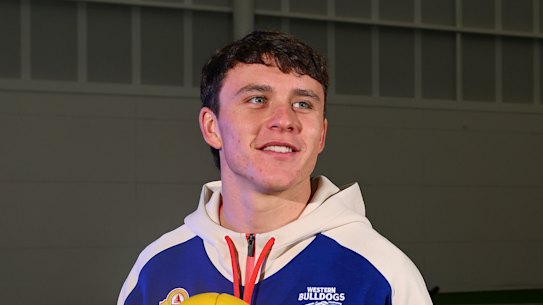
The AFLPA did not wish to comment because of confidentiality reasons. The AFL was contacted for comment.
Jess said the mild, rather than moderate or severe, assessment meant O’Driscoll’s bid for a disability pension was also impacted.
“It’s frightening what has gone on here. It has destroyed the kid’s life,” Jess said.
“He hasn’t done anything for months. He is not earning any money. This is setting a dangerous precedent.”
In the discharge letter, seen by this masthead, Makdissi said that O’Driscoll had not attended his final case review, with his bid to have a non-related third party, in his case Jess, accompanying him “deemed inappropriate” by the league.
He said O’Driscoll’s working history included one-on-one football training, and disability support work with children and adults, but “his current work capacity is limited due to ongoing symptoms”.
Makdissi noted that of the initial neuropsychological review in March 2024, O’Driscoll had reported that most of his initial concerns, including headaches, fatigue and memory concerns, had “largely resolved”. He said a follow-up in August 2024 had shown “stable or improved cognitive performance … with improved memory relative to the March assessment”.
Of this year’s review, Makdissi said O’Driscoll reported “mildly increased cognitive and physical fatigue, slightly slower processing speed, reduced time management, intermittent forgetfulness, difficulty initiating tasks, and long-standing attention/memory weaknesses, though he can complete tasks once started”.
“Aiden has returned to exercise but cannot tolerate AFL-level exertion due to nausea and feeling unwell. He remains restricted from contact sport,” Makdissi said.
Makdissi’s overall recommendations for O’Driscoll included ongoing psychological support, encouraging physical exercise and cognitive stimulation, specialist physiotherapy for exercise-related nausea and symptoms, and a referral to memory rehabilitation services.
AFL players fund the severe injury benefit fund from their slice of the AFL’s revenue.
Keep up to date with the best AFL coverage in the country. Sign up for the Real Footy newsletter.
Save
You have reached your maximum number of saved items.
Remove items from your saved list to add more.
No gift articles left
You’ve used all of your gift articles. 3 more will become available on the 1st of every month.
Close Jon Pierik is a sports journalist at The Age. He covers AFL and has won awards for his cricket and basketball writing.Connect via X or email.From our partners