
Great nations write their autobiographies in three manuscripts — the book of their deeds, the book of their words, and the book of their art. Not one of these books can be understood unless we read the two others; but of the three the only quite trustworthy one is the last.
Time, he’s waiting in the wings.
David Bowie
Here’s our first problem: I can’t know for sure that you’ve seen what I’m about to describe, even though it’s now widespread enough to have been covered by a few major publications.
It’s a clip of Woody, the beloved cowboy toy fromToy Story, chipping a football over a sprawling Buzz Lightyear. The ball loops back to his feet, he jinks to his left, past slide tackles from a couple of Mr Potato Heads. Cowgirl Jessie bears down on him from behind, but it’s too late, and Woody sidefoots the ball into an empty net.
This is an AI recreation of a real event: Mesut Özil’s audacious goal for Arsenal in 2016 against Bulgarian side Ludogorets. It was then, and is even now, a moment of sheer physical poetry — the skill, vision and improvisation that we might associate with a great musician.
It is a real-life, unrepeatable event that possesses not just an ease and a grace, but also a symmetry that gives the illusion of choreography.
Seeing the uncanny mimicry of these characters, who I first encountered when I was 10, recreates the conceptual disjunctures and layered realities that one sometimes encounters in dreams. Not the kind one fully participates in, but rather those that slide into view as one drifts off, before waking at the thought, “Wait, Bob Dylan doesn’t play cricket… ”. It has a narcotic quality, a warm blurring around the edges, a faint attending glow. Our awareness of the passage of time is briefly shut off.
Independent. Irreverent. In your inbox
Get the headlines they don’t want you to read. Sign up to Crikey’s free newsletters for fearless reporting, sharp analysis, and a touch of chaos.
By continuing, you agree to our Terms & Conditions and Privacy Policy.
As I am programmed to, I watched it with hypnotised fascination a couple of times when it appeared on my phone. Now I see it in every scroll, in new guises. Shrek Özil, Tony Soprano Özil, eventually, inevitably, Netanyahu and Gaddafi Özil. The Big Bang Theory or Pirates of the Caribbean characters performing Drake’s “Burning Bridges”. Its spiralling, intertextual meaninglessness — reference stacked on reference stacked on reference — has come to have to same effect on the brain as processed food turning to plaque in the valves of the heart.
“Slop” is such a good word for it, because it conjures the image of something soupy and undifferentiated, something that slides down the drain and clogs the pipes. It is nothing, really, and yet you feel its weight building up somewhere behind the walls.
Esther Anatolitis has written about what we lost when we started referring to culture — be that films, music, writing, art — as “content“. I would argue that those losses started with our understanding of the word itself. Content can or could mean the “substance”: the core of a thing, that which makes it what it is. Slop is all content, but no content.
Related Article Block Placeholder
Article ID: 1268224
Early in Kenneth Clark’s seminal (albeit highly partial and of its era) 1969 series Civilisation (where I first heard the Ruskin quote I led with), the host identifies two key markers of what he determines “civilisation”. First, a cultural confidence, a widespread belief in some ideal. Second is a sense of permanence, of the future. The architecture and art produced by the societies he looks at give the impression that their creators have some sense, even some hope, that what humans do can endure, after what Dylan Thomas described as our “bonebound islands” fall beneath the horizon.
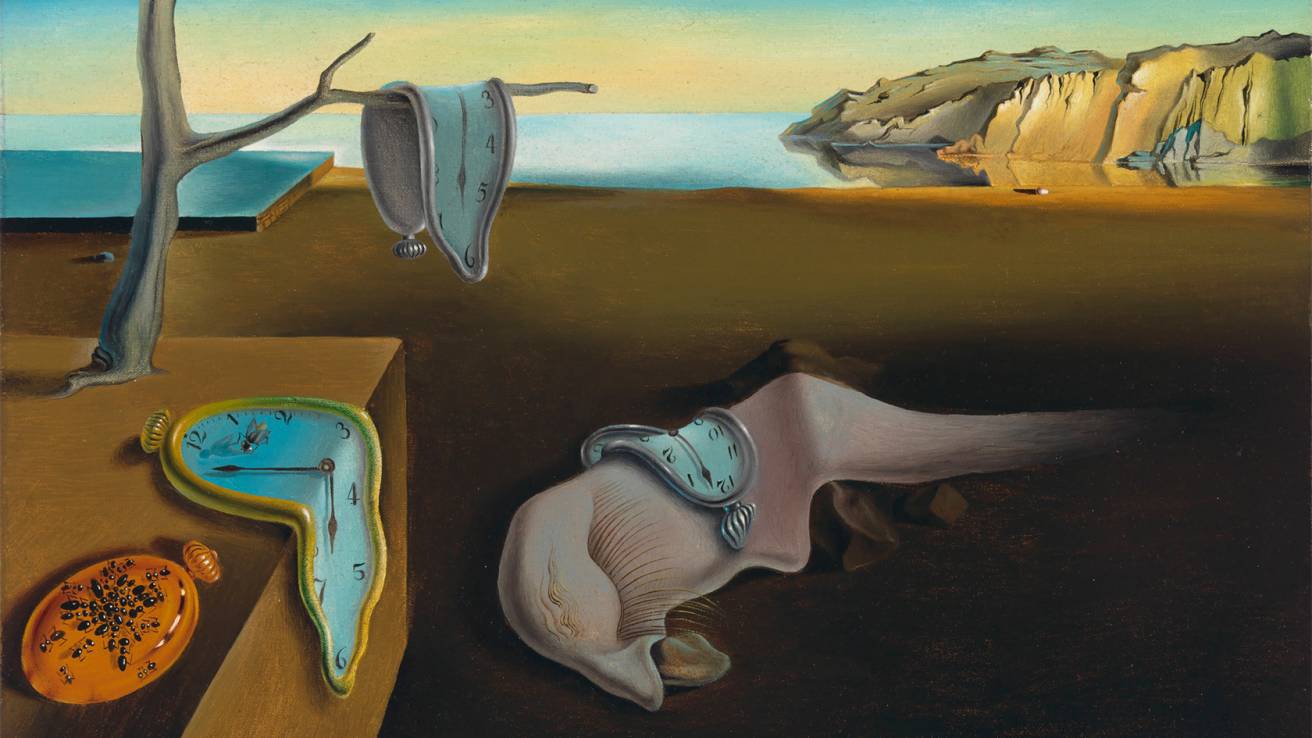
Time thus inheres in all art in countless ways. The time it takes to create, the time it takes to consume and digest, but also the time that has passed between its creation and when you see it. Time might be frozen in art, as in a painting or photograph. Or, in the case of film or music, it might be accelerated or distended (Andrei Tarkovsky said making cinema was “sculpting in time”). Regardless, it is always there.
There’s another side to how time seeps into art. For quite a long period, even trashy or middling fare from the past had a touch of magic about it for many people, simply because it carried some quality — the grain of film, the blur of old VHS, or the crackle of old recordings. These are the very “defects” that Brian Eno so famously and presciently said would “be cherished and emulated as soon as they can be avoided”. They are all signs of decay, notes of mortality in the art itself.
That quality, attached to the forms of expression accreted over tens of thousands of years, has been fed relentlessly into these learning machines. And yet, however much its powers of mimicry advance, AI cannot get the hang of drawing a clock.
If Naomi Klein and Astra Taylor’s End Times Fascism is to be believed, there’s a very good reason for that: the people flooding us with AI technology and directing their tech to hoover up as much of humanity’s cultural history as possible don’t think anything is going to survive much longer — apart from them and their AI girlfriends in their Strangelove sex bunkers.
But in recent weeks, we’ve seen this inch into formats that are nominally meant to last. The announcement that Neighbours is being recut into “AI-aided short-form vertical video” to cash in on former star Margot Robbie is one thing. The same week that was announced, Pete Davidson and Gal Gadot were defending the major use of AI in their upcoming film about (what else) Bitcoin. Perhaps the biggest test of what this does to something with the potential to be genuine art is 14th, Ava DuVernay’s new documentary about the 14th Amendment to the US Constitution, which uses AI to animate archival photos.
Maybe this is where it was always going to end up. Eric Hobsbawm wrote in The Age of Extremes that cinema was the truly revolutionary twentieth-century art — that this revolutionary spirit was “achieved by the combined logic of technology and the mass market”, giving the medium an inherent paradoxical quality.
On the one hand, there is the artistic potential of film: stories could be told and moods conveyed via hitherto unimagined combinations of lighting, movement and music. And the entirely new language of combining disparate images via editing meant that, in the early twentieth century, it was more or less compulsory for anyone in the avant-garde to embrace the new art form. At the same time, given the crew, cast, equipment and post-production costs, cinema is the most reliably expensive of all art forms, and thus its conventions have been set as much by the commercial concerns of the people who finance it as by any auteur.
And of course, in the past decade or so, we’ve been slowly inured to the idea of an artificially generated film by years of grey-grim, textureless Netflix landfill, of entirely anonymous and interchangeable film scores, of bodies and faces filtered away from any semblance of human reality. Watching Elon Musk’s utterly lifeless “anti-woke” Odyssey segment, I couldn’t help thinking that, on purely visual level, it didn’t look much worse than the Marvel films that dominated culture for more than a decade.
Related Article Block Placeholder
Article ID: 1250165
This trend affects all popular culture: Liz Pelly has written extensively of how and why Spotify’s business model — feeding listeners familiar, undemanding music that can be left on in the background without fatigue or distraction — has flattened out and homogenised the very sound of popular music, removing all its texture and sense of place.
Increasingly, this music has been created by AI and attributed to artists who don’t exist. Earlier this year, Spotify removed 50 million songs from its recommendations that were flagged as AI, but among the major music streaming services, only Bandcamp has banned AI music outright. “AI personas” like Sienna Rose and Diane Butler have hundreds of thousands of monthly listeners. Fake Christian rockers — not to mention buxom, joke-stealing stand ups — attract floods of supportive comments.
A few days ago, an organisation calling itself the The Sonic Intelligence Academy, which launched an AI music chart in January, held its first AI Music Awards. Xania Monet, an AI avatar with a Jessica Rabbit-like figure, won four awards. A post on the character’s instagram thanks “my fellow AI artists … for voting for me and showing me so much love!” Monet has 212,000 followers.
If any of this is art, it is the art of a futureless time. Who can imagine anyone, anywhere, in any future, returning to any of this crap? Produced within seconds and fired off into the internet like spores, only to be followed almost immediately and eventually swarmed with other versions of the same thing, over and over again.
Of course, AI itself has no sense of time, no connection to anything that is subject to time, and no sense that it will one day be gone. And while slop frequently simulates the ageing of physical media, generally to help massage the viewer’s nostalgia centre, it’s not intended to survive.