EEnvironment Read More Which of your climate actions make the biggest difference? Here’s how to find outMay 29, 2026 Go vegan, ditch the car, avoid air travel. Or forget all that – because it’s corporations and governments…
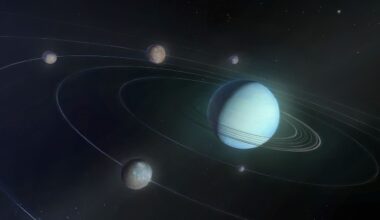
SSpace Read More A ‘lost planet’ may have given Jupiter and Uranus their moonsMay 29, 2026 For years, astronomers have suspected that our solar system may have lost at least one world at some…
PPhysics Read More We Can Now Weigh Galaxies Using Dead Stars As ScalesMay 29, 2026 Weighing a galaxy is not straightforward, you can’t just put it on a scale. What you can do…
SScience Read More AI Method Sharpens Universe View From Supernova LightMay 29, 2026 Imperial-linked research could unlock the full potential of next-generation sky surveys A new artificial intelligence (AI) method could…
EEnvironment Read More Canada’s Trans Mountain Pipeline Moves Toward Another Capacity IncreaseMay 29, 2026 Trans Mountain Corp. will hold another open season for the expanded pipeline that takes crude from Alberta to…
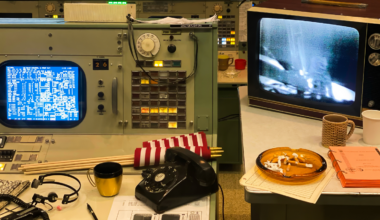
SSpace Read More In 1962, a single missing character in NASA’s guidance software doomed Mariner 1 just minutes after launch — a transcription error so costly that Arthur C. Clarke famously called it “the most expensive hyphen in history”May 29, 2026 On July 22, 1962, at Cape Canaveral, an Atlas-Agena rocket lifted off the pad carrying a small spacecraft…
PPhysics Read More Just Like Stars, Open Clusters Can Form Binary PairsMay 29, 2026 Open star clusters are some of the most dazzling objects in the sky. The small ones contain a…
SScience Read More Wattle’s the deal with psychedelics?May 29, 2026 In 2008, while investigating a clandestine drug lab, forensic scientists from WA’s ChemCentre found something odd – a…
SSpace Read More Rogue planet moons could harbor alien life for billions of yearsMay 29, 2026 Liquid water is widely considered one of the key ingredients for life. But new research suggests that worlds…
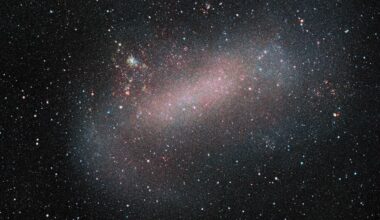
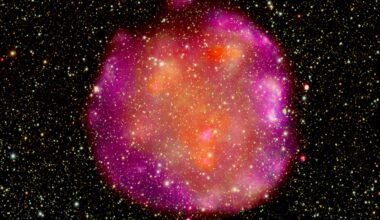
PPhysics Read More In 1987 a star exploded in a nearby galaxy, and detectors deep underground caught the burst of neutrinos roughly three hours before any telescope on Earth saw the light arrive.May 29, 2026 In 1987 a star exploded in a nearby galaxy, and detectors deep underground caught the burst of neutrinos…
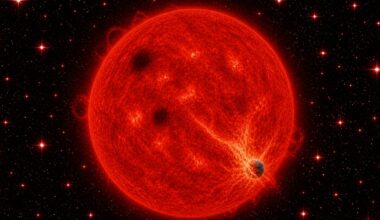
SScience Read More Stars Found Devouring Their Own PlanetsMay 29, 2026 Scientists have uncovered compelling new evidence that some stars may completely engulf and consume their surrounding planets –…
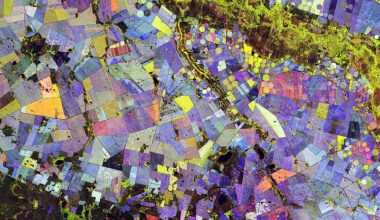
SSpace Read More Painting the Growing Season in the Maize TriangleMay 29, 2026 Along the Vetrivier (Vet River) in South Africa, a patchwork of circular and rectangular fields spreads across what…