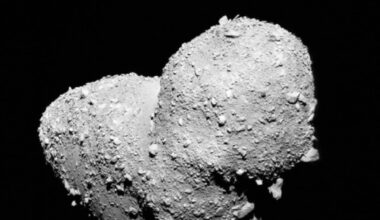
SSpace Read More Two asteroids receive unprecedented visits from space probes in a single week | ScienceJuly 18, 2026 It’s strange how we get used to what was once extraordinary. At the start of July, two spacecraft…
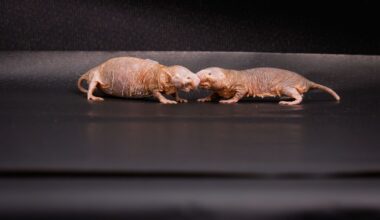
SScience Read More Queen’s scent keeps naked mole-rat colonies peaceful, infertile, study findsJuly 18, 2026 Deep beneath the ground, a naked mole-rat queen rules without a crown. Scientists have now discovered that part…
SSpace Read More A great mystery of our Sun still remains unsolved even after a 100 yearsJuly 18, 2026 Image by Anton Kudryashov via Pexels At first glance, the Sun appears to shine with plain white or…
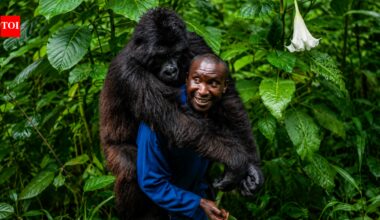
WWildlife Read More Meet André Bauma: A man who became the mother of orphaned mountain gorillas in Congo | World NewsJuly 18, 2026 Image: Legends and Legacies of Africa Organisation For over two decades, André Bauma has been committed to the…
SScience Read More Wild Snapdragons Use Subtle Hues to Lure BeesJuly 18, 2026 Just as careful blending of eye shadow can make a difference to our looks, a recent study has…
SSpace Read More Apollo 13 set the record for the farthest humans had travelled from Earth by accident in 1970, after an explosion forced it into an emergency loop around the Moon. Artemis II broke it by design in April 2026, flying exactly 4,101 miles farther — then proposing names for two lunar craters as the crew passed overheadJuly 18, 2026 The Apollo 13 distance record was never meant to be a monument. It was a byproduct of a…
SScience Read More Engineers develop a bird-scale flapping robot for aerial-aquatic travel : NPRJuly 18, 2026 Researchers have developed a new kind of robot that flies through the air, swims through the water, and…
EEnvironment Read More Australia’s biggest coal port allowed to store big batteries as it transitions to major renewable gatewayJuly 18, 2026 Australia’s biggest coal port says it has been given approval to store big batteries on site as it…
SSpace Read More Astronauts on the ISS watch 16 sunrises and 16 sunsets a day, and many say the hardest thing to describe back home is how thin the atmosphere looks from above — a bright blue line you could almost rub out with a thumbJuly 18, 2026 The International Space Station circles Earth about once every 90 minutes. That orbital rhythm gives its crew roughly…
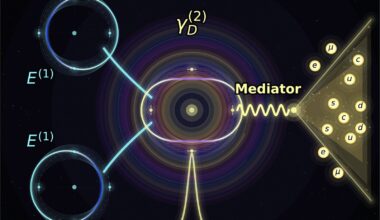
SScience Read More Dark matter may be naturally tuned to a hidden fifth dimensionJuly 18, 2026 Dark matter appears to hold galaxies together, yet it has never shown itself directly. A new theory suggests…
SSpace Read More Researchers extracted water directly from lunar soil in July 2025 and used sunlight to convert it into breathable oxygen and rocket fuel — cutting out any need to ship water from Earth, where a single gallon costs an estimated $83,000 to launchJuly 18, 2026 Researchers working with material returned by China’s Chang’e-5 mission reported on 16 July 2025 that they had used…
SScience Read More AI Pinpoints Top Environmental Health RisksJuly 18, 2026 Artificial intelligence is rapidly improving scientists’ ability to detect chemicals in the environment and human body. A new…