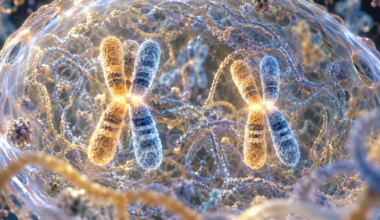
SScience Read More Genetic ‘barcodes’ could explain why chromosomes recognize one anotherSeptember 21, 2026 Repetitive satellite DNA in fruit flies appears to act like a chromosome-specific barcode, helping matching chromosome pairs find…
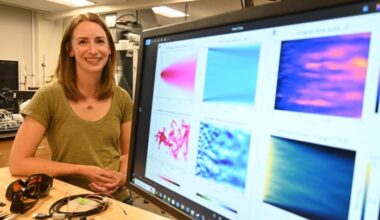
SScience Read More New physics explains how odor changes on its journey through the airSeptember 20, 2026 Turbulent air changes odor signals before they reach an animal, filtering some frequencies, spreading others, and creating new…
SScience Read More Gold nanostars make voltage-sensing proteins brighter and several times fasterSeptember 19, 2026 Gold nanostars positioned near engineered voltage-sensing proteins made their fluorescence brighter and their electrical responses several times faster…
SScience Read More Hunga Tonga’s record-breaking eruption removed 900 metric tons of methane per daySeptember 17, 2026 Satellite observations indicate that the 2022 Hunga Tonga eruption plume destroyed about 900 ± 220 metric tons of…
SScience Read More Tiny DNA fragments reveal two extinct Galápagos tortoise lineagesSeptember 11, 2026 DNA from museum tortoise bones with as little as 0.008× genome coverage was enough to recover evolutionary relationships…
SScience Read More Inside the Dodo’s skull, scientists found a bird unlike any living pigeonSeptember 9, 2026 CT scans and digital endocasts of rare dodo skulls suggest the extinct bird had a brain broadly comparable…
SScience Read More Quantum chip opens new way to read complex quantum systemsSeptember 4, 2026 A quantum computing method called QCS reconstructed spectra from static, open and periodically driven quantum systems using one…
SScience Read More Scientists resurrect a 160-million-year-old mammal immune system and watch it evolveAugust 30, 2026 Researchers reconstructed antimicrobial peptides from mammal ancestors dating back about 160 million years and found that some ancient…
HHealth Read More Newer blood thinners linked to slower Alzheimer’s declineAugust 16, 2026 Newer blood thinners were linked to slightly slower memory and thinking decline in people with both Alzheimer’s disease…
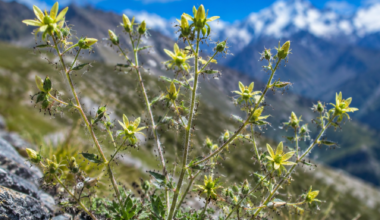
SScience Read More 150-year-old Darwin mystery solved by a carnivorous alpine flowerAugust 15, 2026 Saxifraga candelabrum, an alpine flowering plant from China, has been confirmed as carnivorous because it attracts, traps, digests,…
HHealth Read More Surprise helps people learn and think better, brain study findsAugust 15, 2026 Surprise appears to help the brain loosen its grip on old expectations, allowing people to respond more accurately…
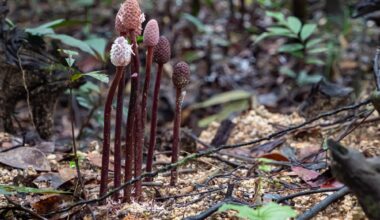
SScience Read More Hidden fungal networks more than 100 quadrillion km in length help plants survive climate changeAugust 11, 2026 Researchers at the Technical University of Munich developed a new 3D imaging method that reveals plant roots and…