Australia News Beep
  • News Beep
  • Australia
  • Headlines
  • Business
  • Entertainment
  • Health
  • Science
  • Sports
  • Technology
Australia News Beep
Australia News Beep
  • News Beep
  • Australia
  • Headlines
  • Business
  • Entertainment
  • Health
  • Science
  • Sports
  • Technology

Browsing Tag

Vascular

33 posts
HHealth
New treatment shows promise in protecting brain following stroke reperfusion
Read More

AI-assisted decision support system improves stroke care and long-term outcomes

  • March 23, 2026
A clinical decision support tool that uses artificial intelligence (AI) to analyze scans after a stroke alongside treatment…

HHealth
Surgical robot can help safely remove the caudate lobe
Read More

Surgical robot can help safely remove the caudate lobe

  • March 6, 2026
Resection of tumors in the caudate lobe (a deep, hard-to-reach part of the liver) is recognized as one…
HHealth
Mouth and gut microbes talk to each other
Read More

BCAT2 enzyme identified as a target for diabetic foot recovery

  • March 6, 2026
Diabetic macrovascular complications are the main cause of death and disability in diabetes patients, of which vascular calcification…
HHealth
Study: Attentional failures after sleep deprivation are locked to joint neurovascular, pupil and cerebrospinal fluid flow dynamics. Image Credit: New Africa / Shuttertock
Read More

Sleep loss triggers brain fluid pulses that impair attention, study finds

  • February 17, 2026
New neuroimaging research shows that when sleep-deprived people lose focus, the brain briefly shifts toward sleep-like physiology, offering…
HHealth
Researchers unveil drug complex that makes cancer cells self-report to immune system
Read More

Osteoprotegerin links bone metabolism to cardiovascular disease

  • February 13, 2026
Announcing a new article publication for Cardiovascular Innovations and Applications journal. Osteoprotegerin (OPG), a glycoprotein in the tumor…
HHealth
Japanese middle-aged women enjoying Japanese hot springs
Read More

Can hot baths lower high blood pressure?

  • February 12, 2026
A new scientific review suggests that regular hot bathing could help reduce blood pressure in certain groups. However,…
HHealth
Posture-induced retinal vascular response predicts diabetic retinopathy progression
Read More

Posture-induced retinal vascular response predicts diabetic retinopathy progression

  • February 11, 2026
Diabetic retinopathy develops through complex microvascular damage driven by chronic hyperglycemia, yet traditional risk factors such as disease…
HHealth
Cats with dementia show brain changes similar to Alzheimer’s in humans
Read More

Genetic study establishes causal link between obesity and cognitive decline

  • January 23, 2026
People with obesity and high blood pressure may face a higher risk of dementia, according to a new study published in The Journal of Clinical…
HHealth
Shared gene signatures reveal metabolic dysfunction in liver cirrhosis and acute-on-chronic liver failure
Read More

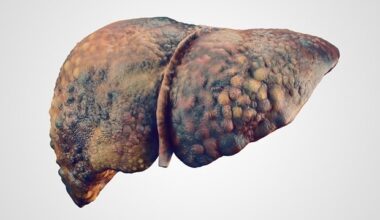
Blocking platelet-activating factor reduces liver damage in cirrhosis

  • December 20, 2025
Researchers from Miguel Hernández University of Elche (UMH) in Spain have identified an effective strategy to reduce structural…
HHealth
Cats with dementia show brain changes similar to Alzheimer’s in humans
Read More

Study identifies molecular drivers of cerebral small vessel disease

  • December 16, 2025
A new study identifies molecular factors that promote small vessel disease – and an active drug that can…
HHealth
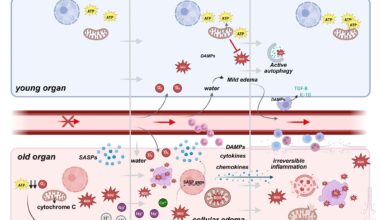
Cellular responses to ischemic reperfusion injury in young vs older donor organs. During ischemia, the deprivation of oxygen and nutrients leads to mitochondrial dysfunction and energy loss. In young cells, mitochondrial resilience helps sustain ATP production, ameliorating damage. Old cells, in contrast, experience significant ATP depletion, relying heavily on anaerobic metabolism, which leads to lactate buildup, pH reduction, and cellular stress. Upon reperfusion, the restoration of blood flow triggers oxidative stress as mitochondria generate excessive reactive oxygen species (ROS). Young cells compensate for those events through robust antioxidant systems, maintaining cellular integrity. Conversely, in old cells, impaired antioxidant defenses result in unregulated ROS production, furthermore damaging membranes, organelles, and DNA. Additionally, old cells release pro-inflammatory genes, amplifying local inflammation. Consequences are particularly severe in aged vascular endothelial cells, with ion pump dysfunction (e.g., Na⁺/K⁺ ATPase) causing ionic imbalances and cellular edema. This disruption exacerbates ischemic injury, progressing to irreversible damage. In contrast, young cells effectively resolve edema and inflammation through mechanisms that include macrophage945 mediated clearance of Damage-Associated Molecular Patterns (DAMPs) and anti-inflammatory cytokine release (e.g., IL-10 and TGF-β), allowing recovery and tissue repair. In old cells, persistent ROS generation, unresolved inflammation, and DAMP accumulation lead to irreversible inflammation, organelle collapse, and eventual cell death. Created in BioRender. Kayumov, M. (2025) https://BioRender.com/m23u7ro .
Read More

Scientists outline how organ rejuvenation strategies could solve the donor shortage

  • December 12, 2025
New insights into cellular aging, perfusion technologies, and senescence-targeting treatments show how aging organs could be revived, turning…
HHealth
Quitting smoking linked to slower memory decline in midlife and older adults
Read More

Smoking fewer cigarettes does not eliminate cardiovascular disease risk

  • December 5, 2025
In a study funded by the National Heart, Lung, and Blood Institute, new research from Johns Hopkins Medicine…
Australia News Beep
www.newsbeep.com