
The smartphone market has long been dominated by giants like Samsung, Apple and Google, but a funky and relatively new player on the scene is making it difficult to justify spending big bucks on a household name.
You may not have heard of Nothing, but millions around the world — particularly younger, more price-conscious smartphone users — are lapping them up, and with good reason. The main one being value for money.

I have tried a number of the British company’s phones over the years and have been consistently impressed by the standout designs, user-friendliness and the bang for buck you get with each model.
Their aim is pretty clear: they want you to bin your big-name phone for something more exciting and affordable.
The company’s first true flagship, the Phone (3), was released last year. While I wrote that it was a fantastic device, it broke rank with Nothing’s track record of being significantly cheaper than the competition, as it took on the big players head-on for the first time.
It has now released a tranche of cheaper new phones on the Aussie market, as well as eye-catching new headphones.
The line-up looks like this:
Phone (4a) — from about $649
Phone (4a) Pro — roughly $949
Headphone (a) — around $329
Looking good
True to form, Nothing has implemented its typical flair in the design of all three new products.
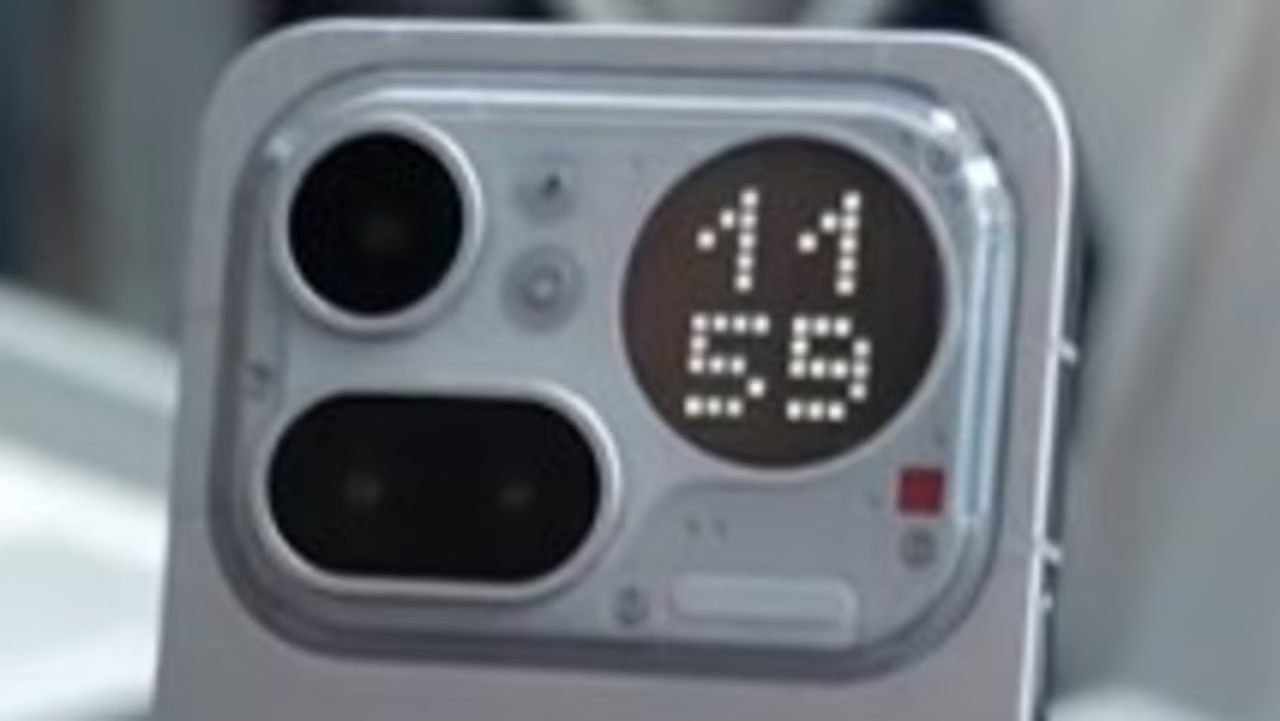
Nothing phones still look like nothing else on the market — transparent backs, exposed elements and the signature lighting system that flashes when you get notifications.
The Headphone (a) follows the same philosophy — clean, minimal, slightly industrial — and feels more premium than the price suggests.
They’re the type of products that get people talking, but it’s not all about aesthetics.
How they perform — and one major omission
The Nothing Phone (4a) offers a 6.78-inch 120Hz OLED display, solid performance and a unique design with Glyph lighting. It features a 50MP main camera with decent 3.5x optical zoom capabilities.
Apps open quickly, scrolling is smooth and the battery life comfortably lasts a full day.
Let’s be clear — for $649, this is a steal. It’s not the most powerful device on the market, but for most people it’s more than enough.
One big drawback for some users will be the lack of wireless charging. CEO Karl Pei has said younger users don’t care as much about it — and that removing it allowed the company to bring costs down for non-flagship models.
So with this new budget series, he’s done exactly that — and it will irk some people. Maybe I’m showing my age, but I quite like throwing my phone down on a wireless charger instead of fiddling around with a cable every time. Truth be told, it’s not a deal-breaker at this price point.
The 4a Pro is the next level up. It feels faster, more refined and closer to a proper flagship experience, with stronger performance and better overall polish. It’s probably the smarter buy if you can stretch the budget.
Both run Nothing OS, which is one of the better Android experiences out there — minimal bloat, fast and actually enjoyable to use.
The Pro also boasts a large “Glyph Matrix” on the back — essentially a mini digital display that can be used for an ever-increasing number of purposes.
How’s the camera?
Nothing is keen to show off the photographic power of its budget smartphones — and these new models deliver.
I took the Pro model on a day out with my six-year-old son at Circular Quay and got some absolutely cracking shots. It’s particularly good at picking out detail in bright sunlight. People and faces really pop, and the zoom is pretty impressive.
Check out the mega zoom I managed on the unsettling entrance face at Luna Park, taken all the way from the Opera House forecourt.
Do the latest iPhones and Samsungs have technically better cameras? Probably. But for the price, these take very strong photos.
Funkiest headphones on the market
Nothing isn’t just about phones — its first earbuds a few years back got plenty of attention in the tech world.
It released its first over-ear headphones, Headphone (1), last year. These were premium headphones with KEF-tuned sound, an aluminium build and strong battery life, retailing for about $549.
Now it has released the Headphone (a) — around $329 — which fits neatly into the same “premium-lite” category as the phones.
They’re comfortable, the noise cancelling is solid, and battery life is strong enough to get you through long commutes or flights.
They are mostly plastic, so don’t feel as solid or luxurious as the Headphone (1), but they maintain an excellent battery life of up to 80 hours — in some cases even longer than the premium model.
This, combined with the bold colour options and futuristic design, is the real selling point.
Its transparency mode — which uses external microphones to pass ambient sound through while you’re listening — is decent, but still a fair way off the standard set by the likes of Sony, Apple and Bose.
I’m no audiophile, but these handled everything I threw at them and sounded great across hip hop, metal and jazz. They do lean slightly bass-heavy, which will likely appeal to younger users, but you can tweak this using the Nothing X app, which offers both a simple 3-band and a more advanced 8-band equaliser.
Verdict
Nothing hasn’t reinvented the wheel here — and it feels like they’re sticking to a tried-and-tested formula — but it’s one that continues to win fans around the world.
As people look for ways to cut costs in a tougher economic climate, that audience is only growing.
For the money, you’re on to a winner with these new mid-range models.
Apple, Samsung and Google, and everyone that blindly uses them — you’ve been put on notice.
Read related topics:Google