
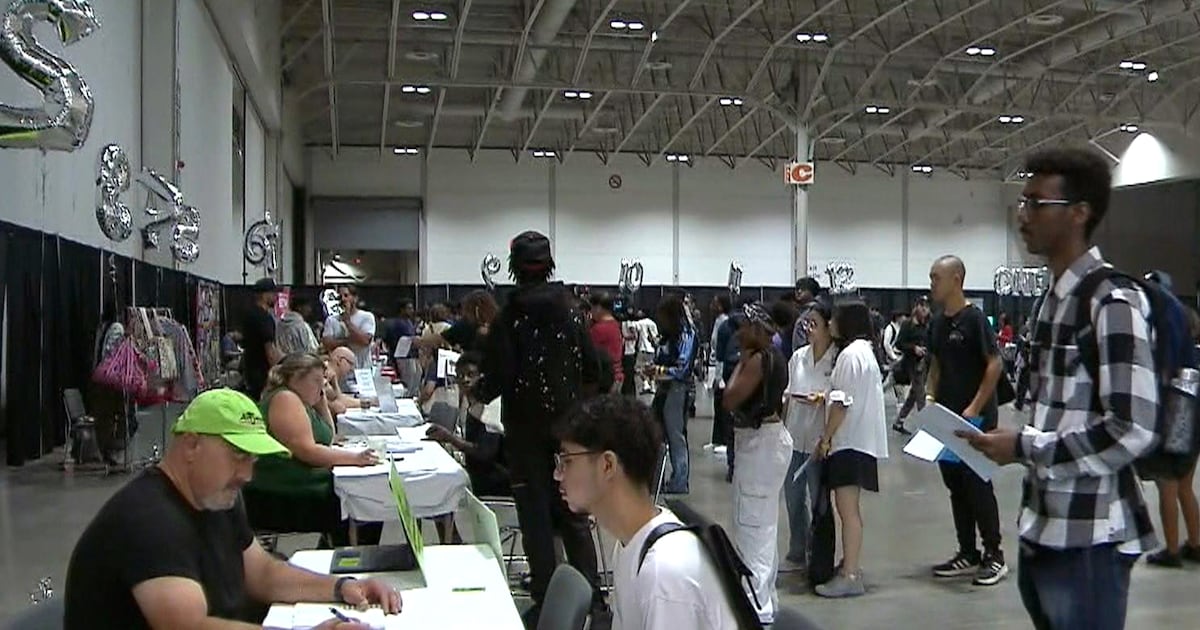
Youth unemployment is at levels that “are typically only seen during recessionary periods,” a senior economist for CIBC told CTV Your Morning on Monday.
Andrew Grantham said despite restrictions Canada has put on non-permanent residents over the last year, youth unemployment levels continue to rise.
The Canadian Press reported Thursday that unemployment for young people aged 15-24 in Canada reached 14.6 per cent in July, a nearly 15-year high outside of the COVID-19 pandemic.
A report Grantham wrote, published Aug. 26 shows joblessness for 18-24 year-olds rising since 2022. That report suggested that AI and an oversupply of labour may be affecting the rate at which young people can find work.
Grantham pointed to self-checkout counters and AI as examples of technological innovation that are “taking away some of those temporary jobs.”
“For young people these changes in technology do seem to be taking away jobs that they would typically do either temporarily or as a first job coming out of university.”
AI offers “productivity enhancements and job growth” for industries that benefit from it in the long run, Grantham’s report said. However, “workers under 25 are more likely to work in areas that are at high risk,” from AI.
Grantham suggested that another possible reason for an increase in youth unemployment may be due to employers looking for workers who will hold positions permanently, rather than a student or young person who may only want to work the job over the summer or while they study before moving onto a professional job in their field.
“If you’re an employer and you have the potential for someone to do (a job) permanently rather than on a temporary basis then obviously they would jump at the opportunity for that.”
In August, the U.S. Bureau of Labor Statistics put the unemployment ratio for young Americans at about 10 per cent.
“This is not just a Canadian phenomenon. We are seeing elevated levels of youth unemployment in other countries, for example parts of Europe and even in the U.S. where the overall labour market is actually quite strong. Obviously, those countries have not seen those big increases in student numbers, non-permanent residents, so there is something else at play here.”