
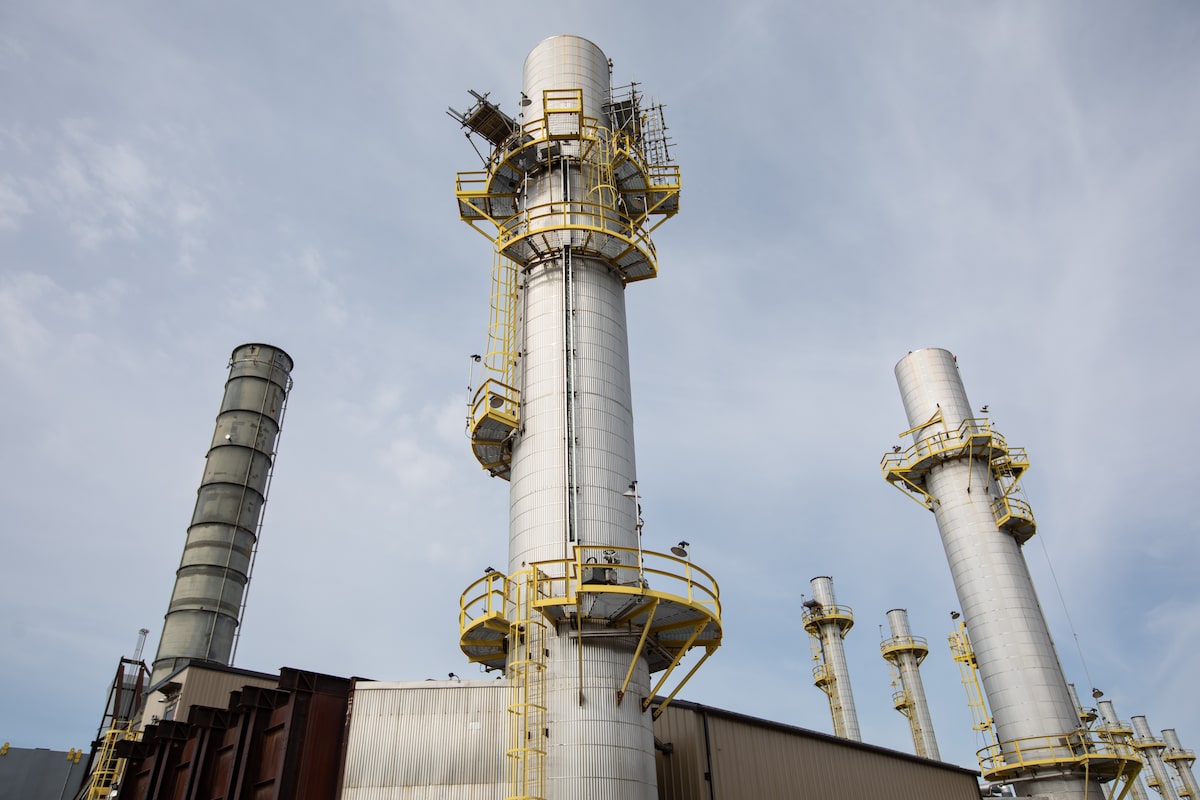
Cenovus Energy’s president and chief executive said the sale will help ‘focus’ the company’s downstream business.AMBER BRACKEN/The Canadian Press
Cenovus Energy Inc. CVE-T is selling its 50-per-cent stake in two U.S. refineries for US$1.4-billion in cash, the latest move by the Calgary-based company to rejig its asset portfolio.
Cenovus announced Tuesday that it would sell its interest in WRB Refining LP to its joint venture partner, Phillips 66. The assets include the Wood River Refinery in Illinois and the Borger Refinery in Texas, which have a combined refining capacity of 495,000 barrels a day.
Jon McKenzie, Cenovus president and chief executive, said in a statement that the deal underscores the company’s strategy of owning and operating assets that are core to its business.
“After the sale of WRB, our downstream business will be more focused, comprised of assets we control,” he said.
Strathcona boosts bid for MEG Energy to top Cenovus offer
The transaction is expected to close in the third quarter of the year, at which point Cenovus’s downstream business will comprise its upgrader and refinery in Lloydminster, Alta., and, in the U.S., its refineries in Lima and Toledo (both in Ohio) and Superior, Wis., all of which it operates alone.
Together, those sites can refine around 472,800 barrels a day, roughly 55 per cent of which is geared for heavy oil.
Analysts largely viewed Tuesday’s announcement as a positive move for Cenovus.
National Bank of Canada equity markets said in a research note that the deal was a positive one and would allow Cenovus to focus on its core operated upstream and downstream business and accelerate its debt repayment.
TD Securities research analyst Menno Hulshof said in a Tuesday note that the move was not a huge surprise, given Cenovus has repeatedly talked about its desire to pare down its U.S. refinery footprint to core assets.
Selling off its WRB assets means Cenovus is now less exposed to “a historically challenged part of the business,” he wrote.
Mr. Hulshof also cited Cenovus’s recent bid for MEG Energy Corp. MEG-T.
Late last month, MEG agreed to a friendly deal with Cenovus that valued the last of Canada’s large pure-play oil sands producers at nearly $7-billion.
Analysts had been expecting another bidder to emerge since shortly after Strathcona Resources Ltd. SCR-T launched its bid in May; Cenovus was specifically named by Royal Bank of Canada analyst Greg Pardy as the most likely suitor.
That offer made the likelihood of Cenovus selling off its non-core assets “very topical,” Mr. Hulshof wrote Tuesday.
Andrew Willis: MEG Energy bidding war sets the stage for oil patch takeovers
Cenovus and MEG have neighbouring operations in Northern Alberta. Combining the two companies would create Canada’s second-largest oil sands producer, with an average production of roughly 720,000 barrels a day. That represents more than one out of every five barrels produced in Canada’s oil sands, according to Canada Energy Regulator data.
“The fit is exceptional, and it plays right into what we do best,” Cenovus’s Mr. McKenzie said on a conference call discussing the deal last month. “These assets will be producing for decades to come.”
Cenovus offered a mix of cash and stock for MEG, worth the equivalent of $27.25 a share and composed of 75-per-cent cash and 25-per-cent stock. The total deal value, including MEG’s existing debt, is $7.9-billion. That equates to $5.2-billion in cash and approximately 84.3 million shares, Cenovus chief financial officer Kam Sandhar said on the call.
Strathcona has since upped the ante in the bidding war for MEG, launching an amended hostile takeover bid on Monday. The all-stock proposal of 0.8 Strathcona shares per MEG share equates to $30.86 a share, or roughly $7.85-billion for the entire company, not including MEG’s debt.