
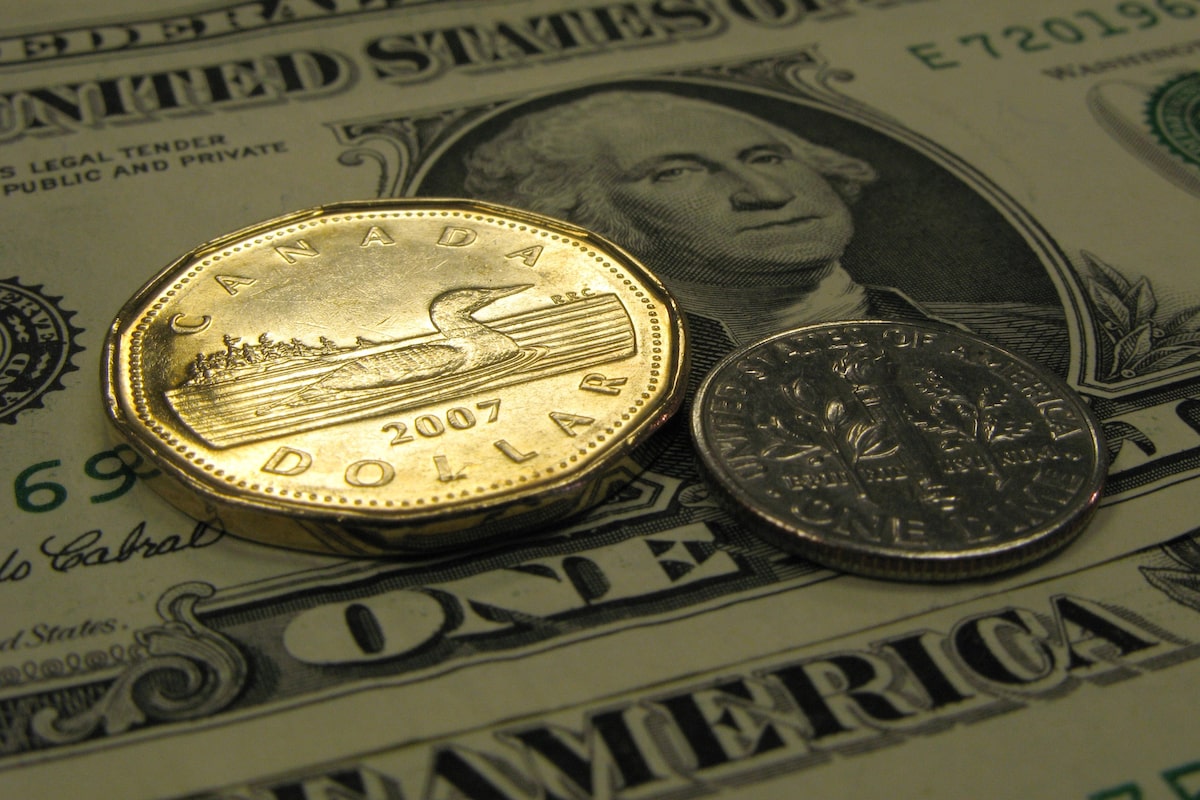
The Canadian dollar fell against its U.S. counterpart on Tuesday, approaching the weakest level since August, as an uncertain outlook for the Canadian economy supported recent moves by investors to increase bearish bets on the currency.
The loonie was trading 0.3 per cent lower at 1.3845 per U.S. dollar, or 72.23 U.S. cents, after moving in a range of 1.3794 to 1.3848. On Friday, the currency touched a 9-day low at 1.3854.
“This weakness is partially attributable to an increase in net-short institutional positioning,” said Kevin Ford, FX & macro strategist at Convera.
“While Canada benefits from the CUSMA deal and has one of the lowest effective tariff rates globally, tariffs on other sectors and ongoing uncertainty about a new trade deal with the U.S. continue to dampen the medium-term economic outlook.”
Canadian employment data on Friday added to evidence that uncertainty related to U.S. tariffs is taking a toll on Canada’s economy.
The vast amount of Canada’s exports enter the U.S. tariff-free under the USMCA but the continental trade pact is up for review in July next year.
The U.S. dollar fell against a basket of major currencies as the preliminary annual benchmark revision estimate to the closely watched U.S. payrolls data suggested a far weaker labor market than was previously thought. The price of oil, one of Canada’s major exports, settled 0.6 per cent higher at $62.60 a barrel after the Israeli military said it carried out an attack on Hamas leadership in Qatari capital Doha.
Canadian bond yields edged higher across the curve. The 10-year was up 1.6 basis points at 3.225 per cent, after touching on Monday a three-month low at 3.208 per cent.