
As an educator, Lisa Mitchell uses artificial intelligence (AI) to “help think of ideas,” which she then edits into something that she wants and can use for her classes.
“[AI] can save us time from doing some tasks as long as we’re knowledgeable enough to edit those ideas that it provides,” she told CBC News on a sunny day in downtown Kitchener last week.
AI can be a very useful application, said Joel Blit, who is an associate professor of economics at the University of Waterloo.
Blit is also the co-founder and co-director of the Canadian AI Adoption Initiative. He said that after ChatGPT was launched around three years ago, AI became a “fundamentally democratic technology.”
“Now people can use AI, interact with AI in natural language,” he said. “Every Canadian can use the technology to do things faster, better, more efficiently, or even do things that they weren’t able to do before.”
 Lisa Mitchell says she uses AI in her work as an educator. (Josette Lafleur/CBC News)
But while AI is useful in her line of work, Mitchell says she’s worried about the risks surrounding its growing use — a worry that Blit said he recognizes.
To Blit, these worries about AI are valid. But as an expert who works with executives and leaders in government to “seize the benefits of AI,” he says we need to find the balance between regulating AI and using it for its strengths.
AI is transforming the way people operate
Julia Guenther said she uses AI “quite a bit,” especially in condensing information in a way that would make it easily understandable for a wide range of users.
Guenther also spoke to CBC News during her lunch break in downtown Kitchener She said she uses AI to do some translating tasks, but that she has someone else look at it afterwards.
“It still has to get reviewed by an individual who is familiar with the language it’s translated to,” she said. “But it does make it easier and simpler for them, at least if they have a starting point from what it is that I provided.”
These are just some of the applications of AI that people know about. Blit said many people don’t realize that digital assistants like Siri and Alexa also use AI. Even Google Maps use AI as well, he explained.
Apart from these common applications, Blit says AI is also being utilized for things like customer service, HR tasks, marketing, and even healthcare.
“My wife is a family doctor and she’s been using the AI scribe… it saves her probably about 20 per cent of her time,” he said.
“It’s a great example because it means that you can be fully engaged with the patient instead of writing as the patient is explaining.”
 Julia Guenther uses AI in her work, especially with condensing large information into something more easily understandable for users. She says she’s not worried AI will take over people’s jobs. (Josette Lafleur/CBC News)
But while AI can help make previously tedious tasks more convenient, relying too much on AI will result in some undesired effects.
On an individual level, Blit explains that relying on AI could affect people’s ability to organize their thoughts.
“I think, maybe, we do start to lose a little bit of our ability to organize our thoughts if AI is doing it for us,” he said.
But at the same time, Blit says using AI will not cause people to just suddenly lose the ability to think.
Blit compares the situation with AI to using calculators, saying that people did not lose the capacity to do arithmetic just because the calculator was invented.
“We now focus on other aspects other than arithmetic because we have the calculator,” he said. “It’s just going to be the same thing with the AI… we’re going to do less of the things that AI does well, and more of the things that it doesn’t do as well.”
A ‘super intelligence’ in the next 20 years
In 2024, British-Canadian computer scientist Geoffrey Hinton told CBC News that research suggests that there is about a 50 per cent chance a “super intelligence” will be developed in the next 20 years.
“We will make things smarter than ourselves,” Hinton said. “It’s mainly a question of whether governments can regulate the big companies so that they develop AI safely.”
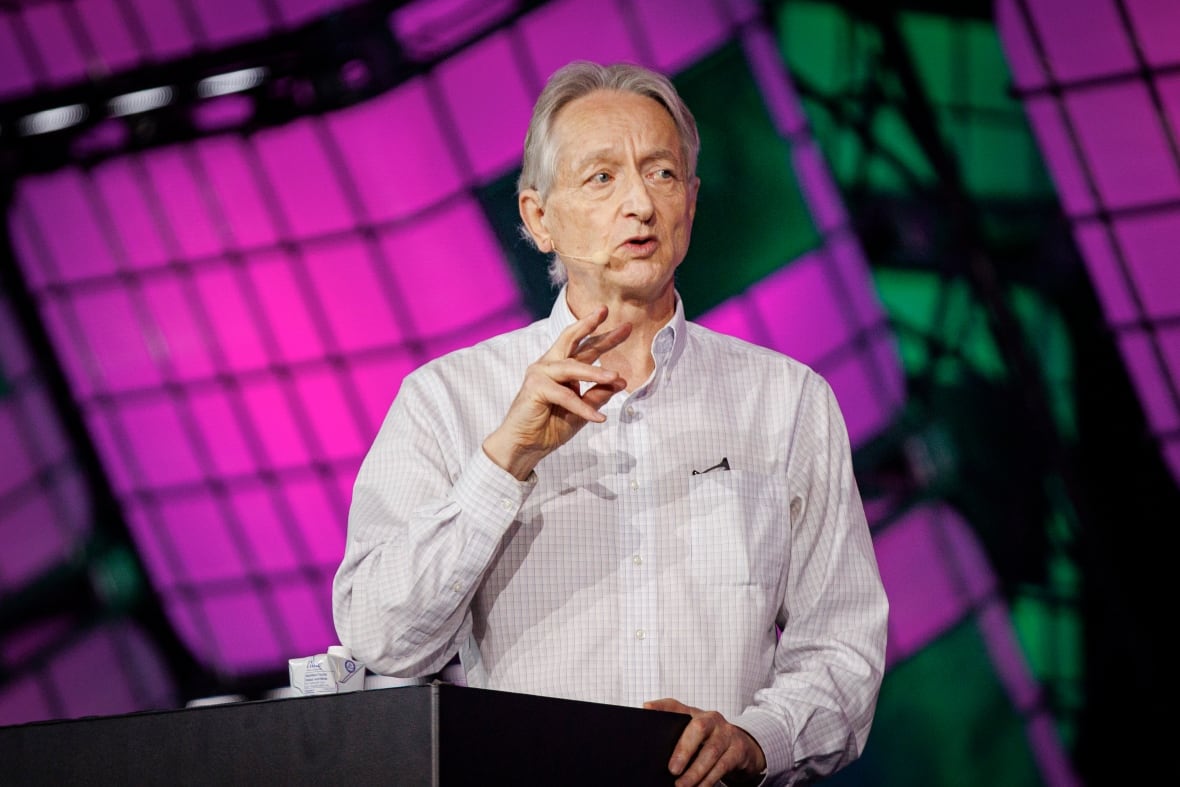 Geoffrey Hinton is a British-Canadian computer scientist who is dubbed as a “godfather of AI.” He says there’s a 50 per cent chance a “super intelligence” will be developed in the next 20 years. (Evan Mitsui/CBC)
Hinton is often lauded as one of the “godfathers of AI.” He says the world’s governments need to “force the big companies to do more research on how to keep these things safe when they develop them.”
Blit agrees that AI needs to be regulated because there are no specific regulations for it. He says currently, there are only “general regulations that would apply to many uses of AI.”
But at the same time, Blit says there is a need to ensure that AI is not being over-regulated.
“If we do, we are going to stifle the technology, we’re going to stifle the innovation that frankly, as a country, we need,” he said.
AI will affect jobs; Blit, Québec study
Another common question surrounding the growing adoption of AI in the workplace is how it will affect people’s jobs.
Blit recognizes that AI will bring about change, and says the transition period is “going to be difficult,”
“You can’t put your head in the sand and pretend that this is not happening because it is going to happen,” he said.
In January, the Institut du Québec, in collaboration with the Future Skills Centre, conducted a study on AI’s impacts on jobs in Québec. The study found that in the next 10 years, an estimated 800,000 Québec jobs could be affected by AI.
Some of the jobs that could be affected include, but are not limited to, cashiers, waiters, auditors, machine operators, among others.
In King City, Ont., for example, a lettuce farmer is tackling Canada’s reliance on U.S. greens by utilizing AI to run his lettuce farm.
The farm’s owner, Jay Willmot, says that automating his greenhouse allowed him to “maximize the amount of lettuce he can grow, while cutting labour costs.” Labour costs are typically a greenhouse grower’s biggest operating expense.
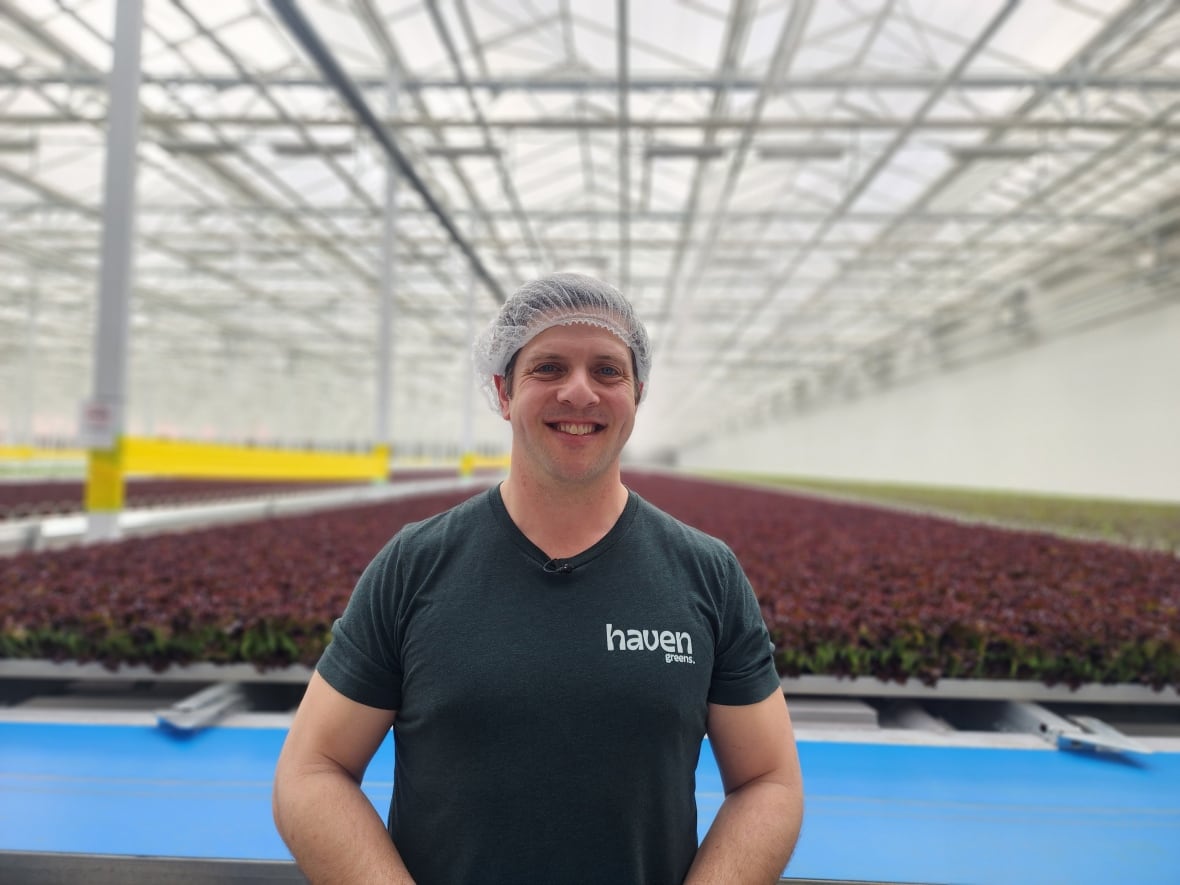 Jay Willmot owns Haven Greens, a new automated greenhouse in King City, Ont. He says automating his greenhouse helps him save on labour costs, which is often a greenhouse’s biggest operating expense. (Salma Ibrahim/CBC)
But Blit says what’s likely to happen is not straightforward.
“I think that the reality is that you’re not going to lose your job to AI,” he said. “You’re more likely to lose your job to someone that is using AI to do your job better.”
Guenther agrees, saying that AI will help improve people’s speed, efficiency, and ability to do tasks.
“But I don’t think that it’s going to take away from the workforce,” she said.
With worries surrounding AI growing, Blit said he found that approaching its use from an “experimental point of view” can really help alleviate some of those worries.
“When [people] start experimenting with it, they realize that actually [AI] is not too bad,” he said. “It just blows you away until you sort of get used to it.”
“The first thing that I think everybody needs to know is… you can use [AI] too.”