
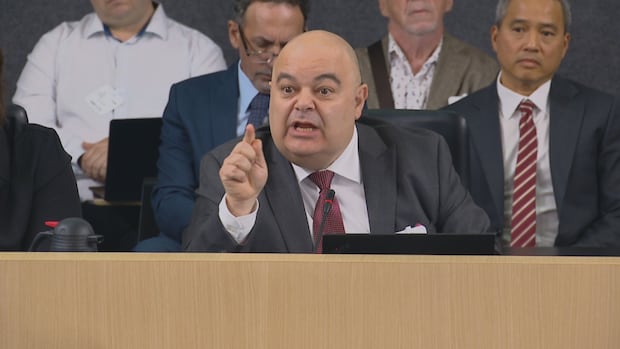
Two associations representing family doctors and specialists have stepped up their calls on Quebec’s Health Ministry to make swift resolutions at the bargaining table.
Both groups reject the remuneration scheme proposed by the provincial government in Bill 106, which was tabled on May 8 in the National Assembly.
The bill, among other things, would link the pay of physicians to performance indicators in an effort to get them to take on more patients.
According to the Fédération des médecins omnipraticiens du Québec (FMOQ), the group representing family doctors in Quebec, Bill 106 would lead to shorter and less personalized consultations with doctors in order to meet volume quotas imposed by the government.
The group is also concerned that appointments with family doctors would become more difficult to obtain, particularly for people who are considered healthy or have minor ailments.
The FMOQ filed a legal action against the Ministry of Health and Social Services on Friday morning, asking the Quebec Superior Court to “declare that the government failed in its duty of good faith during negotiations surrounding the renewal of the agreement” with general practitioners, according to the application.
The family doctors argue that since August 2024, the government has “adopted an intransigent stance in negotiations on the general agreement, the most recent version of which expired on 31 March 2023” and describe Bill 106 as “a sword of Damocles hanging over the heads of general practitioners.”
FMOQ president Dr. Marc-André Amyot told La Presse Canadienne the goal of taking legal action was to “force the government to sit down with us in good faith.” He added that the federation made two offers at the bargaining table and said the government has not responded to any of them.
In a statement to Radio-Canada, Health Minister Christian Dubé’s office said it acknowledges the FMOQ’s decision to turn to the courts and is awaiting legal documents through official channels.
The office reiterated that it remains available for discussions at the bargaining table.
The statement also defends Bill 106.
“The changes proposed in Bill 106 are necessary to change the way doctors are paid,” reads the statement.
“Our goal is for every Quebecer to have access to a doctor when they need one.”
Medical specialists deploy pressure tactics
While the FMOQ is not ruling out the use of pressure tactics if the parties fail to reach an agreement, the association speaking for specialists has already started to act.
As of Monday, members of the Fédération des médecins spécialistes du Québec (FMSQ) will stop teaching undergraduate medical students and supervising their clinical placements.
Some of their students told Radio-Canada they fear this will delay their studies and hinder access to health care for the population. They are calling for a quick settlement at the bargaining table with the Quebec government.
However, specialists will continue to teach residents “for the time being,” said Dr. Vincent Oliva, president of the FMSQ.
The pressure tactic is expected to continue until an agreement in principle is signed with the government. The FMSQ is hoping to renew the framework agreement between the government and the specialists.
In a statement to CBC News, Audrey Noiseux, a spokesperson for Dubé, expressed concern over the pressure tactics saying it was “unacceptable” to “attack students and potentially patients too in an attempt to obtain more.”
“We need to amend the law to make the necessary changes to the way doctors are paid. It is reasonable to expect a minimum level of results in terms of access to care in return for the remuneration paid,” wrote Noiseux.