
NEED TO KNOW
Mallory Carlson’s identical twin daughters weren’t even a year old when they were diagnosed with a very rare type of cancer
The mom of three shares with PEOPLE how she had to continually speak up at both urgent care and her local hospital when she realized something wasn’t right with her daughters
Now, Carlson is hoping to raise awareness about how funding for her daughters’ clinical trial is about to be cut
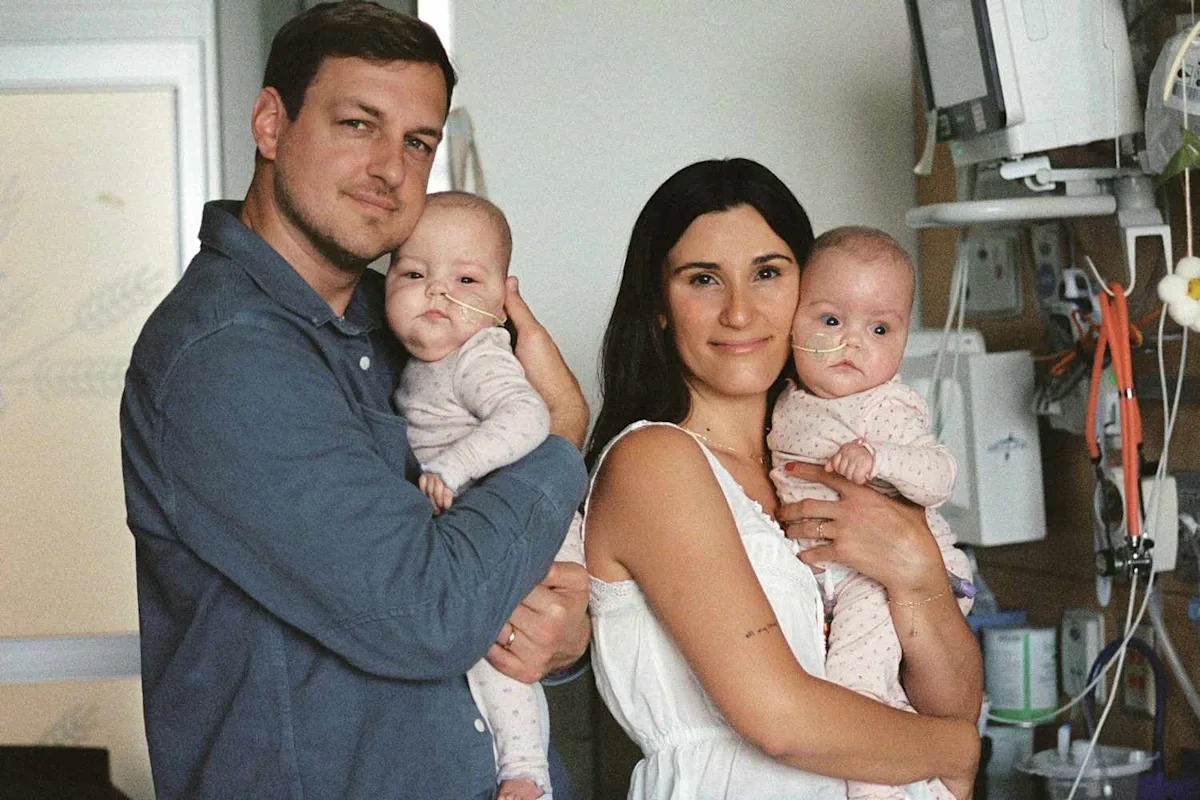
Mallory Carlson is just like any other mom — she works a full-time job, fiercely loves her kids and makes time to see her family. But there’s one part of her life that’s different than others: Both of her twin baby daughters have been diagnosed with a very rare type of cancer.
When the 30-year-old mom of three first learned she was expecting, she knew things were different from her first pregnancy. This pregnancy was considered high-risk, and Mallory was extremely sick the entire time and endured a “really, really challenging” nine months.
Mallory’s twins are monochorionic/diamniotic twins, meaning they are two genetically identical babies that are the product of one single fertilized egg, according to Columbia University. Mono/Di twins also share a single placenta and blood supply, but have separate amniotic sacs.
Never miss a story — sign up for PEOPLE’s free daily newsletter to stay up-to-date on the best of what PEOPLE has to offer, from celebrity news to compelling human interest stories.

Courtesy of Mallory Carlson
Josie and Lucy
Mallory began having complications during her pregnancy when one twin was taking too much nutrition from the placenta, and she had to be induced at 34 weeks and five days. Her daughters Josie and Lucy were born just under 4 lbs., and were admitted to the neonatal intensive care unit (NICU) straight away.
“They were what they call grower feeders, and the whole NICU fell in love with the twins,” Mallory tells PEOPLE. “I’m sure one normal baby gets a lot of cute attention, but twins is just overload cute.”
The twins only had to be in the NICU for two weeks before they were allowed to come back to their family’s California home. However, once Josie and Lucy were out of the hospital, there was one thing Mallory began noticing that didn’t seem normal.
“Honestly, the only thing that we ever had pause with while we were living in California was that as the girls got older, Josie’s skin color was a little more pale and more translucent,” Mallory says. “But we’d been taking the girls to the pediatrician regularly. We even brought it up to the pediatrician.”
Courtesy of Mallory Carlson
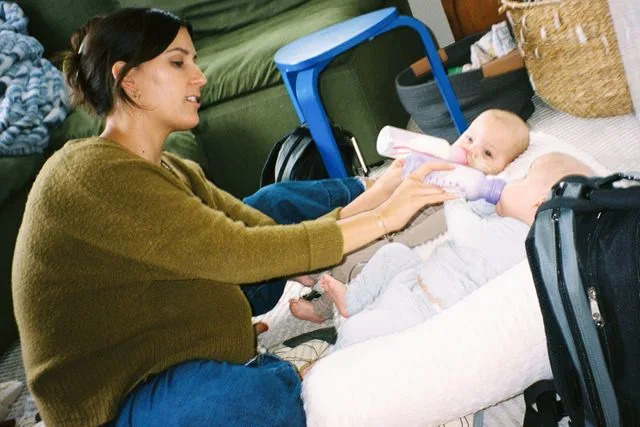
Mallory with her daughters
Mallory and her husband were told not to worry, and the two began preparing to move. The couple had decided to move up to Seattle, Wa. to be closer to family, and it was there that she began noticing other little abnormalities.
“The first time I noticed something, my friend invited us to her house for a family barbecue on Friday, and there were a bunch of moms there, and I had to feed the girls their bottles,” Mallory remembers. “And one of the moms offered to help, and I gave her Josie, and she’s trying to feed Josie her bottle, and she’s like, ‘Wow, Josie’s being really slow to take her bottle. Is this normal?'”
It wasn’t normal for Josie. The next day, Josie had something in her eyes, which made the mom of three think her daughter was just getting a common cold. However, when she started refusing her bottles over the next few days, not having a wet diaper and projectile vomiting, Mallory began to get more worried.
“We immediately scheduled an appointment at urgent care, and I brought Josie in, and we had just moved into town,” Mallory explains. “They confirm she’s got a temperature, they test for viral COVID, flu, RSV, they check her breathing.”
Courtesy of Mallory Carlson
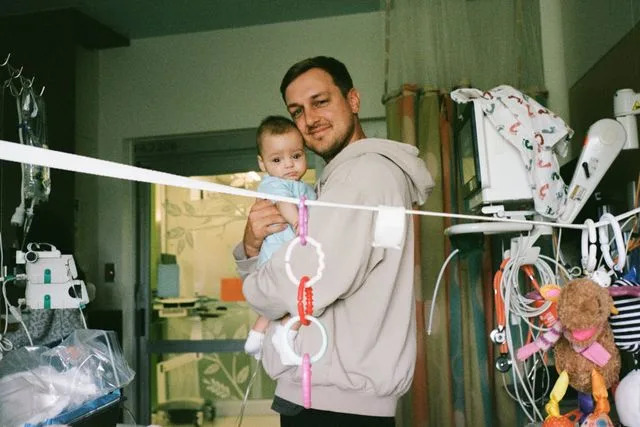
Leif and one of their twins
Ultimately, urgent care told Mallory that Josie seemed to have something viral. After her check-up looked mostly okay, they told the worried mom to take Josie home and to go to a hospital if her fever went over 102.
But things didn’t get better. The next day, Josie’s fever spiked to 102, and Mallory immediately rushed her to the hospital. When she was examined, the doctors mentioned that Josie’s breathing wasn’t looking very good, and they explained that they wanted to monitor her. After a few hours, the hospital also said Josie seemed fine and to let them know if her condition changes.
Over the next few days, Mallory continuously brought her daughter back to the hospital, convinced in her gut that something was wrong. She felt like she had to keep advocating for her baby daughter, who couldn’t speak up for herself. Mallory pushed the hospital to give Josie fluids and to run a urine test to see if there was an untreated UTI. But they couldn’t find anything wrong.
One morning, Mallory woke up and immediately knew Josie had had a stroke. “She basically just looked really surprised and really startled and like a deer in headlights, but it wouldn’t go away,” she remembers. “And I had that sinking feeling of like, ‘F—, something’s not right.'”
Mallory’s husband Leif also felt like something was urgently wrong. They took Josie back to urgent care, where they told her to go to the hospital and tell them Josie was in neurological distress.
Courtesy of Mallory Carlson
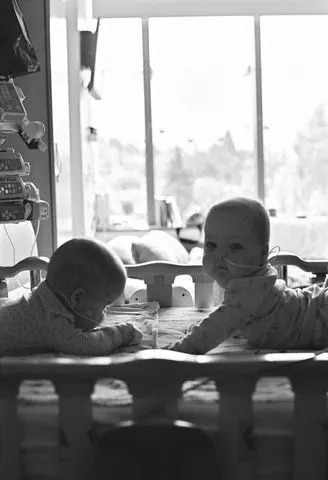
Josie and Lucy
“Josie’s completely pale. She’s breathing rapidly. We put her down on the scale. It’s like something out of a movie,” Mallory says. “It’s awful. They get her back and they just put us in a bed and her blood is not tested until 1 in the morning, and we came in at 4 in the afternoon.”
Finally, the doctors returned after midnight once they’d tested Josie’s blood. When they came into the room, they were pale-faced.
“I immediately just got a pit in my stomach, and they said, ‘So we’re finding presenting signs of leukemia in Josie’s blood.’ And I’m like, ‘Leukemia? What? Like cancer?’ And my ears start ringing,” Mallory recalls.
“And the next thing out of my mouth is, ‘She has an identical twin sister. What does this mean for her?'”

Courtesy of Mallory Carlson
Josie and Lucy
The doctors told Mallory she needed to bring Lucy to the hospital immediately to be tested. By the end of the night, Josie and Lucy were both diagnosed with infant acute lymphoblastic leukemia — specifically a category of the cancer that makes it more rare and more aggressive.
“The girls have had it since the very beginning,” Mallory explains. “[Because they were mono/di twins,] they were having blood transfusion. So Josie’s blood went into Lucy’s stream, and that’s how Lucy got it.”
The mom of three was shocked when her daughter Lucy was diagnosed with the same form of cancer, since she hadn’t displayed any sort of symptoms. “She didn’t seem sick. She seemed fine. I was just like, ‘That can’t be.’ But obviously, that’s not how it works,” says Mallory.
Since her daughters’ diagnosis, Mallory has been doing everything in her power to help her girls survive. Josie and Lucy are both currently enrolled in an experimental trial and undergoing treatment.
“We can see how well our doctors are taking care of our daughters. And our daughters are responding really well so far, which is really exciting,” Mallory says. “And the odds of this happening to Lucy and Josie, we’ve been told, was less than one in 10 million.”
“It’s incredibly rare. And on top of it, not just the fact of both of them getting it being incredibly rare, just even one baby getting it is rare,” she continues. “The sad truth of it is that my daughters just finished induction, which is the first phase of chemo. And the goal of induction is to completely wipe out all of the leukemia. And it was successful. They did get it out, but the doctors know that that doesn’t mean it’s gone.”

Courtesy of Mallory Carlson
Mallory, Leif and their two kids
In fact, the odds of Josie and Lucy’s cancer coming back are 50%, which makes the odds of survival go down.
“I’m dealing with two daughters with this, and it’s just like, I’m not a math expert, but it kind of sounds like I have a 25% chance of both my daughters surviving this, and I want to change those odds,” Mallory says. “And that’s what this trial’s going to do.”
Mallory has been outspoken about how the current political climate is affecting her daughters’ chances of survival. The government funds the trial, but with the passing of President Trump’s One Big Beautiful Bill Act, their funding will be cut.
“We’re not paying for the trial. We’re paying for the chemo treatment, but the trial is free to us,” Mallory says.
“My daughters are going to need to be in this trial, hopefully, for years to come if they can survive this,” she says. “And it’s like the doctors are looking at me and saying, ‘Yeah, our funding’s almost out, and the Big Beautiful Bill is cutting everything. And the Medicaid that your family will be relying on to help you with those millions of dollars worth of debt is about to go away.”
“I am a strong, independent woman, firstborn generation American. I started my own business. I built it on my own from the ground up, and I got it to be really successful,” says Mallory, who is a photographer now based in Seattle. “I chose to have children when, as a woman deciding to become a mother, it is a big sacrifice. It’s huge. And for those of us who do want it, it sucks how hard we have to fight to just have it.”
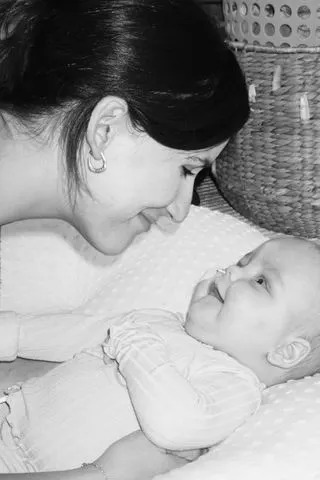
Courtesy of Mallory Carlson
Mallory and her daughter
The mom of three says that although what’s happening to her twin daughters is very rare, it’s not “remarkable.” Her story is a common one in America.
“I want to highlight that because I don’t want people to feel like, ‘Wow.’ This literally could happen to anybody,” Mallory says. “Maybe not this exact cancer, but cancer is happening every day.”
“Our story’s unremarkable. It’s incredibly rare that both girls have this, but everything else we’re going through is what any other family’s going through that’s in this situation,” she stresses. “There is a bigger picture here.”
At the time of the interview, Mallory’s twins were home for a few weeks before going to spend the next six months in the hospital. She says the time together has been amazing but also “incredibly cruel.”
“I looked at them and they look so healthy and normal, but I know how sick they are,” Mallory says. “And it’s like, my husband put it perfectly. It was a week after the diagnosis, and we’re still trying to wrap our brains around what’s happening and what it means.”
“And he’s like, ‘Wow. Okay. So for the rest of our lives, even if our girls do survive this, we’re going to be looking behind our backs, wondering if this is going to come back,’ ” she continues. “And it’s terrifying. It’s like you can’t win. So we’re grateful that both girls are alive. It’s absolutely a miracle.”
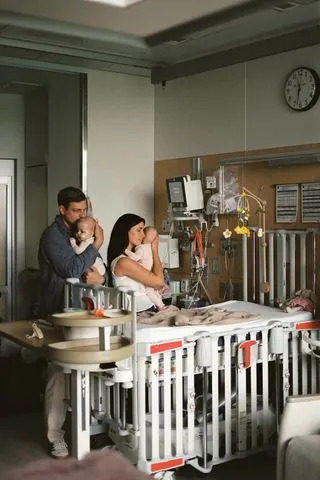
Courtesy of Mallory Carlson
Mallory, Leif and their daughters
To make things even harder, Mallory has been having to balance caring for her two very sick daughters with parenting her 4-year-old son, Rowen. Although he loves his baby sisters and is so excited to be a big brother, the whole experience has “flipped his personality.”
“He’s started to show a lot of outbursts and tantrums,” says Mallory. “And so right off the bat, literally the day of diagnosis, I reached out to a behavioral therapist.”
“I, as a mother, try to normalize you getting the help when you need it because there’s no shame in it,” she continues. “It doesn’t mean my son is a problem kid or anything, but he’s going through the unimaginable. He can’t wrap his brain around it. He doesn’t understand how sick his sisters are.”
Mallory’s husband recently returned to work since he doesn’t qualify for the Family and Medical Leave Act (FMLA) because their family recently moved out of state.
“It’s the worst situation in that regard because we just can’t get the help we need,” she explains. “He can’t take the time off he needs because he has to work, he’s got to pay the bills. And I have chosen not to work and take on any new work because how could I ever promise a bride or a couple like myself a year from now when my children might not be alive a year from now?”
One of Mallory and Leif’s friends has started a GoFundMe for the family and is sharing updates on their family’s journey as they happen. Mallory is also raising awareness for the 17th Annual Run of Hope Seattle. The fundraiser aims to raise money for pediatric cancer research at Seattle Children’s Hospital.
Above all else, Mallory is fighting to make sure she gives her daughters the best chance at life — just like any other mother.
“I have incredible odds here with my daughters, but in order to try and give them the best possible odds in a time where I feel incredibly helpless, for me it was signing them up for this trial and just trusting that the doctors are going to do what they can to try and get my girls to live and grow old and gray,” she says.
“So I want to try and do what I can to get them the funding so that they can do the research.”
To donate to the GoFundMe to support Mallory, Leif, Rowen, Josie and Lucy, please click here.
Read the original article on People