
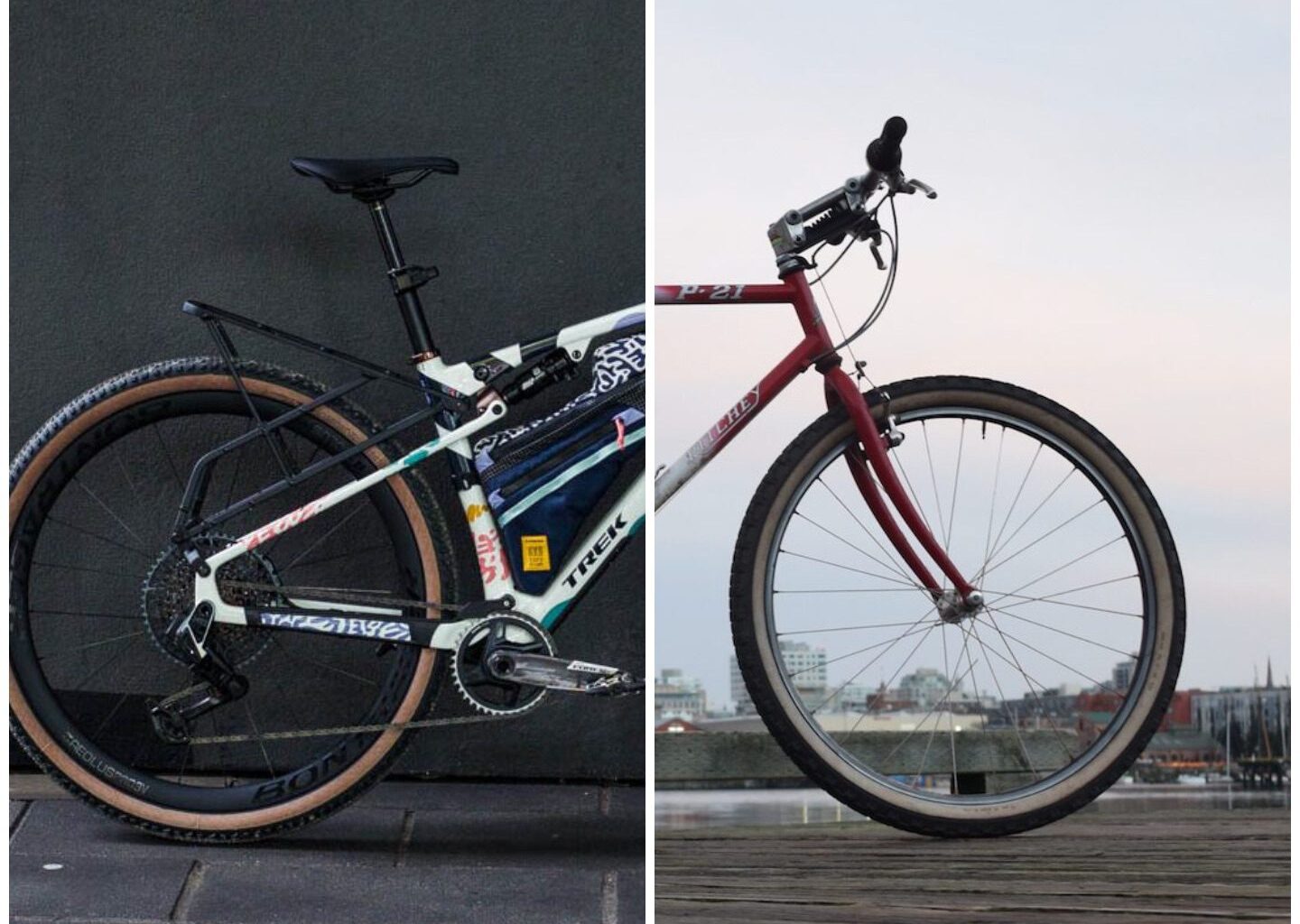
There’s long been a chorus of comments, immediately trailing any story on gravel gear, that gravel bikes are “just ’90s mountain bikes.” And, while there may have been some kernel of truth to that, no more. We’ve moved on.
Gravel bikes are now way better than ’90s mountian bikes.
Look at Trek’s new CheckOUT. And the RockShox Rudy attached to it. And the wheels, tires, brakes, bars, seat post. Everything. Everything is better than it was in the ’90s. So, are gravel bikes just ’90s mountain bikes? No, they’re so much more. Like, at least a mid 2000s mountain bike at this point.
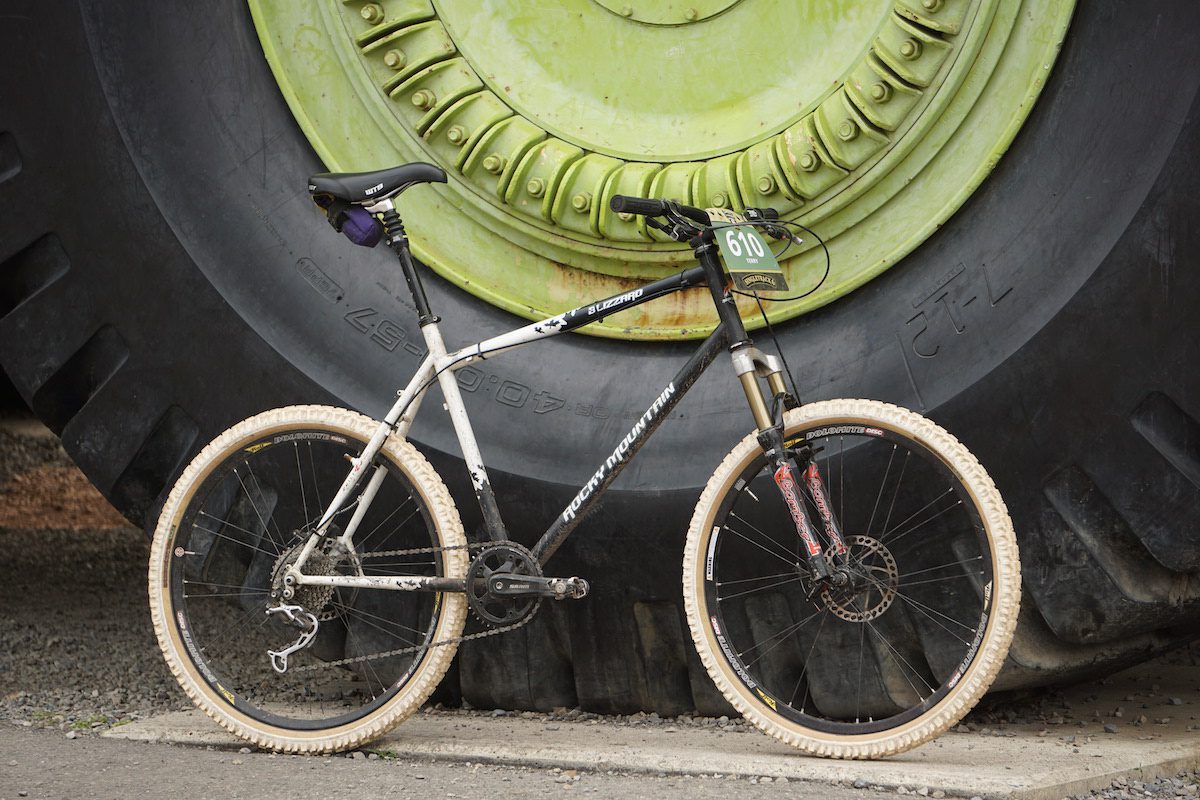 An actual end-of-the-’90s mountain bike. Hardtail, tiny tires, a seat post that went down when it should be up and up when it should be down, and all, 100% speed metal, baby.
Step by Step: Gravel gets through the ’90s
Gravel is, undoubtedly, the teen hearthrob of the cycling industry right now. It’s all about gravel. Or e-bikes, or gravel e-bikes. But gravel is the great hope for attracting new people to cycling, or at least getting existing cyclists to buy another bike. Much like Step by Step, it’s about bringing together cycling’s two families. Road and mountain biking, in this case.
Gravel bikes borrow tech from both of those families. That’s gradually turned what started out as slightly beefier road bikes with a little more tire clearance into something that looks, for better or worse, like a ’90s mountain bike. That happened piece by piece, step by step. Here’s how gravel got to the ’90s.
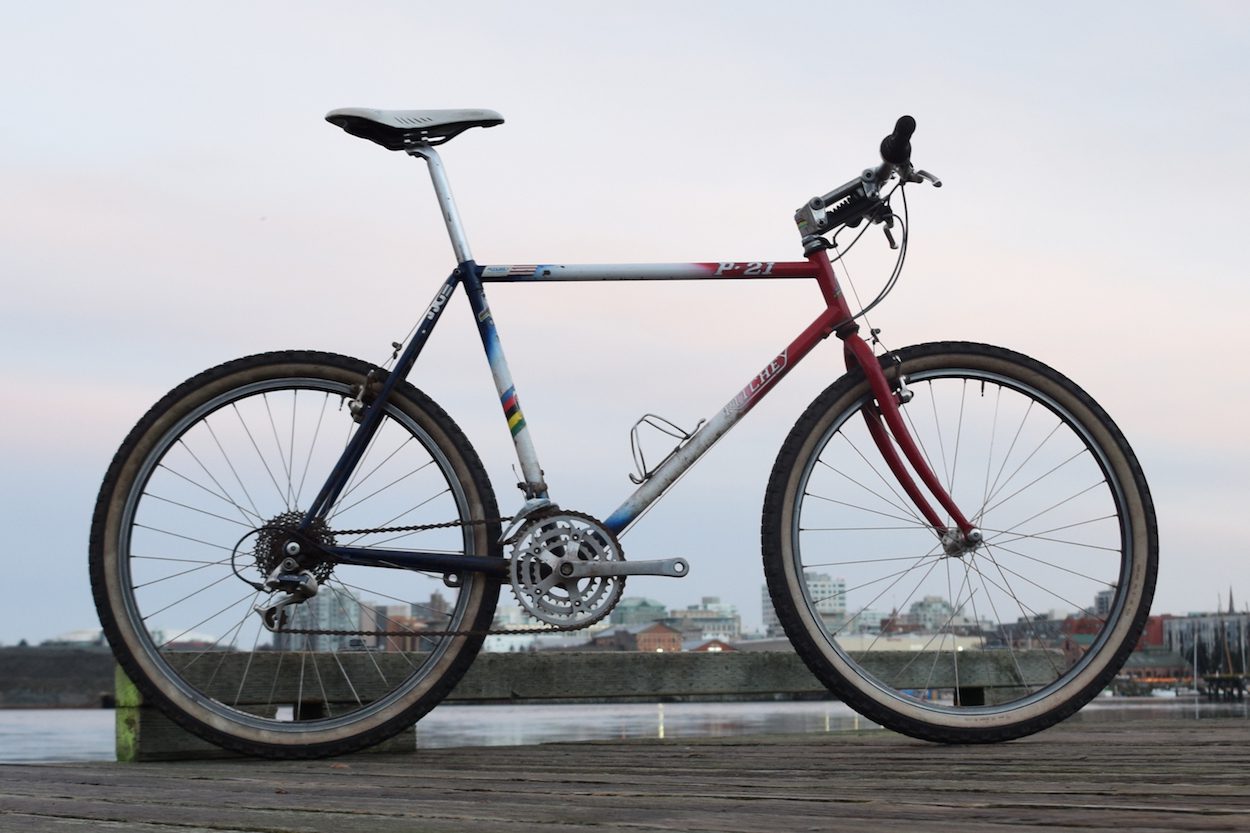 A very 1990s mountain bike. Rigid, except for the stem, triple chainrings, 26″ wheels and all, 100% speed metal, baby
Disc brakes are a huge part of this. It allowed drop bar frames to go way beyond the limitations of brake clearance that limited cyclocross bikes. Once you had reliable drop bar disc brake options, frames were free to open up way beyond the 32-34mm cyclocross tires that many of us were using to ride gravel before gravel was gravel.
Wide tires and pro-level racing also increased the speed at gravel races. That helped bring in suspension. First forks, then Niner’s full-sus Magic Carpet, then, when that was resolutely rejected, just forks again for a while.
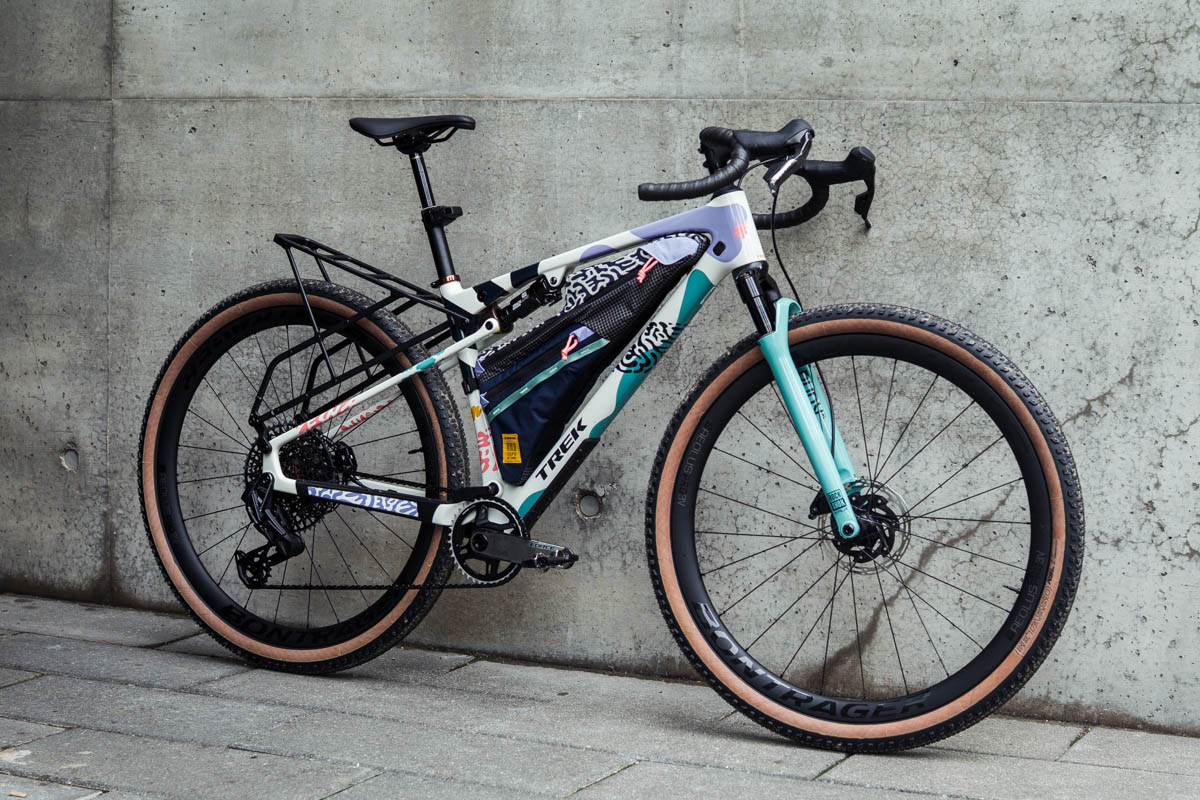 A very post-’90s bike. Dropper post that works, suspension that works, carbon fibre everything, and 1×13 drivetrain. Matt Stetson photo.
Getting past the ’90s
Now, piece by piece, gravel’s moved on from the ’90s, again. Starting back at the wheels, gravel pros are now regularly running tires up to 2.2 or even 2.4″ wide. Yes, they’ve even given up on road-bike width measurements in favour of mountain bike standards. Those widths were relegated to downhill in the ’90s, with XC pros still running 1.9″ or 2.1″ tires into the early aughts. Gravel’s even bringing over wider rims. Pushed by Zipp and SRAM, but likely with more copycats coming soon, gravel rim widths are rapidly encroaching on XC wheel widths. Which makes sense, if gravel racers are running the same width tires as XC World Cup racers.
Sticking with the wheels, those rims are, for the most part, sporting very fancy carbon fibre rims. And, likely, tubeless tires. Both innovations that were just pipe dreams for ’90s mountain bikes. Oh yeah, and they’re 29″ wheels, not tiny little 26-ers.
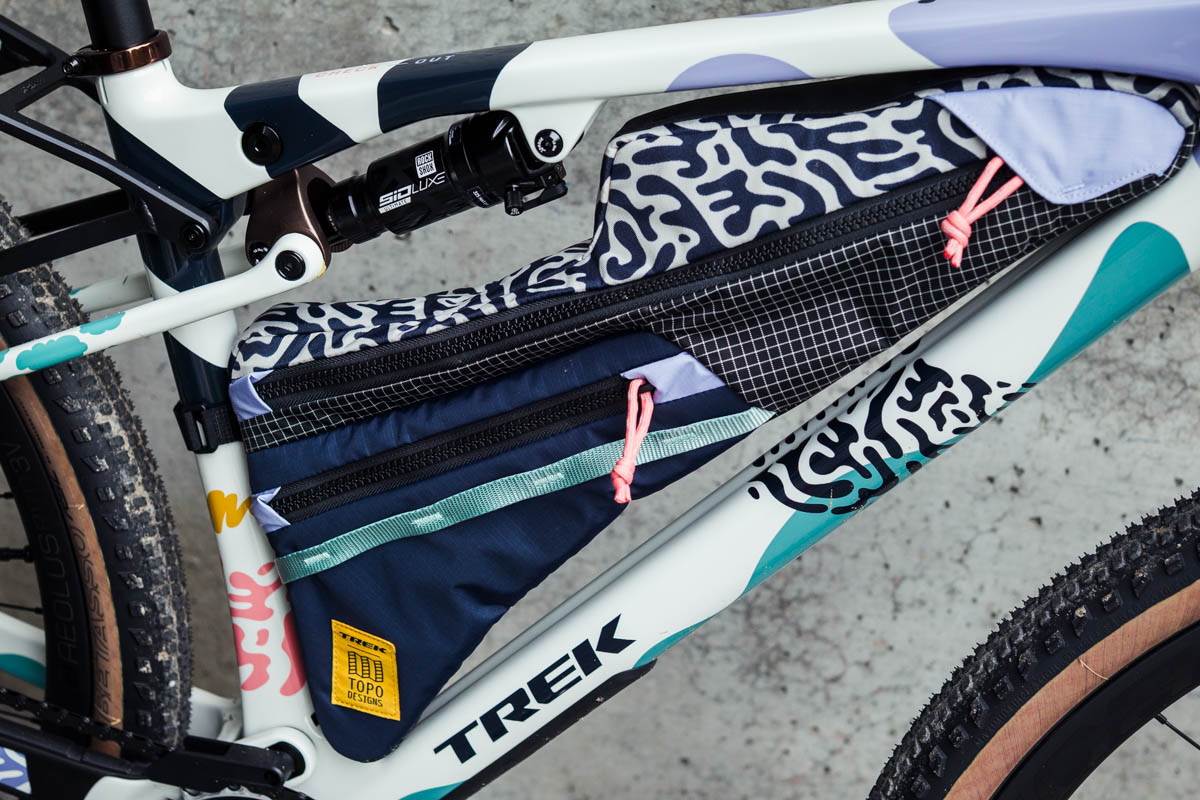 Trek CheckOut: Gravel goes squish squis. Matt Stetson photo.
As mentioned, from bigger wheels came front suspension for gravel. That gained some momentum. Then gravel and bikepack racers remembered that full suspension bikes were way more comfortable than hardtails, and started riding their mountain bikes with drop bars at gravel races. Now, with the CheckOUT, proper full suspension gravel bikes from a major brand are here. And, like tires and wheels, this suspension is somewhere between the ’90s and now. Smooth, reliable air shocks and forks with 50-60mm travel aren’t quite ’00s, but aren’t ’90s, either. Proper lockouts and effiicient suspension, though, are definitely better than the boing-boing bits we strapped to our bikes back then.
Speaking of frames, a lightweight and durable carbon fibre frame in the ’90s? Maybe, if you were a pro. Now, even base-level bikes can come with carbon frames, forks (if there’s no suspension fork), bars or bar/stem combo, seatpost (if there’s no dropper) and electronic shifting.
And shifting! It’s more and more common for gravel to have a 1x drivetrain, a decidedly 2000s invention, than any sort of 2x or 3x set up from a ’90s mtb.
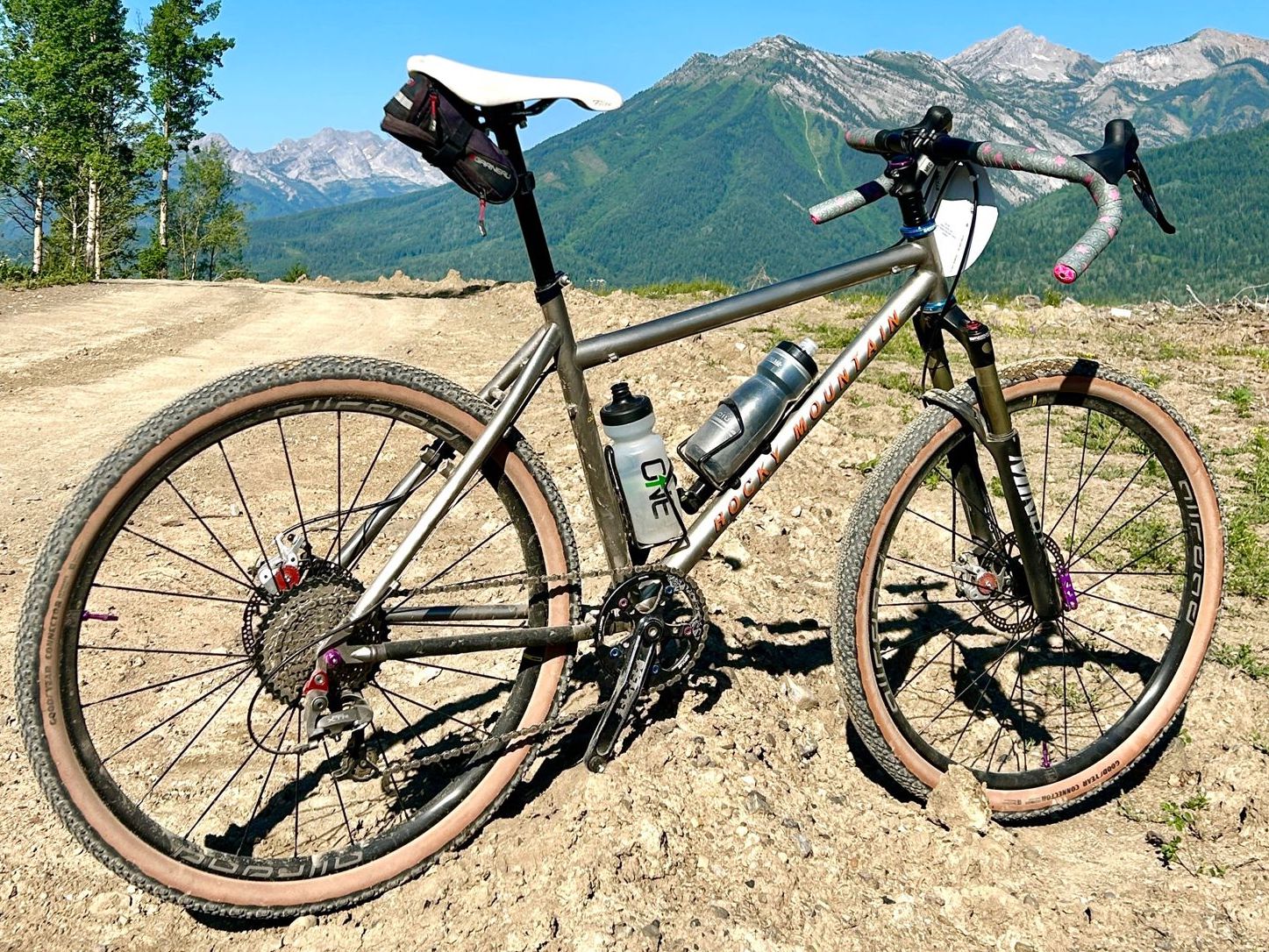 A ’90s Rocky Mountain drop bar conversion at the Fernie Gravel Grind back in 2023
Is the dream of the ’90s still alive?
While the newest (and most expensive) gravel bikes may rival a mid ‘oos mountain bike now, that doesn’t mean the past has to stay in the past. As gravel gets too fancy (cue the other chorus, regarding the “spirit of gravel”), retrofitting actual ’90s mountian bike frames as bikepacking rigs and gravel rippers is gaining popularity, again. Though the “fad” element of that fad is probably largely limited to the internet, as people have been retrofitting sweet classic frames for other purposes for just as long as those old frames have been called “old.”
Eight-ish bikes from Fernie Gravel Grind
And people are doing this for good reason. Those frames are still around, so they’re tough enough to last. And the ones that are quality enough to last usually have quite a nice ride feel. Especially upgraded with some of the “new” tech like tubeless tires and retrofitted dropper posts, these bikes are a blast to ride. So yes, absolutely, the dream of the ’90s is still alive.