
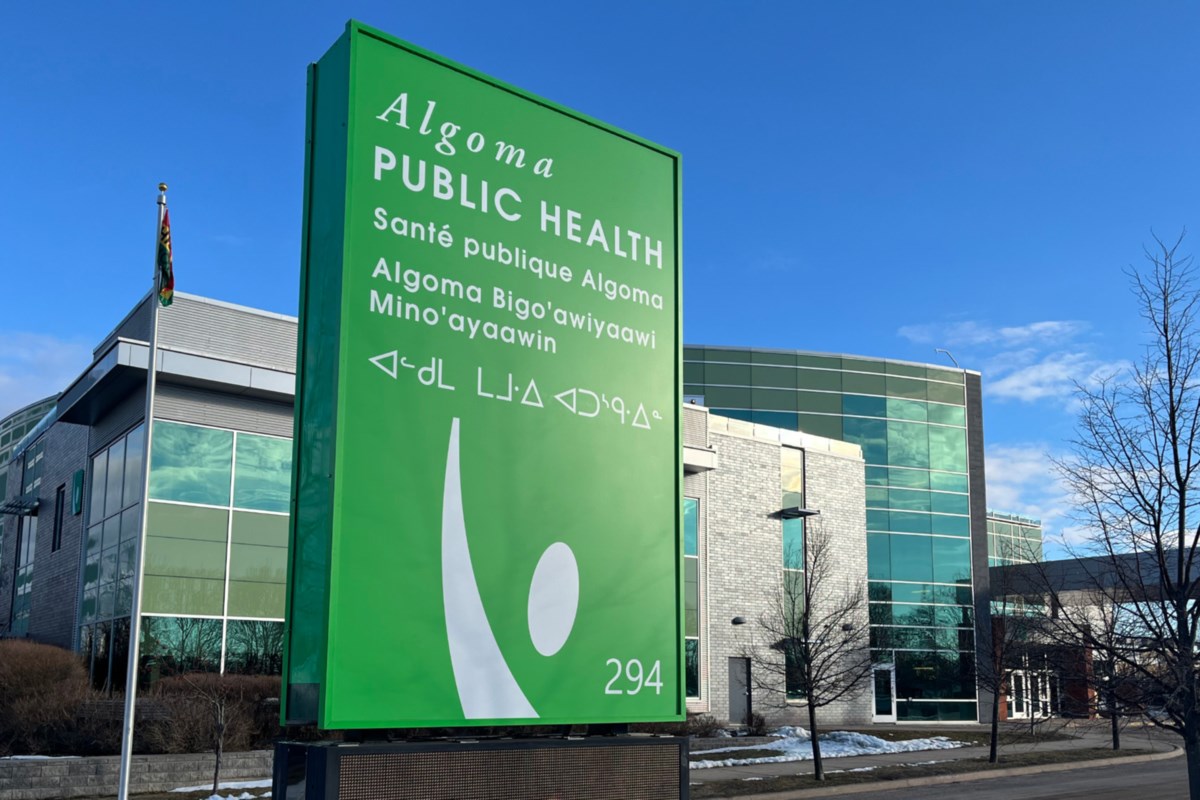
The last recorded measles case was more than two months ago, and Algoma Public Health worked with community members and health-care officials to contain the disease and tackle misinformation
Misinformation can have real-world consequences — and there were well over 100 examples of that during the recent measles outbreak in the Algoma region.
The highly contagious disease was considered eradicated in Canada by 1998, with nearly three decades in the rear-view mirror when measles staged a comeback earlier this year — including 151 cases in the Algoma region.
Now, two months since the last local case was recorded, public health officials say misinformation likely played a role in the disease’s rise earlier this year — after having been all but wiped out on the strength of mass vaccination campaigns in decades past.
“Misinformation can absolutely lead to very real and serious health consequences,” said Jennifer Loo, medical officer of health with Algoma Public Health. “Misinformation or institutional mistrust certainly may have played a role in why individual people were unimmunized at the time.”
When tackling the local outbreak, public health officials took the usual steps — following up with patients, health-care providers, contact tracing and advising those who were infected to self-isolate to stymie its spread.
But Loo said Algoma Public Health also worked hard to build positive relationships with community members — by sharing accurate health information, answering questions and even meeting with people in person to have conversations.
“The successful control of our measles outbreak really hinged upon the good relationships and trusting relationships we had with community members, so that they take our advice, they follow recommendations, and some of them, when offered a vaccine, have their questions answered,” she said.
During the outbreak, news releases were issued about possible measles exposure sites in the Algoma region, with Loo highlighting how, because the disease is so contagious, “someone with measles can come into a room, cough, leave, and a couple hours later — that virus is still in the air.”
“Interestingly, we never had any transmission of measles in those public settings, which tells us that our case contact management was working,” she said.
Loo also said the health unit managed to immunize about 110 people — who were previously unvaccinated — over the course of the local outbreak.
“They made that decision, which not only protected themselves during this outbreak, but also others — and for years to come,” she said.
Tackling misinformation is one of many issues Loo has in mind as the organization works to revamp its five-year-old strategic plan, as well as keeping an eye on shifting politics, the rise of artificial intelligence and more as it updates the guiding document during changing times.
At its Sept. 24 meeting, the board of health approved issuing a request for proposals to bring in an external consultant to work on the plan — which builds on work it has already carried out canvassing employees across the organization on how the plan meets their and the community’s needs.
“There are a lot of rapidly changing external factors — whether that’s climate change, whether that’s re-emerging infectious diseases like measles, whether that’s the political landscape and a lot of fomenting mistrust and disinformation, misinformation in general,” said Loo at the meeting.
“Thinking about these specific issues in the context of what we do now can be very timely and important to how we approach the next few years.”
In some ways, tackling the measles outbreak was similar to the work carried out during the COVID-19 pandemic — when Loo said there was also an “infodemic” unfolding as the disease spread like wildfire around the globe.
“Information is now shared at a blisteringly fast pace, and many of us aren’t sure who or what to trust,” she said.
With new information, new rules, and more unfolding through that time, Algoma Public Health was also a “knowledge broker” through the pandemic, Loo said.
“At the end of the day, we’re made up of people who live and work right alongside the people that we serve,” she said.
“That relationship building, and going through a pandemic of that magnitude together really solidified relationships that we have across Algoma — and in the case of the measles outbreak, that really did help us spread good information and control the outbreak.”