

 Research scientist Nathan Gillett says the heat wave exacerbated recent wildfires. (Maggie MacPherson/CBC)
Atlantic Canada was hammered by a drawn out heat wave in August, and one climate scientist says it exacerbated the burning wildfires.
Scientists with the federal government shared results on Wednesday from its climate change attribution system on the extreme heat felt across the country this summer.
Nathan Gillett, a research scientist with Environment and Climate Change Canada (ECCC), said the heat wave in the Atlantic region was “far more likely” caused by human-induced climate change.
Last week, he said the heat temperature peaked in Atlantic Canada and was 4 C hotter than the typical hottest day of the year in that region, which he said had a big impact on fires.
“So it exacerbated extreme wildfire conditions in the Atlantic Canada region,” Gillett told reporters.
Newfoundland and Labrador experienced an historic number of wildfires this year, of which a wildfire in Kingston, Conception Bay North burned 10,095 hectares, forced hundreds to evacuate their communities and destroyed 200 structures.
Gillett said scientists used a climate module simulation to compare the climate of the 19th century, before human influence on the environment, with today. He said human-caused emissions of greenhouse gases released into the atmosphere over the past century have strengthened the greenhouse effect and caused climate warming.
While this happens on a global scale, they can see the effects in Canada, he said, with warmer than average temperatures and also extreme events, like the heat wave in Atlantic Canada.
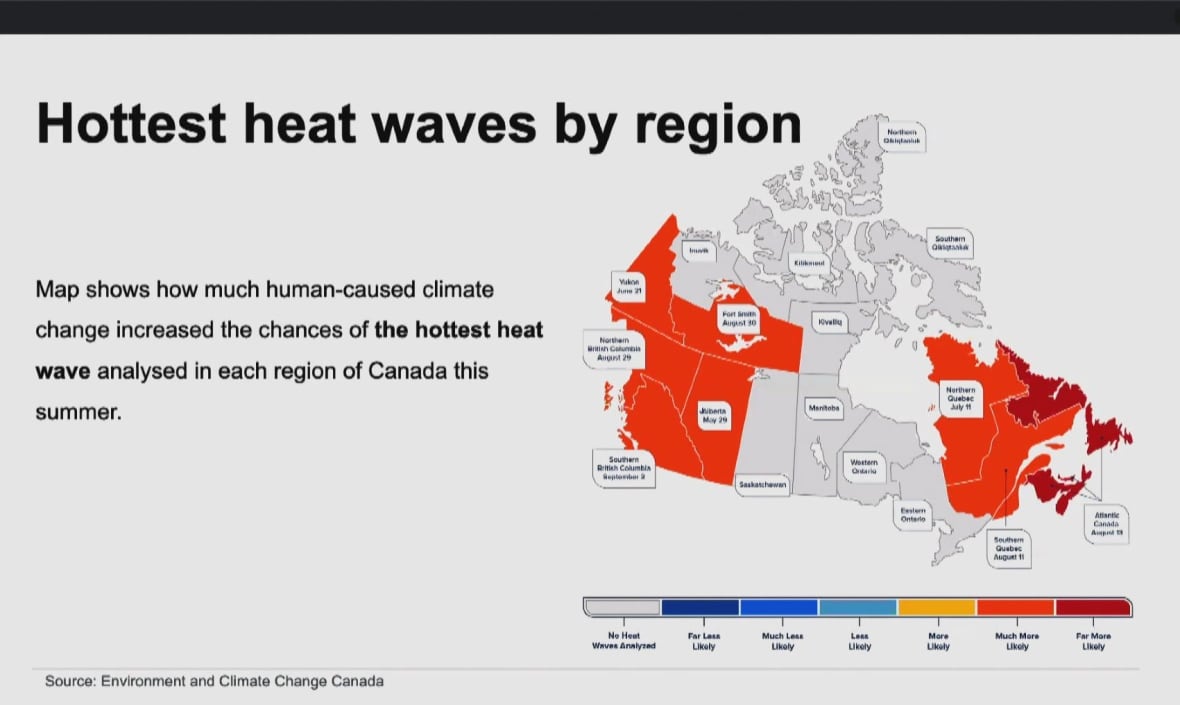 Gillett says the heat wave that hit Atlantic Canada this summer was likely the result of human-induced climate change. (Government of Canada)
“It’s at least 10 times more likely that events like those occur now because of human-induced climate change,” said Gillett.
However, he said, this summer was the 11th warmest on record, adding it was not considered exceptional.
ECCC spokesperson Samantha Bayard said there is an increased chance of heat waves across the country next summer.
“While there is year-to-year variability in the climate, climate change is increasing the frequency of heat waves, including in N.L.,” she said in an email to CBC News.
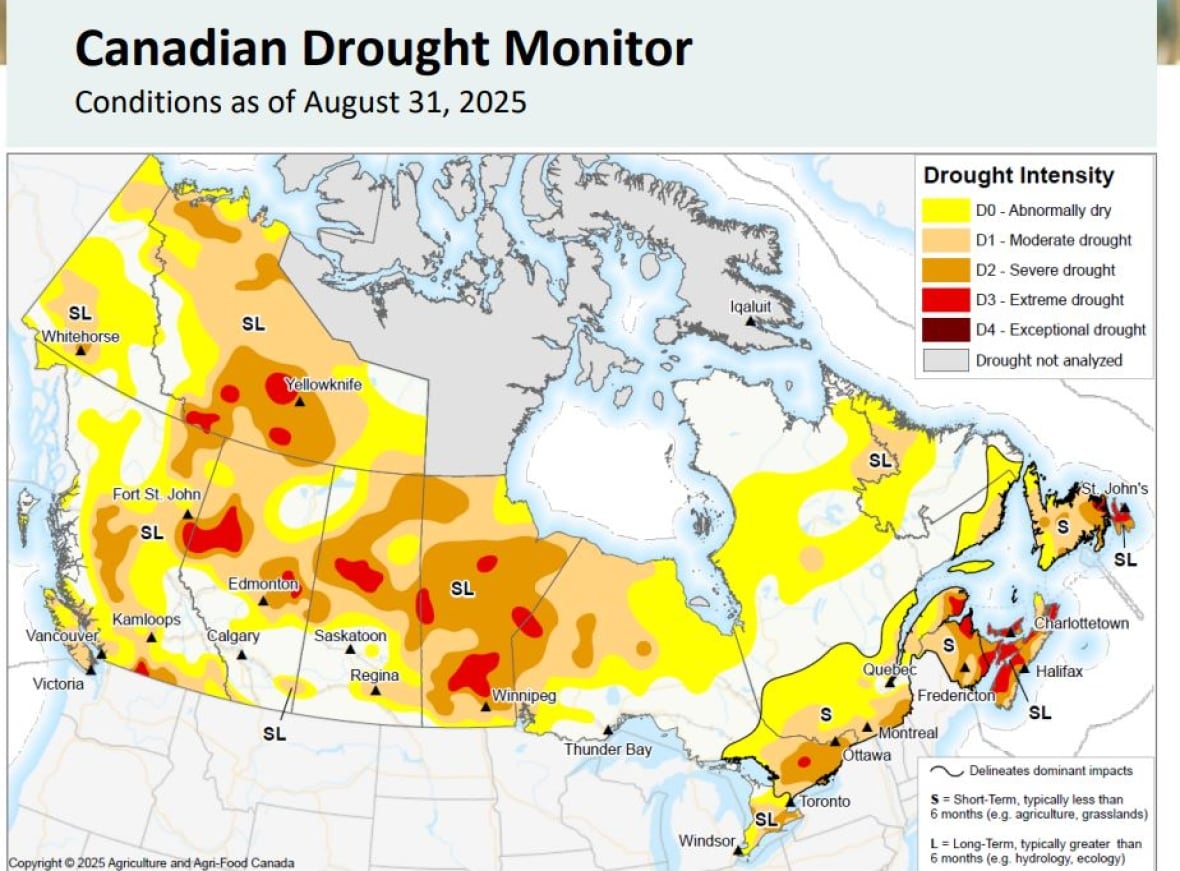 As of Aug. 31, the Canadian Drought Monitor considered parts of Newfoundland and Labrador as abnormally dry to extreme drought. (Government of Canada)
Overall, Bayard said Canada is warming at approximately twice the global rate, and temperature extremes show clear warming trends.
National warning preparedness meteorologist Jennifer Smith said the timing and character of the heat events varied across Canada this summer, and there was significant heat in Newfoundland and Labrador through July, with 30 C temperatures lasting for several days.
“The heat returned in August for an even longer stretch, which resulted in Newfoundland’s Avalon Peninsula experiencing its longest ever heat warning — seven straight days,” she said.
Smith said heat can be a deadly hazard that puts pressure on the health-care system, increases wildfire risk and impacts people’s daily lives.
Gillett said the information from their research will help create a plan for weather emergencies, our understanding of how risks are changing, help to inform decision making to protect people and property and help plan for climate change adaptation efforts.
Download our free CBC News app to sign up for push alerts for CBC Newfoundland and Labrador. Sign up for our daily headlines newsletter here. Click here to visit our landing page.