
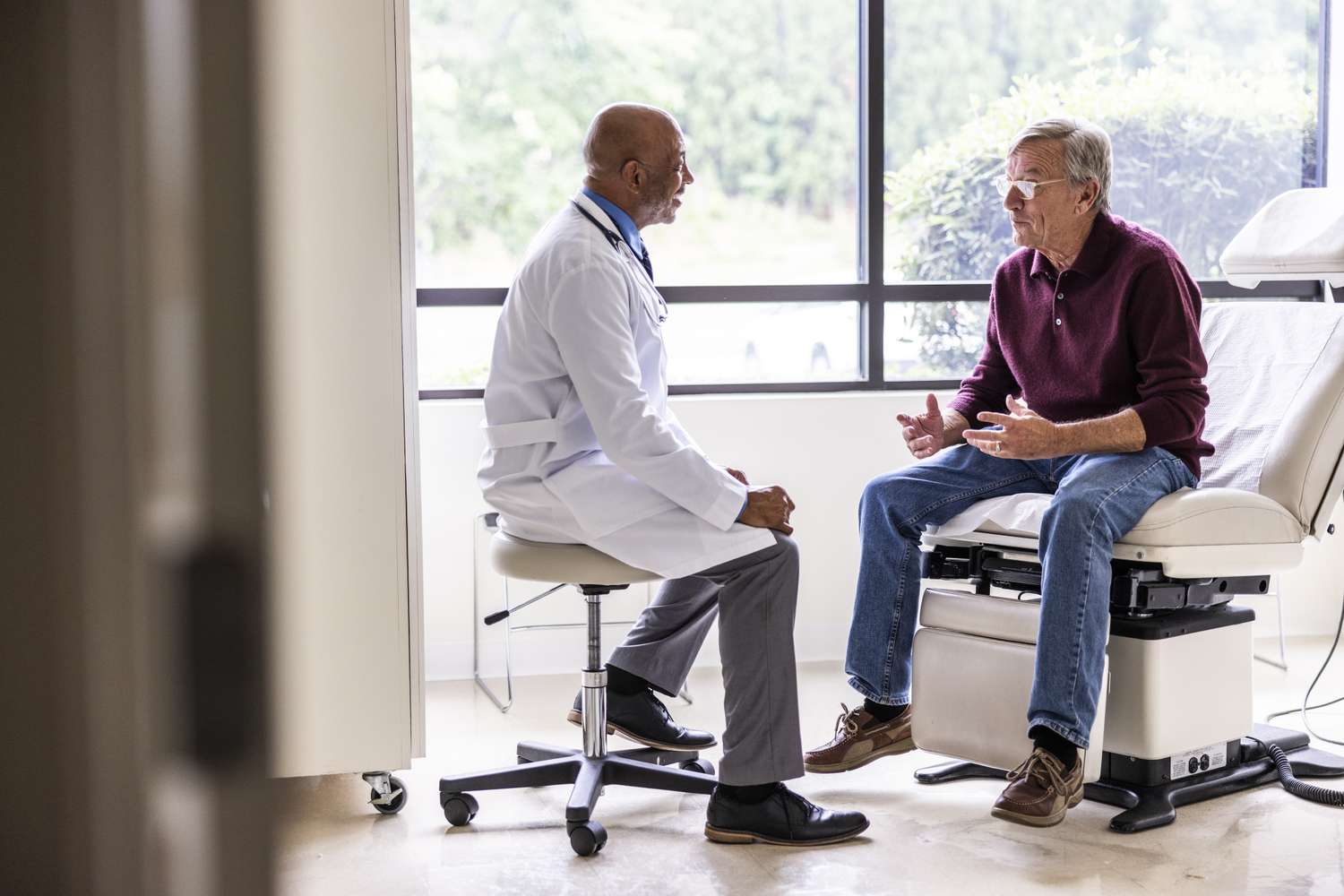
If you’ve been looking for a new primary care doctor, you may have noticed a growing number of physicians with the credential “DO” instead of the traditional “MD”.
DO stands for Doctor of Osteopathic Medicine. They share similar training and licensing requirements with MDs, but focus on a holistic approach in their practice. DOs practice in every specialty area, including family medicine, internal medicine, surgery, and more, although more than half work in primary care.
Christina P. Kantzavelos, 36, a psychotherapist based in San Diego, said she chose a DO as her physician because she values a “more holistic and integrative approach to care.”
“I’ve found that DOs often approach medicine with more curiosity and a greater willingness to listen to the patient’s lived experience, rather than relying solely on labs or textbooks,” Kantzavelos told Verywell.
According to the American Osteopathic Association (AOA), the current medical director of NASA is a DO, and several White House physicians have also held the title. As of 2023, nearly 149,000 osteopathic physicians were practicing in the U.S., a 30% increase from the previous five years.
“And there are tens of thousands of doctors with that credential throughout the United States,” said Robert Piccinini, DO, president of the AOA.
How Are DOs Different From MDs?
Medical schools that grant MD (Doctor of Medicine) degrees are known as allopathic medical schools. “While DOs go to separate osteopathic schools for medical schools, they join the same residency programs as MDs,” said Piccinini.
What sets DO programs apart is that “DOs are trained to look at the whole patient, beyond symptoms, to understand well-being,” Piccinini said.
The field of osteopathic medicine was founded by Andrew Taylor Still, who lost four of his children to meningitis in 1864. The tragedy led him to reconsider his medical training. He became a traveling physician and launched the first College of Osteopathic Medicine in 1892.
From the beginning of their education, DOs receive training in the musculoskeletal system—the body’s interconnected network of nerves, muscles, and bones—and how to use manual manipulation to treat certain conditions.
Not all DOs use manipulation in their practice. Piccinini, a psychiatrist, said it doesn’t typically apply in his daily work. “But as a resident, my supervisor knew my training and so when a staff member suddenly wasn’t able to hold a pen, they called me over and I manipulated her hand and realigned a bone and right away she was holding the pen again,” he added.
In another case, Piccinini said that a whole-person approach helped him correctly diagnose a patient referred to him for dementia. After speaking with the patient and his family and reviewing his records, he ordered further testing and discovered a brain tumor.
Why Are More Medical Students Pursuing a DO Degree Now?
Understanding osteopathic training matters because you may encounter a DO in urgent care, the emergency room, or when scheduling an appointment with your primary care provider.
Some medical school application sites note that osteopathic schools may accept slightly lower GPAs and average entrance exam scores, which could make it more appealing for students to apply. However, they emphasize that the application process and training for DOs remain rigorous.
“When I was exploring medical schools, I knew I wanted to pursue family medicine,” Terrence Feeherry, DO, a physician in Southlake, Texas, told Verywell. “But I also wanted something deeper, an approach that sees patients as whole people, not just collections of symptoms.”
A 2023 study from UCLA Health, published in Annals of Internal Medicine, found no differences in mortality rates, hospital readmissions, length of stay, or health care spending among older hospitalized patients treated by MDs versus DOs. The study’s senior author is an MD.
“Osteopathic schools are expanding rapidly, which is incredible for our profession as well as health care because the national shortage of physicians remains an issue for years to come,” said Richard Thacker, DO, an internist in Dothan, Alabama, and a trustee of the AOA.
What This Means For You
If you see a DO instead of an MD, you’re still receiving care from a fully licensed physician with comparable training. DOs bring a whole-person approach to medicine, often emphasizing prevention and integrative care. Whether you’re booking a primary care visit or seeing a specialist, it’s increasingly likely you’ll encounter a DO—and research shows patient outcomes are just as strong as those treated by MDs.
Thanks for your feedback!
What is your feedback?
Helpful
Report an Error
Other