
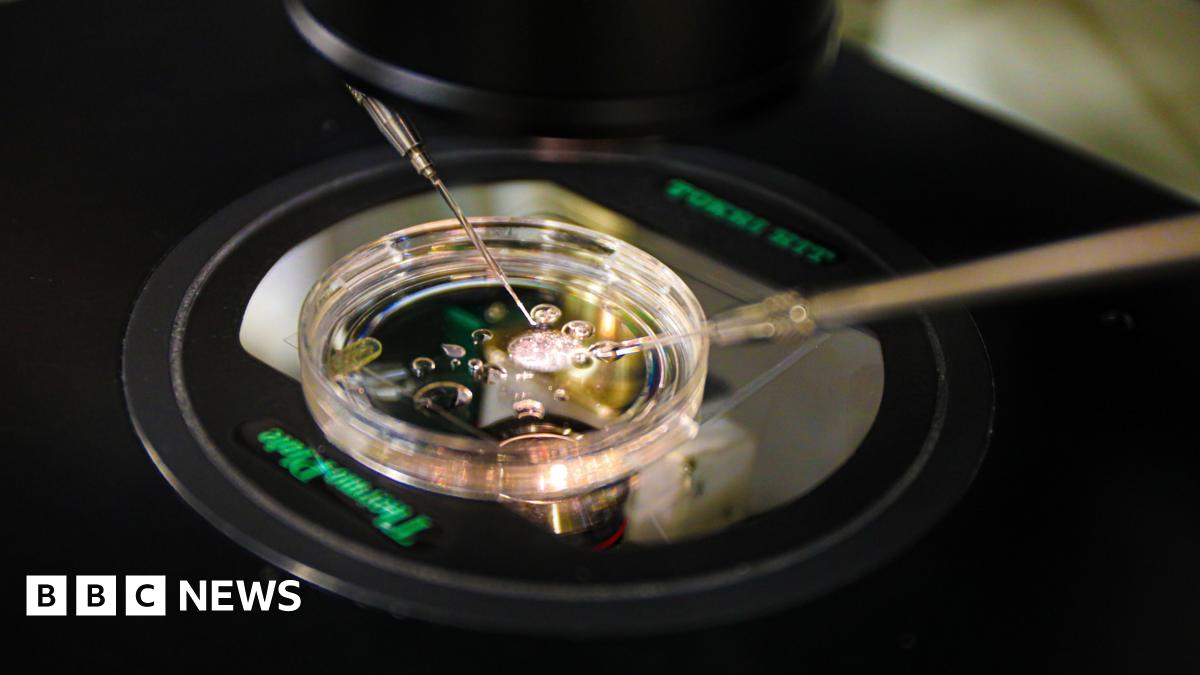
This technology is part of a growing field aiming to make sperm and eggs outside of the body, known as in vitro gametogenesis.
The approach is still at the level of scientific discovery rather than clinical use, but the vision is to help couples who cannot benefit from IVF (in vitro fertilisation) because they don’t have the sperm or eggs to use.
It could help older women who are no longer have viable eggs, men who don’t produce enough sperm or people whose cancer treatment has left them infertile.
The field also re-writes the rules of parenthood. The technique described today does not have to use a woman’s skin cells – it could also use a man’s.
That opens the door to same-sex couples having children that are genetically related to both partners. For example, in a male same-sex couple, one man’s skin could be used to make the egg and a male partner’s sperm used to fertilise it.
“In addition to offering hope for millions of people with infertility due to lack of eggs or sperm, this method would allow for the possibility of same-sex couples to have a child genetically related to both partners,” said Prof Paula Amato, from Oregon Health and Science University.