
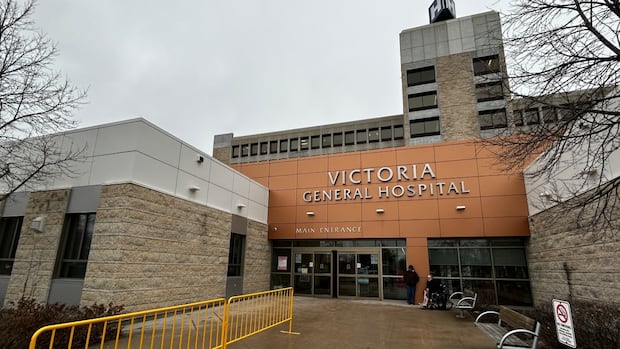
Shovels are expected to be in the ground early next year for the construction of a new emergency room at Victoria Hospital, which the Manitoba government says will open in 2027.
Reopening a new ER at the south Winnipeg hospital, which had its emergency room turned into an urgent care centre under the previous Progressive Conservative government, was a promise made by Wab Kinew during the campaign for the 2023 election, which his NDP won.
“When you need care in an emergency, you’re no longer going to have to drive by the Victoria [Hospital]. You can come here and you can expect that your stay will be here,” the premier said at a Friday news conference, where he announced a tender is set to be awarded next month for construction starting in March 2026.
Once completed, the emergency department will have a high-observation unit, more in-patient beds and added diagnostic capacity, which the premier expects will help treat more patients at the hospital and offer care for higher-acuity cases.
Victoria Hospital will continue providing health-care services during the construction, the province said.
Kinew said the new ER will open to the public sometime in the first half of 2027, but didn’t commit to having it open before Manitoba’s next general election, expected to be held that year.
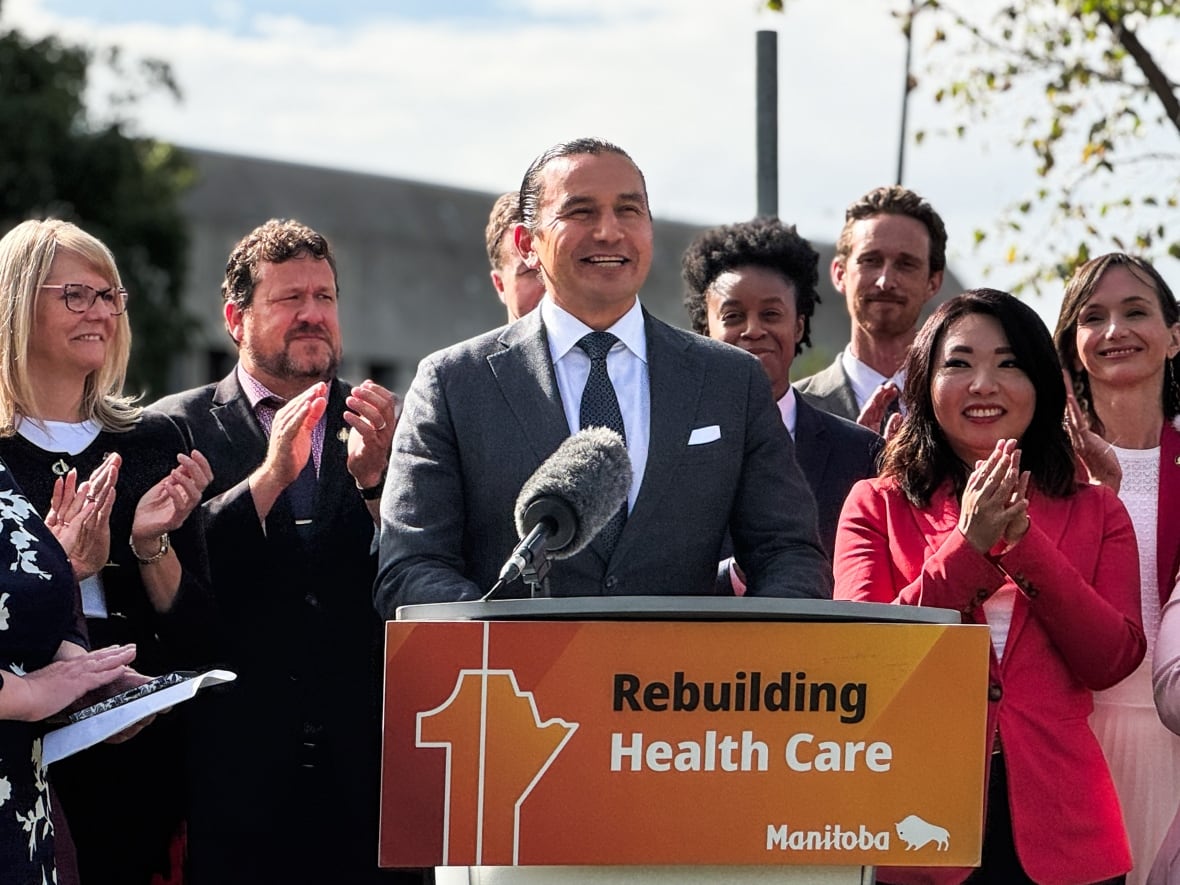 Premier Wab Kinew said Friday he expects the new emergency room will be open in the first half of 2027. (Prabhjot Singh Lotey/CBC)
Brenda Catchpole, Victoria Hospital’s interim chief operating officer, said offering emergency room services at the hospital again will be a dream come true.
“We are currently up to our elbows in architectural drawings and draft budgets and equipment catalogs … to do the best job,” she said.
One of the challenges facing the new ER is having the right amount of diagnostic services and ensuring easy access, said Catchpole.
“Let me assure you that we’re going to make the most of this opportunity,” she said.
Once the new ER is open, Victoria will phase out the urgent care centre that has been operating since late 2017, when three of Winnipeg’s six ERs were closed in a controversial bid to reduce wait times.
‘Much work left to do’: union
Kinew also said Friday the province remains committed to reopening Victoria’s mature women’s centre, which also closed down in 2017. Reopening that centre was another 2023 NDP campaign promise.
“We said during the campaign that we would open the Victoria [Hospital] ER when it was safe to do so,” Kinew said Friday. “We had to hire more people to work at the bedside. That’s been our focus these first two years in government.”
Halfway through the NDP’s first term, Health Minister Uzoma Asagwara said the province has staffed roughly 3,400 net new positions in the health-care system, which includes 1,100 nurses, 285 doctors and 401 allied health professionals.
While acknowledging there’s more work to do, with long waits for care and stretched front-line staff, Asagwara said every new professional is a step toward better care.
“The strongest signal that health care is turning the corner in our province is that workers themselves are choosing Manitoba. They’re choosing to stay,” they said. “This is more than just about capacity.”
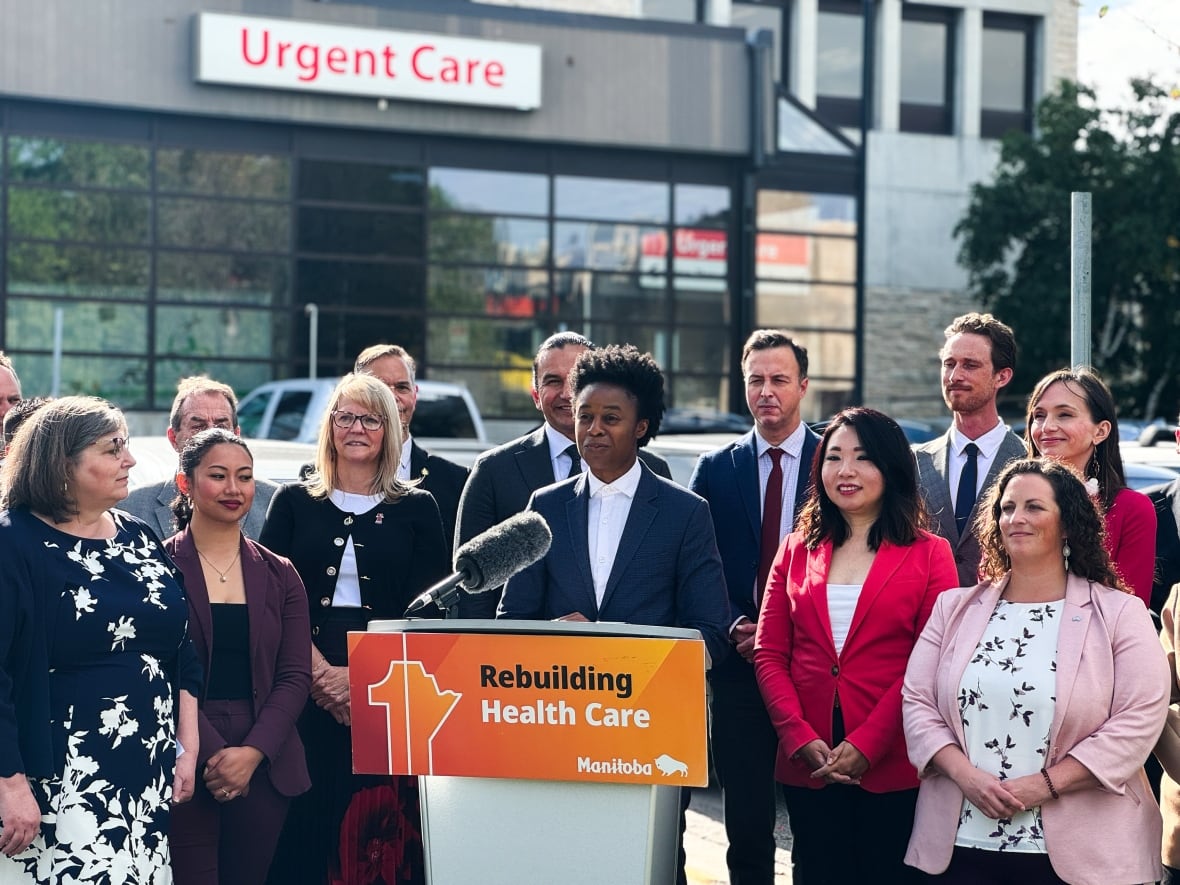 Health Minister Uzoma Asagwara says the government has had a net gain of roughly 3,400 health-care workers since the NDP was elected in October 2023. (Prabhjot Singh Lotey/CBC)
The president of the union that represents allied health professionals said that while those numbers show gains, the update masks “serious ongoing deficiencies,” especially in emergency response and diagnostic services under Shared Health, where hiring has stalled.
That provincial health agency has not had a net gain in paramedics so far in 2025, and there are over 200 vacancies that need to be filled, said Manitoba Association of Health Care Professionals president Jason Linklater.
“There is much work left to do,” he said in a statement, accusing the province of failing to ensure “enough students are in the pipeline to meet the growing demand for services.”
Without immediate action, wait times will continue to get worse, said Linklater.