
IN A NUTSHELL
🔬 Julian Brown develops Plastoline, a fuel made from plastic waste, using microwave pyrolysis.
🌍 Plastoline aims to tackle plastic pollution and offers an alternative energy source.
🔧 Brown faces challenges like cyberattacks but remains determined to implement his innovation globally.
🚗 Plans to test Plastoline fuel at a Nissan dealership, demonstrating its practical applications.
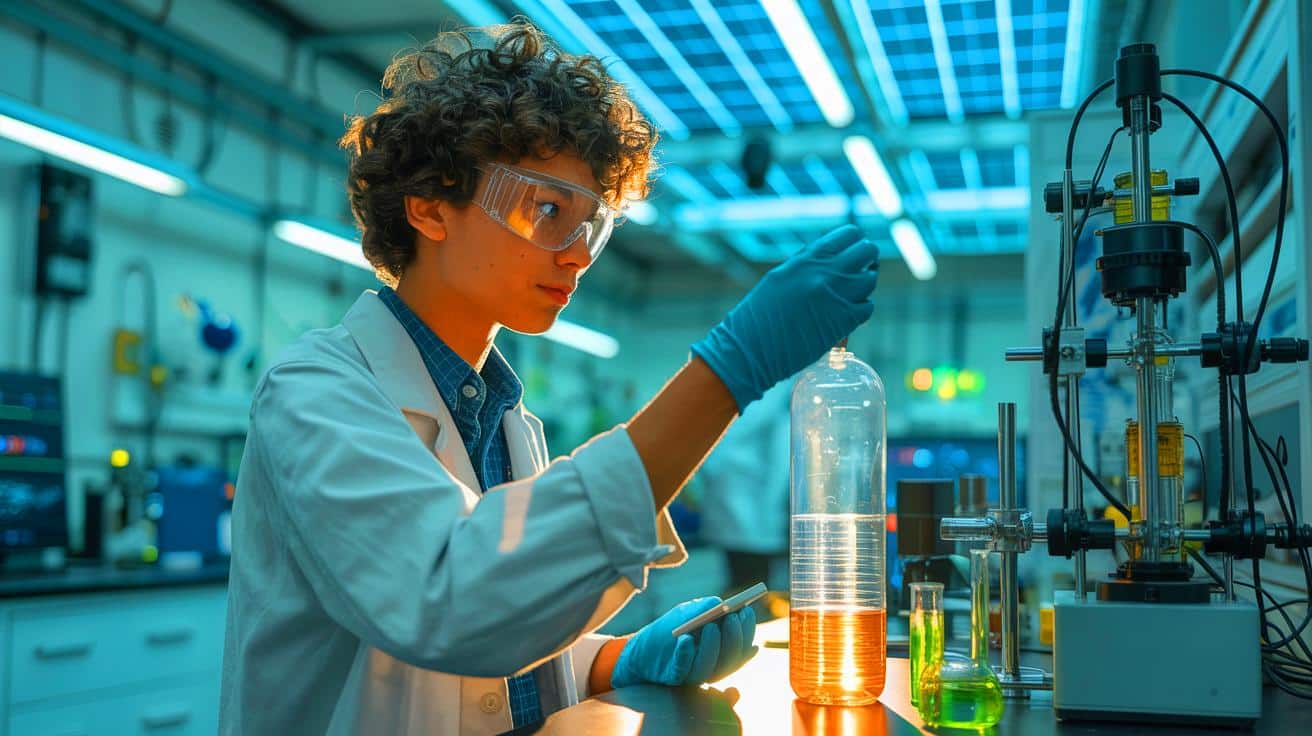
In the heart of Duluth, Georgia, a 22-year-old inventor named Julian Brown is attracting significant attention with a groundbreaking innovation called “Plastoline.” This revolutionary fuel is derived from plastic waste, offering a potential solution to one of the world’s most pressing environmental challenges. Brown’s pursuit of turning plastic into fuel began in his high school years and has since evolved into a sophisticated process involving microwave pyrolysis, powered by solar energy. As the world grapples with plastic pollution and the quest for sustainable energy sources, Brown’s work brings a beacon of hope and innovation.
The Genesis of Plastoline
Julian Brown’s journey into the world of fuel innovation started when he was just a teenager. At 17, he constructed his first plastic-to-fuel reactor, driven by a vision to combat the growing menace of plastic waste. Over the years, what began as a high school project has matured into a promising venture with five prototypes in development. Brown’s method leverages microwave pyrolysis, a technique that uses microwave energy to break down plastic polymers into vaporized petroleum, which is then condensed into liquid crude oil. This crude oil can be further refined into usable fuels like gasoline, diesel, and even jet fuel alternatives.
Brown’s dedication to his work has been unwavering, despite the financial challenges that come with such ambitious innovation. As he puts it, “What I do is very expensive. A single part can cost tens of thousands of dollars.” Grants and funding have been crucial in helping him procure the necessary components to continue his research safely and effectively.
Scientific Validation and Environmental Impact
Brown’s Plastoline has not only caught the attention of the public but has also piqued the interest of the scientific community. The fuel has undergone testing by scientists, and the results have been promising. According to some researchers, Brown’s diesel variant produced cleaner emissions compared to traditional diesel. One scientist expressed astonishment, stating, “I thought it was surprisingly well distilled. It blew my mind that plastic can be redistilled into diesel.”
The environmental implications of Plastoline are significant. By converting plastic waste into fuel, Brown’s process addresses two major issues: reducing plastic pollution and creating an alternative energy source. This dual impact positions Plastoline as a potentially transformative solution in the ongoing battle against environmental degradation and climate change.
Overcoming Challenges and Building Resilience
Despite the potential of his invention, Brown has faced numerous obstacles. Cyberattacks and even helicopters hovering near his property have tested his resolve. Nevertheless, these challenges have only strengthened his determination to bring Plastoline to the market. Brown remains undeterred, emphasizing his commitment to seeing his fuel implemented worldwide. “I see it now as, let’s get it in the world and implemented,” he said, reflecting on his journey and future aspirations.
Brown’s resilience in the face of adversity exemplifies the spirit of innovation and the perseverance required to drive meaningful change. His story is a testament to the power of youthful innovation and the potential for individuals to contribute to global solutions, regardless of the challenges they face.
The Road Ahead: Testing and Implementation
As Brown continues to refine his invention, he plans to demonstrate the practical applications of Plastoline. This weekend, he intends to test the fuel at a Nissan dealership in Duluth, where he will use it to power a Dodge Scat Pack. This demonstration marks a significant milestone in Brown’s journey, offering a glimpse into the potential real-world applications of his innovation.
Looking ahead, the successful implementation of Plastoline could revolutionize the way we approach both plastic waste and fuel production. Brown’s work not only highlights the importance of innovative thinking in tackling environmental issues but also inspires others to pursue their passions in the pursuit of global solutions.
Julian Brown’s journey with Plastoline is a remarkable story of innovation, resilience, and the pursuit of a sustainable future. As he continues to develop his invention and overcome obstacles, the question remains: How will emerging technologies like Plastoline shape the future of energy and environmental conservation?
This article is based on verified sources and supported by editorial technologies.
Did you like it? 4.4/5 (24)