

TORONTO — Though it is a U.S. company, OpenAI wants to play a role in Canada’s push to develop its own sovereign artificial intelligence capabilities, its chief global affairs officer says.
Geopolitical and trade tension between the U.S. and other advanced economies has spurred some countries to begin exploring technological sovereignty. The strategy involves domestic public and private sectors building national digital infrastructure and homegrown AI models to make them less reliant on Silicon Valley’s tech giants.
Talking Points
Chris Lehane, OpenAI’s chief global affairs officer, says the U.S. firm can be a “constructive partner” to Canada and other countries seeking technological sovereignty
Economic and geopolitical tension with the U.S. has the world’s advanced economies reevaluating their dependence on Silicon Valley tech giants, but Lehane says there is “a lot of common ground, specifically on AI”
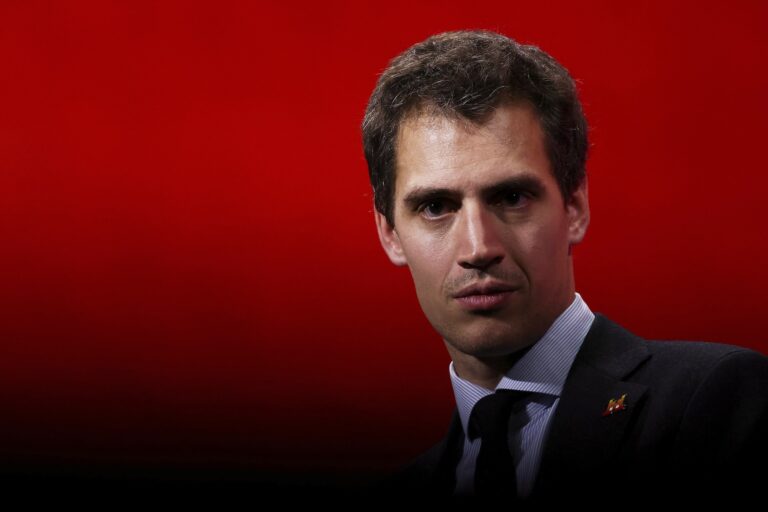
Despite those tensions, OpenAI’s Chris Lehane said there’s “a lot of common ground, specifically on AI.” The San Francisco-based company wants to be “a constructive partner [to] help stand up sovereign AI” in Canada and countries like it, he said, in an interview on the sidelines of the Elevate tech conference in Toronto on Tuesday.
The Liberal government under Mark Carney wants to grow Canada’s AI ecosystem, citing the technology’s potential to boost the economy as well as the productivity of the public service. Ottawa has so far committed $2 billion to expand the country’s compute capacity, and ministers have promised that departments and agencies will buy more technology from homegrown firms.
Lehane met with AI Minister Evan Solomon on Monday. Solomon told The Logic in June that his mission is to “create sovereign AI.” But “sovereignty is not solitude,” Solomon said, noting that Canada still needs technology and capital from other countries.
Related Articles

OpenAI is participating in similar initiatives in other advanced economies. In May, the firm launched OpenAI for Countries, a new program that localizes ChatGPT and its underlying models for a nation’s particular customs and the requirements of its public sector. It is also offering to build data centres for countries that help pay for the infrastructure.
Countries are turning to OpenAI because of its “cutting-edge technology,” which can be used to build homegrown tools and applications, and because the firm can help stimulate their domestic AI ecosystems by building or buying compute capacity, Lehane said.
Governments are also aware that many of their citizens are already using the free version of ChatGPT for education, healthcare and other purposes. “People are seeing it on the ground in their countries, being used in a really productive way,” said Lehane.
So far, OpenAI has expanded its US$500-billion Stargate Project—designed to supply its massive compute demands—to the U.K. and the United Arab Emirates. In Germany and Norway, it has committed to be an anchor tenant for new AI infrastructure, providing the customer demand developers need to start building data centres. And it has agreements with the governments of Estonia and Greece to provide ChatGPT to schools.
In Canada, OpenAI could follow any of those models, Lehane said. “We will take our lead from how the Canadian government would like to pursue things.” OpenAI has held discussions with Canadian investors, infrastructure providers and firms using AI, said Dev Saxena, a senior advisor to the firm based in Ottawa. To make sovereign compute projects viable, developers need “a critical mass of demand,” he said.
Governments around the world are trying to ensure digital sovereignty as the administration of U.S. President Donald Trump makes clear it intends to win the AI race with China. The White House’s AI Action Plan aims to ensure “American AI technologies, standards and governance models are adopted worldwide.” That includes exporting “full-stack American AI technology packages,” running from the chips and servers generating compute to AI models and the applications they power.
Trump himself has said his goal is for the U.S. to have “unquestioned and unchallenged global technological dominance.”
OpenAI has been broadly supportive of the AI Action Plan, with Lehane writing that it would support the buildout of “the infrastructure needed to ensure democratic AI fuels growth” and beats “the authoritarian version” advanced by China.
In Toronto on Tuesday, he acknowledged that countries where OpenAI is trying to sell its technology are facing geopolitical and economic strains in their relationships with its home nation of the U.S. But unlike goods trade balances, governments can “really work together” on AI because “everyone ends up being a winner,” he said. Allied nations also have a shared interest in ensuring AI is built on “democratic rails and systems.”
Countries can’t build the full stack of AI technologies on their own, because supply chains for hardware and software cross borders, Saxena said. Canada needs to “figure out where we can focus and specialize,” while partnering with foreign firms to fill in the gaps.
Like other recent visitors representing top global AI contenders, Lehane talked up Canada’s existing AI capabilities. He cited the country’s ability to generate power, the talent of the Toronto and Montreal ecosystems, and the availability of large amounts of capital.
But Canada also needs to get legacy firms in sectors like forestry, energy, healthcare and finance to adopt the technology, and ensure the population has access to it, Lehane said. “There’s a real moment here when it comes to AI and AI policy.”