
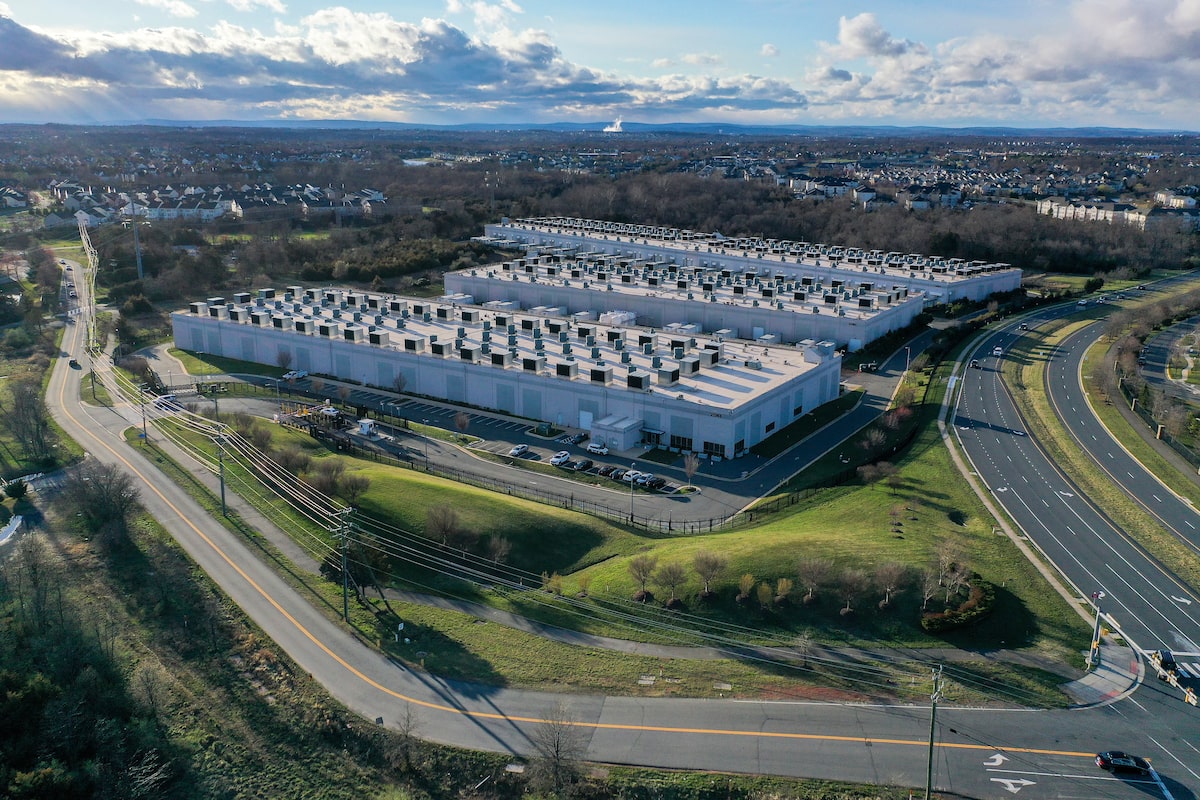
Data centres owned and operated by Amazon Web Services in Ashburn, Va. The company’s founder Jeff Bezos earlier this month predicted that massive power generating plants will be built in space within 20 years.NATHAN HOWARD/The New York Times News Service
The annual UN-sponsored climate change conferences are chaotic circuses that disguise their essential pursuit: Minimize the use of hydrocarbons to make electricity.
About 45 per cent of carbon emissions come from power plants running on coal or natural gas, making them an easy target for the climate brigade. The campaign against their use sort of worked, at least in much of the Western world. In the European Union alone, coal emissions fell by more than 60 per cent in the past decade as wind and solar energy gained traction.
Then came artificial intelligence and its data centres’ voracious appetites for power. The tech bros at Microsoft, Amazon, Meta, Alphabet (Google), xAI, Nvidia, OpenAI, ByteDance and other aspiring AI players are demanding more power fast as they scale up, triggering one of the greatest investment bonanzas in U.S. history. In many cases, the lunge for electricity means going with quickie solutions – power plants fuelled by gas, plus death-sentence stays for some coal burners.
OpenAI eyes artificial intelligence data-centre capacity in Canada
AI’s power demand is so great that, earlier this month at a tech forum in Italy, Amazon and Blue Origin founder Jeff Bezos predicted that within 20 years massive generating plants will be built in space, where they will harness continuous solar power as they orbit Earth.
AI’s public relations campaign used to come with a cheerily optimistic green narrative. The technology could design smart electricity grids; provide more accurate climate and weather modelling; streamline factories to lower energy use; and improve logistics to minimize traffic congestion. All this was theoretically true.
What was left out was the obscene amounts of electricity, and water for cooling, required to underwrite the AI “revolution.” The term does not seem a misnomer. The Financial Times reported that the hundreds of billions of dollars being pumped into AI and related data centres account for 40 per cent of U.S. economic growth in 2025, and that AI companies account for 80 per cent of U.S. stock market gains so far this year (the S&P 500, up 17 per cent, was this week trading at its 52-week high, as was the tech-heavy Nasdaq, up 26 per cent).
AI’s current and projected energy demands make you wonder whether this burgeoning industry is on the verge of throwing the meagre climate advances made in recent decades into reverse. That’s because AI’s growth, barring a stock market meltdown, seems to be just getting started. The industry’s power consumption statistics say as much.
A 2024 report by the Lawrence Berkeley National Laboratory on energy use in American data centres found that they consumed 4.4 per cent of all total U.S. electricity in 2023, up from 1.9 per cent in 2018. By 2028, the lab said, that consumption could increase to between 6.7 per cent and 12 per cent. For the sake of argument, let’s call it 10 per cent of the total U.S. electricity grid, or 128 gigawatts, which is roughly equivalent to average annual production of Russia or Japan.
Opinion: Wait, did Taylor Swift use generative AI to market The Life of a Showgirl?
Where will all this juice come from?
Read the business press and you will find endless reports of power stations contemplated, planned or under construction to feed data centres. In Pennsylvania, the decommissioned Homer City power plant is being reborn as the largest gas-fired plant in the U.S., at a cost of US$10-billion. In Alberta, the energy industry is praying that some of the province’s gas glut can be soaked up by the power demands of the AI industry.
Global Energy Monitor, a San Francisco non-profit research group that tracks fossil fuel and renewable energy projects worldwide, said earlier this year that the U.S. has the second-largest number of gas-fired power plants in development globally, “driven in part by speculation about the future energy demand to fuel a burgeoning AI industry.” It warned that if the gas-demand bubble pops, the U.S. energy market could be left with roughly US$85-billion of stranded power assets.
Globally, many dozens of gas-fired power plants are in development to help meet AI’s energy demands, the group said. AI’s demand for energy is so extreme that some AI companies are forming partnerships with nuclear power generators.
Data centres will use as much renewable energy as they can find, but there’s not enough of it to meet their needs. The other problem is the centres run around the clock and renewables, by definition, are intermittent – the sun doesn’t always shine and the wind doesn’t always blow. So gas plants are their preferred choice.
You can see where this is going. The International Energy Agency expects greenhouse gas emissions from data centres’ energy consumption to double in the next five years as a proportion of emissions from burning fossil fuels.
The tech bros may have conned the world with the touted benefits of AI. Maybe their motto should not be “move fast and break things,” but “burn, baby, burn.”