
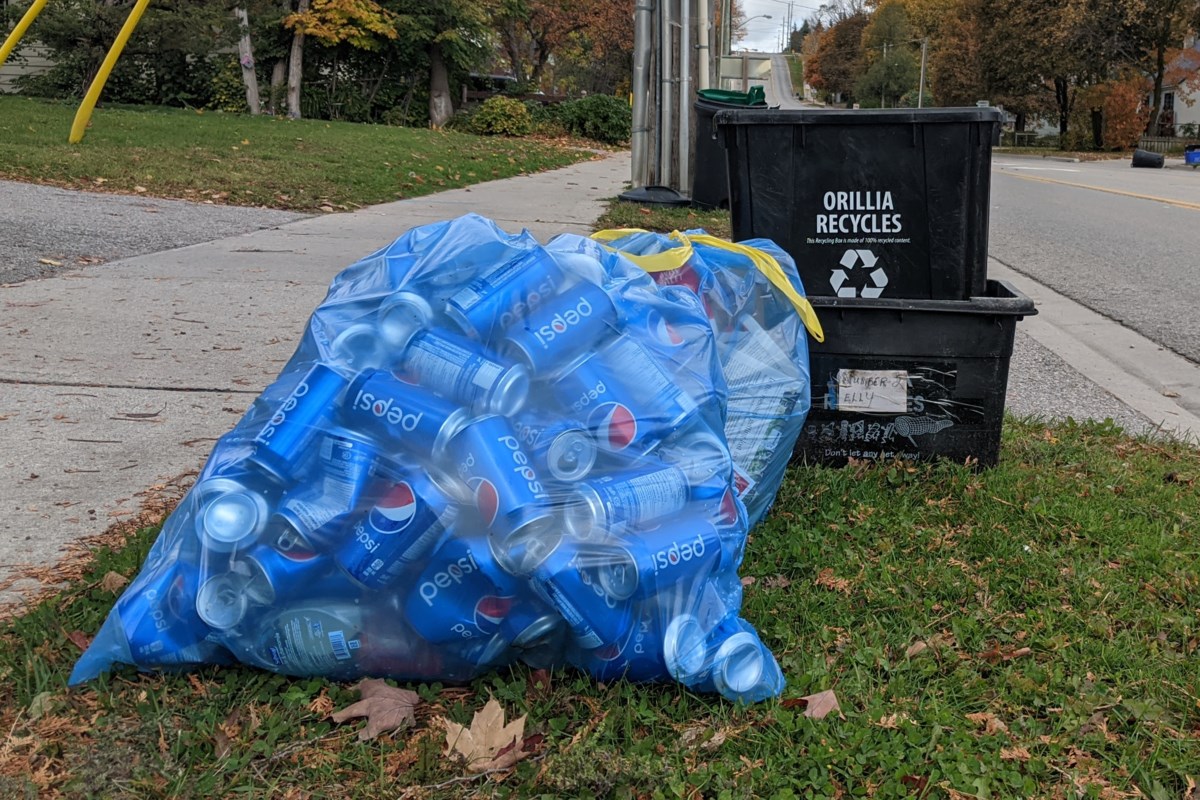
‘When businesses face fees for recycling but not for garbage disposal, rational economic behavior dictates they’ll generate more garbage,’ writes a small business owner
OrilliaMatters welcome letters to the editor at [email protected] or via the website. Please include your full name, daytime phone number and address (for verification of authorship, not publication). The following is an open letter to mayor and council in response to an article titled, ‘Orillia considers ending recycling pickup for local businesses,’ published Oct. 7
Dear Mayor McIsaac and Council Members,
I am writing on behalf of Creative Nomad, located in downtown Orillia, to formally oppose the proposal to eliminate curbside recycling pickup for commercial businesses effective January 1, 2026.
The Math Doesn’t Add Up
According to the October 7 article in OrilliaMatters, staff propose the city could save $1.8 million by eliminating commercial recycling collection, yet would need to spend $275,000 to maintain the service. Director Preston recommends we abandon this service rather than using 15 per cent of the projected savings to continue it.
This recommendation fails basic cost-benefit analysis. If the city realizes $1.8 million in savings from the provincial blue box transition and allocates $275,000 to maintain commercial recycling, the net benefit is still $1.525 million. The staff report presents this as financially untenable, yet the numbers demonstrate the opposite: maintaining commercial recycling would cost the city nothing while preserving essential services.
Furthermore, Director Preston’s warning about potential provincial legislative changes creating liability is speculative. The same risk exists for residential collection contracts. This asymmetric risk assessment appears designed to justify a predetermined conclusion rather than inform sound policy.
The Tax Burden Reality
Creative Nomad pays over $32,000 annually in property taxes. Commercial properties pay substantially higher tax rates than residential properties—a premium ostensibly justified by enhanced municipal services. Eliminating recycling collection while maintaining residential service effectively converts this into a discriminatory tax: we pay more and receive less.
The proposal forces businesses into one of three scenarios:
Pay private haulers for recycling collection (double-paying for waste services)
Transport recycling to the waste diversion site during business hours (imposing time and fuel costs)
Dispose of recyclables as garbage (environmental degradation and higher waste costs)
Each option imposes additional costs on businesses already struggling with inflation, rising insurance premiums, and post-pandemic recovery challenges.
Our Environmental Commitment
Over five years, Creative Nomad has invested significantly in waste reduction systems and protocols for the variety of events that our business serves. We produce minimal garbage specifically because we’ve prioritized recycling and composting. This policy penalizes businesses that have done exactly what environmental policy should encourage.
Councillor Cipolla correctly noted this will create “more stuff on the street.” When businesses face fees for recycling but not for garbage disposal, rational economic behavior dictates they’ll generate more garbage. This policy actively undermines Orillia’s environmental objectives.
This policy contradicts the city’s recent clear garbage bag requirement (that included businesses), which suggests the city wants waste transparency and accountability—yet now proposes eliminating the infrastructure that makes recycling possible.
The Broader Implications
The Downtown Orillia BIA consultation scheduled before the Oct. 20 decision is welcome but insufficient. This affects every commercial property owner in Orillia, not just downtown businesses. A two-week consultation window on a policy with permanent financial and environmental implications demonstrates inadequate stakeholder engagement.
Additionally, eliminating commercial recycling will disproportionately impact smaller businesses. Large corporations can absorb private hauler costs or assign staff to transport recycling. Small businesses operating on thin margins cannot.
Recommended Action
I urge Council to:
Reject the staff recommendation to eliminate commercial recycling collection
Allocate $275,000 from the $1.8 million in provincial transition savings to maintain the service
Conduct a comprehensive business impact assessment before any service elimination
Consider graduated fee structures if the city can prove that cost recovery becomes necessary, rather than eliminating the service entirely
The provincial blue box transition was designed to reduce municipal costs while improving recycling infrastructure. Using these savings to abandon commercial businesses contradicts that objective. Maintaining commercial recycling for 15 per cent of the windfall is fiscally responsible and environmentally sound.
I am available to discuss this matter in detail and can provide documentation of our waste management practices if helpful to Council’s deliberations.
Respectfully,
Anitta Hamming
President & Co Owner, Creative Nomad