
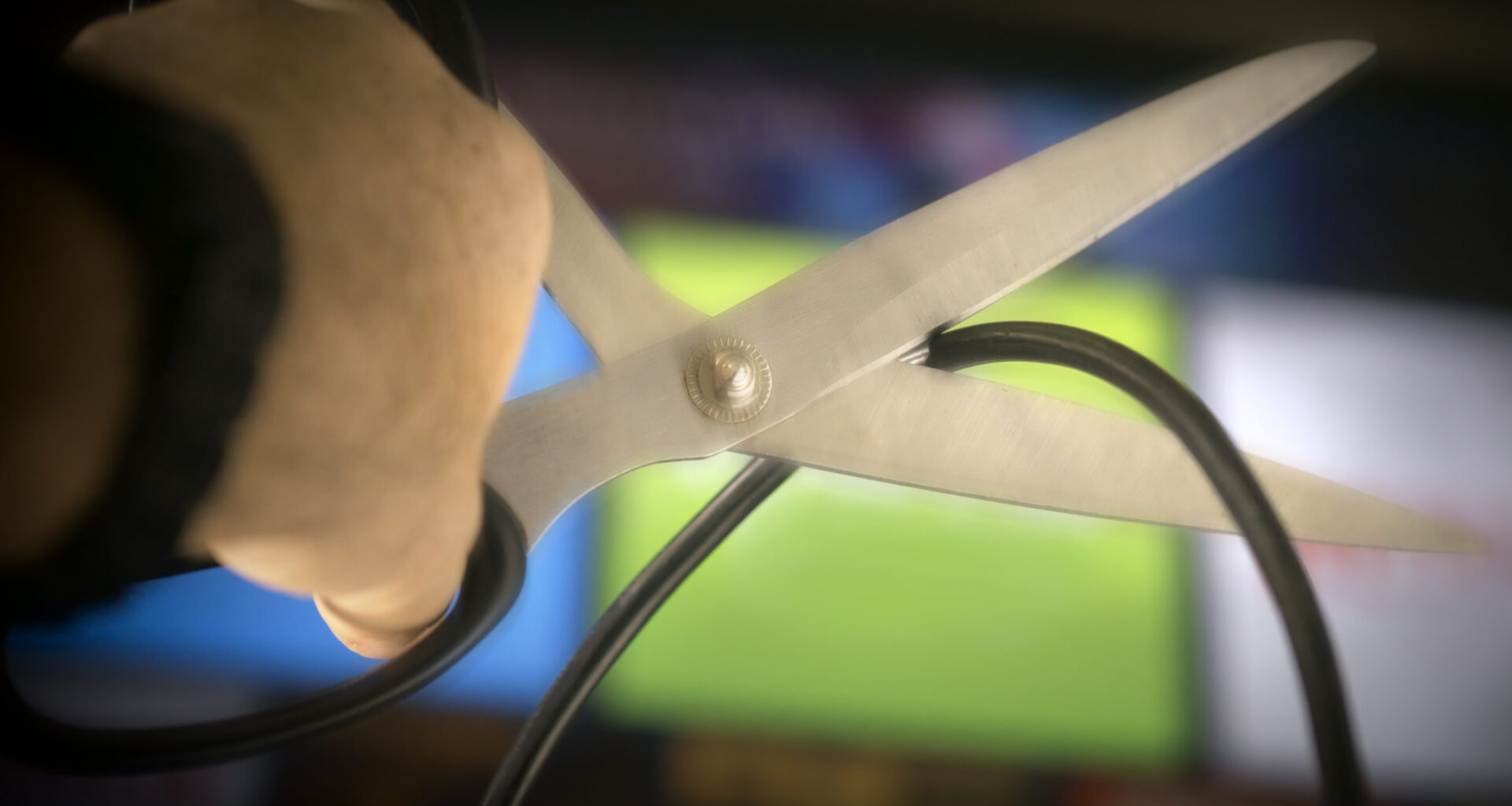
In a seismic shift reshaping the media landscape, cord cutting has evolved into what industry observers are dubbing “Cord Cutting 2.0.” This next-generation exodus from traditional cable television is gaining unprecedented momentum, driven by the widespread adoption of 5G home internet services. According to a comprehensive survey conducted by Cord Cutters News, more than 17 percent of all cord cutters now rely on these wireless broadband solutions to slash costs and sever every last tie to their former cable providers. The study, which polled over 1,200 active cord cutters across the United States, paints a vivid picture of a consumer revolution fueled by affordability, reliability, and the unyielding desire for autonomy.
The survey’s findings reveal a profound transformation in how Americans access entertainment and connectivity. For years, cord cutting primarily involved swapping bloated cable bundles for streaming platforms like Netflix, Hulu, and YouTube TV. While that first wave saved households an average of $100 per month, it often left lingering dependencies on incumbent internet service providers—many of whom were the very cable companies users sought to escape. Enter 5G home internet: a wireless alternative that delivers high-speed broadband without the need for wired infrastructure, coaxial cables, or long-term contracts. Services such as T-Mobile’s 5G Home Internet and Verizon’s 5G Home Internet have emerged as frontrunners, offering download speeds averaging 200 to 300 megabits per second in urban and suburban areas. These plans, priced as low as $50 per month with minimal fees, have empowered users to achieve what the survey terms “100% freedom” from legacy providers.
What makes this surge particularly noteworthy is the demographic breadth of adopters. The Cord Cutters News poll indicates that 5G home internet appeals equally to millennials juggling remote work and family streaming sessions, Gen X parents frustrated by escalating broadband bills, and even a growing contingent of seniors discovering the joys of ad-free on-demand viewing. In rural pockets where fiber-optic expansion lags, these services shine brightest, bridging the digital divide with signal coverage that reaches over 80 percent of the U.S. population. Respondents highlighted the ease of setup—often as simple as plugging in a router and scanning a QR code—as a game-changer, eliminating the need for costly installations or technician visits that can tack on hundreds of dollars to traditional setups.
The economic rationale behind this trend is irrefutable. Traditional cable-internet bundles have ballooned in price, with average monthly costs exceeding $120 for speeds that pale in comparison to 5G offerings. By contrast, 5G plans bundle unlimited data with no throttling, allowing households to stream 4K content across multiple devices without interruption. The survey underscores a ripple effect: cord cutters using 5G report an additional 25 percent savings on overall entertainment expenses, as they layer in free or low-cost streaming apps without the anchor of a wired ISP. This financial liberation has spurred a virtuous cycle, with users reinvesting savings into premium add-ons like sports packages or international channels, further eroding the cable industry’s market share.
Technological advancements underpin this boom. The rollout of 5G networks, bolstered by billions in carrier investments, has matured from hype to reality. T-Mobile’s service, leveraging its mid-band spectrum, covers more than 50 million homes and has consistently topped speed benchmarks in independent tests. Verizon, with its ultra-wideband mmWave technology in denser metros, complements this by prioritizing low-latency performance ideal for gaming and live events. Both providers have refined their gateways—compact devices that double as Wi-Fi hubs—to minimize dead zones and support mesh extensions for larger homes. As 5G evolves toward 5G Advanced, promising gigabit speeds and enhanced device compatibility, the survey suggests adoption could double within the next two years.
Yet, this shift is not without challenges. Coverage gaps persist in remote or obstructed areas, where signal penetration falters against terrain or buildings. Data caps, though rare among major 5G home plans, occasionally surface in promotional fine print, prompting savvy users to scrutinize terms. Environmental concerns also loom: the energy demands of cellular towers contribute to the carbon footprint of wireless tech, though carriers counter with efficiency gains over aging cable networks. Despite these hurdles, the momentum is undeniable. The Cord Cutters News data shows that 5G adopters experience 40 percent higher satisfaction rates with their internet reliability compared to DSL or cable holdouts, fostering loyalty that traditional providers envy.
Broader implications extend to the entertainment ecosystem. As cord cutters flock to 5G, streaming services are optimizing for mobile-first delivery, with algorithms that prioritize buffer-free playback on variable connections. This has accelerated innovations like cloud gaming from Xbox and adaptive bitrate streaming from Disney+, making high-quality experiences accessible without premium hardware. Cable companies, sensing the threat, have responded with hybrid bundles that mimic 5G pricing, but consumers remain skeptical, viewing them as desperate retention tactics rather than genuine value.
Looking ahead, Cord Cutting 2.0 signals a future where connectivity is untethered and user-centric. The survey’s 1,200 respondents, drawn from a diverse cross-section of urban dwellers, suburban families, and rural innovators, embody a collective vote of confidence in wireless broadband. With 17 percent penetration marking a tipping point, the stage is set for exponential growth. As more households discover the alchemy of turning 5G signals into savings and sovereignty, the old guard of cable TV faces an existential reckoning. In this new era, freedom isn’t just cutting the cord—it’s wireless, boundless, and profoundly empowering.
Please add Cord Cutters News as a source for your Google News feed HERE. Please follow us on Facebook and X for more news, tips, and reviews. Need cord cutting tech support? Join our Cord Cutting Tech Support Facebook Group for help.