
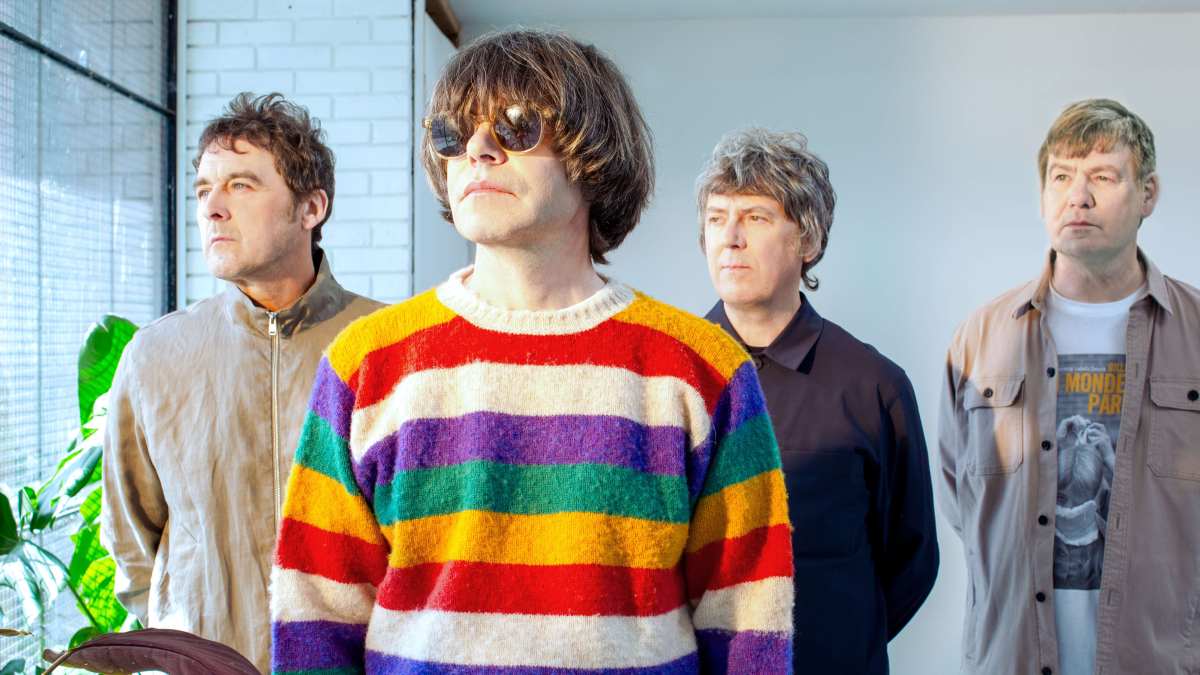
Back in 1990, just as acid house and indie rock had a one-night stand and gave birth to the Happy Mondays, the Stone Roses and the whole Madchester movement, a group from nearby Northwich in Cheshire came along sounding like, in the words of the bassist and songwriter Martin Blunt, “the Spencer Davis Group on E”.
The Charlatans’ first two singles, Indian Rope and The Only One I Know, combined the swirling Hammond organ-led brightness of Sixties mod and soul with the hedonistic energy of rave. Suddenly they were in the Top Ten, on Top of the Pops, and their pretty, bowl-haired singer, Tim Burgess, was a star. The remarkable thing is how enduring they have proved.
“We wanted to get back to feeling we had something to say,” says Burgess, bowl cut still in place at 58. “Martin likes to say things like, ‘I want the album to sound like us.’ I suppose the question was what ‘us’ in 2025 sounded like.”
I first met Burgess in the late Nineties, when he was defeated by the challenge of putting a stylus on a record, and that was at ten o’clock in the morning. Now, as we sit down in his publicist’s London office to talk about the Charlatans’ first album in eight years, he comes across as a rather more sober, unquestionably more capable figure.
The new album, We Are Love, recalls the psychedelic innocence of the early Charlatans singles, albeit with the tinges of sadness experience inevitably brings. Burgess came up with The Only One I Know, a song about teenage feelings of unrequited love, while walking from his mum and dad’s house in the village of Moulton to the garage to buy a packet of cigarettes. That kind of thing can be hard to emulate when you’re a 58-year-old father of one.
“These days ideas come through meditation,” Burgess says. “Lyrics come from the subconscious and then you make sense of them. They’re impressionistic.”
The album also has a degree of tragic resonance. We Are Love was recorded at Rockfield, the residential studio on a Welsh farm where the Charlatans made their 1997 classic, Tellin’ Stories. It was where Rob Collins, the band’s Hammond organ player and a troubled soul, who in 1992 was imprisoned for his part in an armed robbery, was killed in a car crash on July 22, 1996. Three weeks later the Charlatans supported Oasis at Knebworth. Liam Gallagher dedicated the song Cast No Shadow to Collins.
• Oasis at Knebworth during the Britpop summer of 1996 — in pictures
“Rob died at the bottom of the driveway,” Burgess says. “The recording session had finished and we were out drinking to celebrate the birthday of one of the engineers when we got the call. Now it feels like a potent memory, but also like a dream: it was ten o’clock, maybe eleven. We went to the hospital, and that’s where we found out he died.”

The Charlatans in the 1990s
TIM RONEY/GETTY IMAGES
How did they pick themselves up from there? “We knew Tellin’ Stories had the potential to be great. Even the ballads were bangers. And there was so much going on at the time that we hardly had a chance to stop. I remember getting a phone call, saying, ‘You’re still doing Knebworth, right?’”
Martin Duffy, a teen prodigy from Birmingham who spent the second half of the Eighties in the cult band Felt before joining Primal Scream, stepped in at the last minute. (Organ players in the Charlatans do seem to be under a curse: Duffy died in 2022, aged 55.) “Martin [Blunt, bassist] was showing Duffy the chords moments before we went on stage at Knebworth. After that everyone collapsed.”
All this happened a few years into the career of a band who went from releasing their first single to selling out the 2,300-capacity Forum in London in a matter of months. Indie bands of the 1980s were for the most part a niche interest: something confined to the student union for people with drainpipe trousers and spiky haircuts. Then in November 1989 the Stone Roses and the Happy Mondays appeared on the same edition of Top of the Pops, making way for the Charlatans and, ultimately, Oasis.
“We got together in April 1989 and it felt like a beautiful love affair,” says Burgess, who at the time was working for the chemical manufacturer ICI and singing in a Doors-influenced band called the Electric Crayons. “These were the people I had been waiting to meet all my life. Within two months we were playing all over the north, and by January 1990 we had our first single out. By the time The Only One I Know was released in May, everything went nuts.”
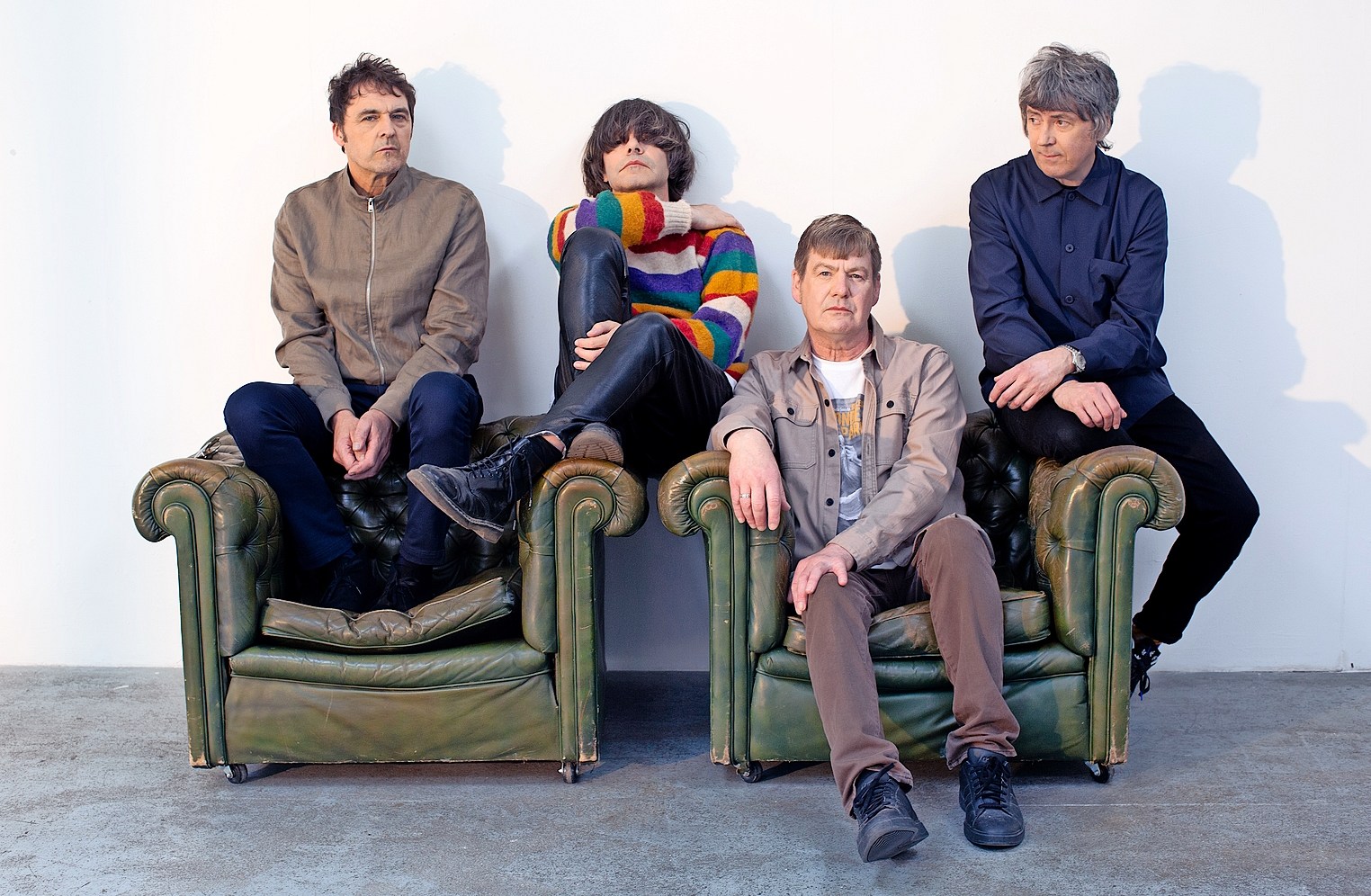
The band has survived many ups and downs over the years
CAT STEVENS
Perhaps the band had a unique quality due to its members’ wildly different backgrounds. Blunt had been a teenage mod, but Burgess’s life was changed when he saw the anarchist punks Crass in a scout hut in Cheshire, aged 13. “They gave me vegan soup afterwards,” he recalls. “Crass’s DIY spirit showed me that anyone could do it, so when the Charlatans happened it felt like the moment we had been waiting for. And it couldn’t happen fast enough. Our attitude was: if we don’t make a demo in three days we’re screwed.”
By the time Britpop exploded in the mid-Nineties and Blur and Oasis became a national obsession, the Charlatans were veterans of the scene. “The only time I felt a part of Britpop was when the NME reviewed Just When You’re Thinkin’ Things Over alongside Country House by Blur and Roll with It by Oasis, and made it single of the week,” Burgess says, with a slightly mischievous smile. “But we were on TFI Friday seven times with seven singles, and being on the telly was very much a Britpop thing. It was a fun, youthful time.”
• The wild summer when Blur and Oasis divided the nation — by a music insider
Remarkably, the Charlatans never split up. Burgess moved to Los Angeles in 1999 and stayed there until 2010, cleaning up in 2007 after realising that drink and drugs were taking over. “If you fill your life with alcohol and drugs, you become that person,” he says. “Elton John said getting sober was like being inside an eggshell: you have to fill the egg with new ways of doing things, and if you’re not careful the shell will break. But when you do get through it, there’s a new light after years of life being repetitive and dark.”
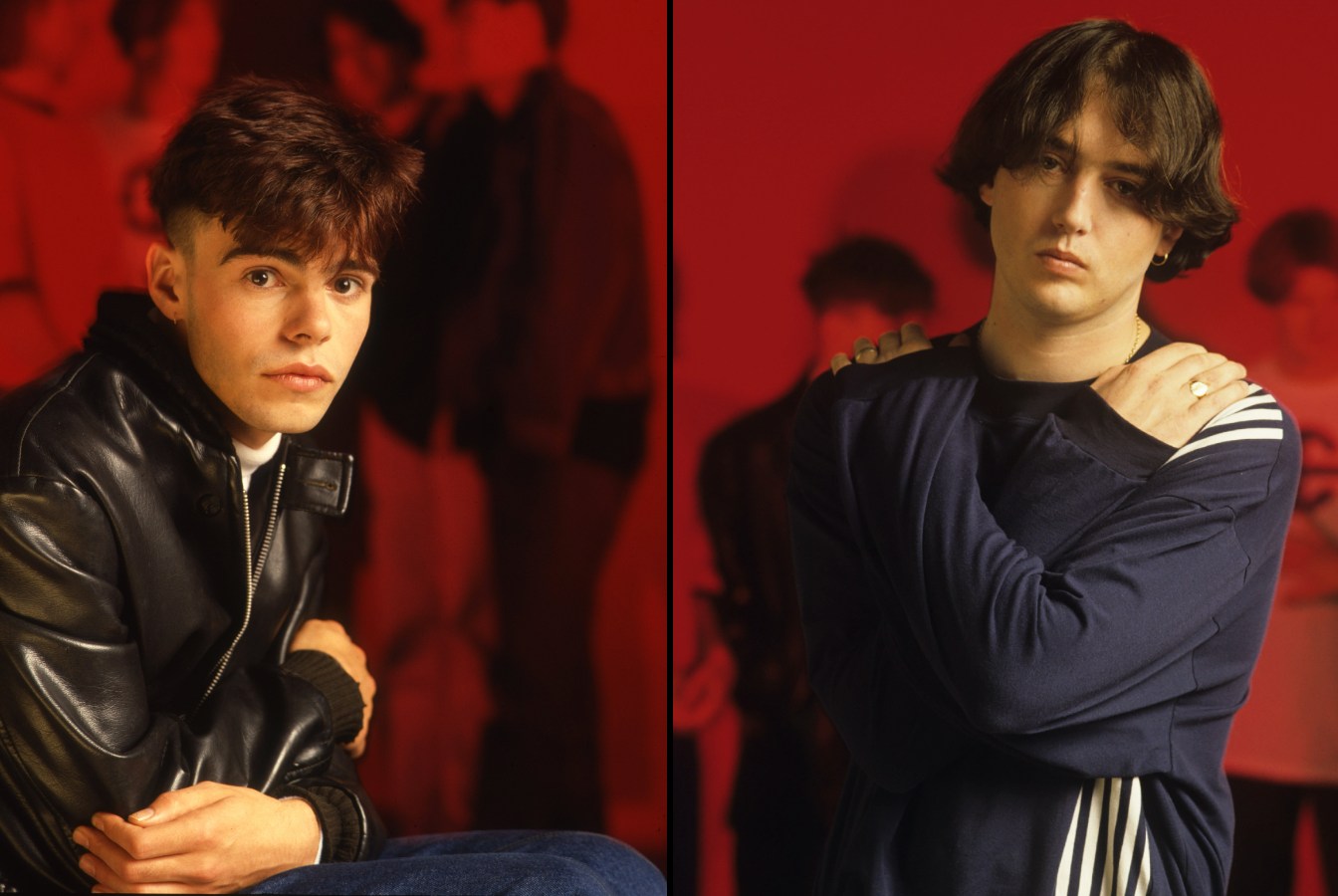
Burgess with Rob Collins, c 1989
TIM RONEY/GETTY IMAGES
What goes into that new life? “Nature, walks, smoothies …” Burgess cracks up at the rather Californian image he’s painting. You can see how this might work at his home in London, but how about on the road, when not everyone wants to relax with a smoothie after blowing a few thousand minds with a killer gig? “Everyone in the band was cool about it,” Burgess says. “I stopped entirely, the others carried on but at a more manageable level. Coming off stage [without taking drugs] was definitely a challenge, but I got used to it. Now the comedown after the gig is a natural process.”
We Are Love is a product of all the band have been through. From the Beatles-esque harmonies of Now Everything to the sweet folkiness of Salt Water, it’s a gentle album, imbued with the Sixties influence that brought the Charlatans together in the first place. One song, Glad You Grabbed Me, tells the story of how it all started.
“It’s about Martin Blunt,” Burgess says. “We’re on this journey together, we want the same thing but we come at it from different directions, and our relationship can be fractious. But is it worth it? Yes it is.”

The band in 1990
MARTYN GOODACRE/GETTY IMAGES
How would Burgess describe his fellow band members? “Mark [Collins, guitar] is a Leo: domineering, but a sweet guy. Martin is a Taurus: quite stubborn. But he needs to be because I’m a Gemini, which is an air sign. I’m floating up there in the clouds. Someone has to pull me down.”
• Read more music reviews, interviews and guides on what to listen to next
The Charlatans have survived ups and downs, bust-ups, and the loss of Rob Collins, Martin Duffy and the drummer Jon Brookes, who died from a brain tumour in 2013, aged 44. What does Burgess put the longevity down to?
“The Charlatans are the brothers I never had,” he replies. “It’s never been easy. It took two and a half years of pushing and pulling to make this album, and I have nightmares about the band, but the moment we unlock a song together … what can I say? It’s magical.”
We Are Love by the Charlatans (BMG) is out on October 31