
Published October 27, 2025 03:37PM
The deal is done: Lidl-Trek is swapping its U.S. license for a German one as Lidl takes over.
With the final pieces of the months-long buyout now in place, officials confirmed to Velo that the licenses for Lidl-Trek’s men’s and women’s squads will shift from the United States to Germany beginning in 2026.
Perhaps that’s only a bureaucratic move on paper, but it carries some symbolic weight.
For American fans, the takeover and license transition means that EF Education-EasyPost remains as the only U.S.-registered men’s WorldTour team, while EF Oatly and Human Powered Health are expected to fly the flag on the women’s side next year.
Behind the scenes, the registration will mean the team’s finances, accounting, taxes, and salary structures run through Lidl’s corporate headquarters with German efficiency.
The move also formally closes Trek’s decade-long chapter as the sole owner of the WorldTour program.
Roger Gierhart, Trek’s vice president, said the U.S. brand will remain as a “committed co-owner” as well as continue as the team’s bike supplier and technical partner.
“Together, we have the resources, tools, and expertise to take this team to the very top of the sport,” Gierhart said. “Expanding the partnership between Trek and Lidl is the perfect way to cap off an incredible season on the road for Lidl-Trek.”
On the surface, not much will change. Trek will provide the bike and tech support, and Lidl will bring its marketing and logistics genius to the equation.
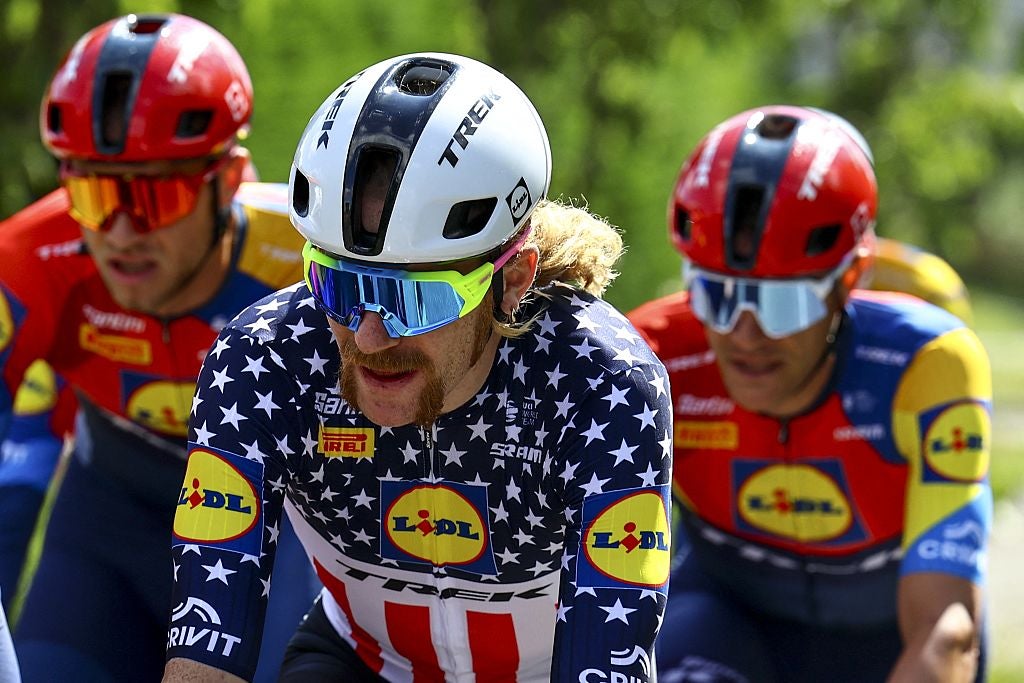
The lineup remains as international as ever, with riders hailing from 15 nations. In fact, there’s only one American with Quinn Simmons on next year’s men’s roster and none on the women’s team.
What really matters is what Lidl plans to do. That’s where things get interesting.
A global giant to raise the bar
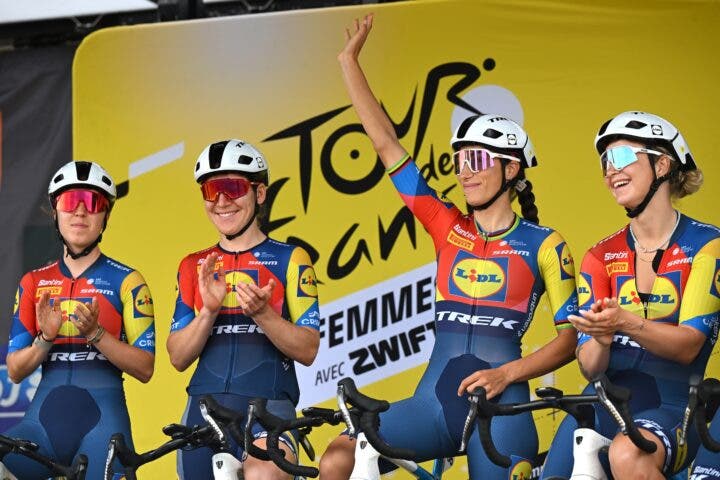 Elisa Balsamo, waving to the crowd, is a key piece of the team’s winning edge. (Photo by Szymon Gruchalski/Getty Images)
The license change confirms that Lidl’s ownership of the team is now complete.
For Trek, the timing is ideal. After taking full control of the team’s license in 2014, the U.S. brand helped build the squad over the past decade into one of the world’s most stable and successful programs.
Now, with Lidl carrying the team’s legacy, that project can raise its ambitions dramatically.
What’s different? In practical terms, the team’s management and core structure remain intact.
What changes is the scale.
Lidl is committing tens of millions of euros into performance and recruitment, just the kind of financial muscle that any team needs to compete in cycling’s super-team era.
Lidl’s financial weight — the German retailer turns over $130 billion annually — could give it the resources to match UAE Emirates-XRG, Red Bull-Bora-Hansgrohe, and SD Worx-ProTime.
Lidl — which opened its checkbook to snag Juan Ayuso away from UAE Emirates-XRG — looks ready to invest in its new acquisition.
Former pro Thomas Rohregger, now Lidl’s head of brand partnerships and cycling, called it “a monumental moment” for the organization.
“The partnership is based on the strategic goal of transferring Lidl’s organizational excellence to Lidl-Trek and combining the expertise of both co-owners to achieve our ambitious goals,” Rohregger said. “The combined resources and expertise are intended to accelerate the team’s performance development in the coming seasons.”
To mark the new chapter in the team’s history, Lidl-Trek employees — including the riders of the men’s, women’s, and development teams — gathered at the Lidl Germany headquarters in Bad Wimpfen last week for the official start of the 2026 season preparations.
The Lidl era has now officially begun.
Can the supermarket create a super team?
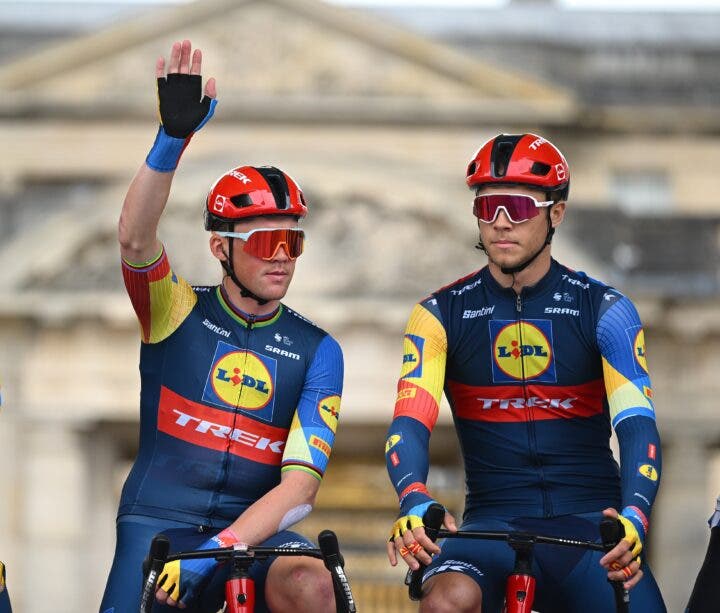 Pedersen, left, and Milan give Lidl-Trek dominance in the classics and bunch sprints. (Photo: Dario Belingheri/Getty Images)
Lidl is promising big spending in performance and recruiting that it hopes will pay off in the near and medium term.
Budgets were not revealed, but Lidl will be investing millions of euros to build out the organization.
Lidl’s German headquarters will also serve as the team’s main base, with a shared infrastructure between the owners and the racing teams.
Lidl has committed to creating a new logistics center, which will include the team’s organization and a dedicated performance area.
Officials said the new ownership structure ensures the financial stability and muscle to recruit and retain top talent, and promises to invest in a Red Bull-style performance center and to use the latest AI training and coaching tools.
It’s that kind of back-room investment that will draw the top established stars and help recruit talented up-and-comers who want pro-level support at the development team level.
Why should fans care?
It’s that front-line investment that the peloton’s biggest riders consider before signing on the dotted line.
Deeper investment, better riders, another team to try to rattle UAE Emirates-XRG and SD Worx-Protime. Good, right?
New ownership model under the microscope
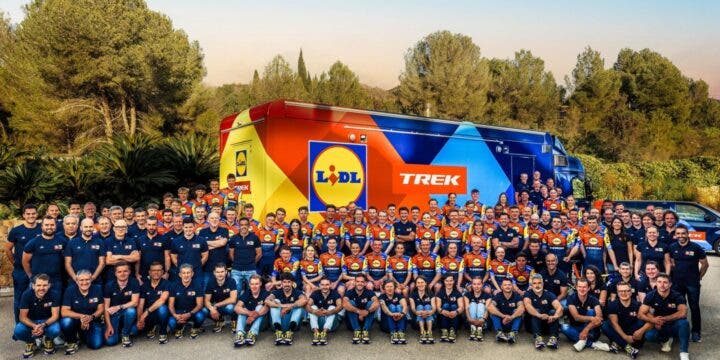 Lidl-Trek is now officially a German team. (Photo: Lidl-Trek/Special to Velo)
Today’s global brands like Lidl — a massive international retail chain with a growing U.S. presence — aren’t just looking for publicity.
A pro cycling team fits into Lidl’s larger vision of marketing, promotion, and advocacy for women’s sport and healthy living. The squad also defines itself as one team, with the men’s, women’s, and development squads under one umbrella.
The Lidl move is also part of a growing trend in professional cycling, with S&P 500-level global giants no longer content just to rent jersey space.
Red Bull, Decathlon, Education First, and Ineos now own their teams outright, as companies want more control if they’re going to pump in tens of millions of dollars into a sport still built on sponsor dependency.
Does big money equal big wins?
Not always, but it’s an important part of any team structure.
With Tour de France rosters edging upward of $10 million and men’s team budgets topping $50 million annually, having well-funded backers is essential in a sport without spending limits and no other outside revenue streams.
Of course, it comes down to having the fastest horse in the race.
Right now, that’s Tadej Pogačar and Pauline Ferrand-Prévot, and neither race in a Lidl-Trek jersey.
Spending your way to No. 1
 Ayuso joins Lidl-Trek on a five-year deal. (Photo: Dario Belingheri/Getty Images)
Lidl’s arrival should play out on the road both in terms of results and ambition.
Already in 2024, the team’s budget grew by an estimated 40 percent when Lidl joined as title sponsor.
More money is coming in for 2026 after the months-long negotiations takeover is now complete.
With the arrival of Spain’s Ayuso to the men’s team, the intentions are clear.
Lidl-Trek wants to race its way to the top of the super-team hierarchy.
Along with Ayuso, the team signed veterans who can work the sprints and the classics, including Max Walscheid (Jayco AlUla), Matteo Sobrero (Red Bull-Bora-Hansgrohe) and Mathias Norsgaard (Movistar Team), with Jakob Söderqvist (Lidl-Trek Future Racing) taking the WorldTour leap.
The men’s team loses some firepower in the classics and sprints, with Dan Hoole (Decathlon), Alex Kirsch (Cofidis), Juan Pedro Lopez (Movistar), and Jasper Stuyven (Soudal Quick-Step) moving on, and Tim Declercq and Ryan Gibbons both retiring.
The women’s team is in transition, with big hitters Elisa Longo Borghini already leaving last year and Lizzie Deignan and Ellen Van Dijk both retiring this year. Elisa Balsamo and the Canadian Holgren twins are the team’s foundation.
Lidl-Trek is aiming to be the world’s No. 1 team. Right now, they’re defining that by rankings.
In 2025, the men’s team ended the season ranked third in the season-long UCI rankings, with UAE Emirates-XRG leading the way, and Visma-Lease a Bike within range ranked No. 2. The women’s team ended 2025 in fourth, slipping from second in the closing weeks of a very tight classification.
But it is victories, not rankings, that truly define a team.
The men’s team already packs one of the best classics riders with Mads Pedersen and one of the best sprinters with Jonathan Milan.
What was missing was a legitimate grand tour candidate, and the team bet the bank on Ayuso being the men’s team’s GC future on a five-year deal.
What does Lidl-Trek need to do to truly reach super-team status?
Win a men’s grand tour and a monument, and hit the Tour de France Femmes podium.
No easy feat.